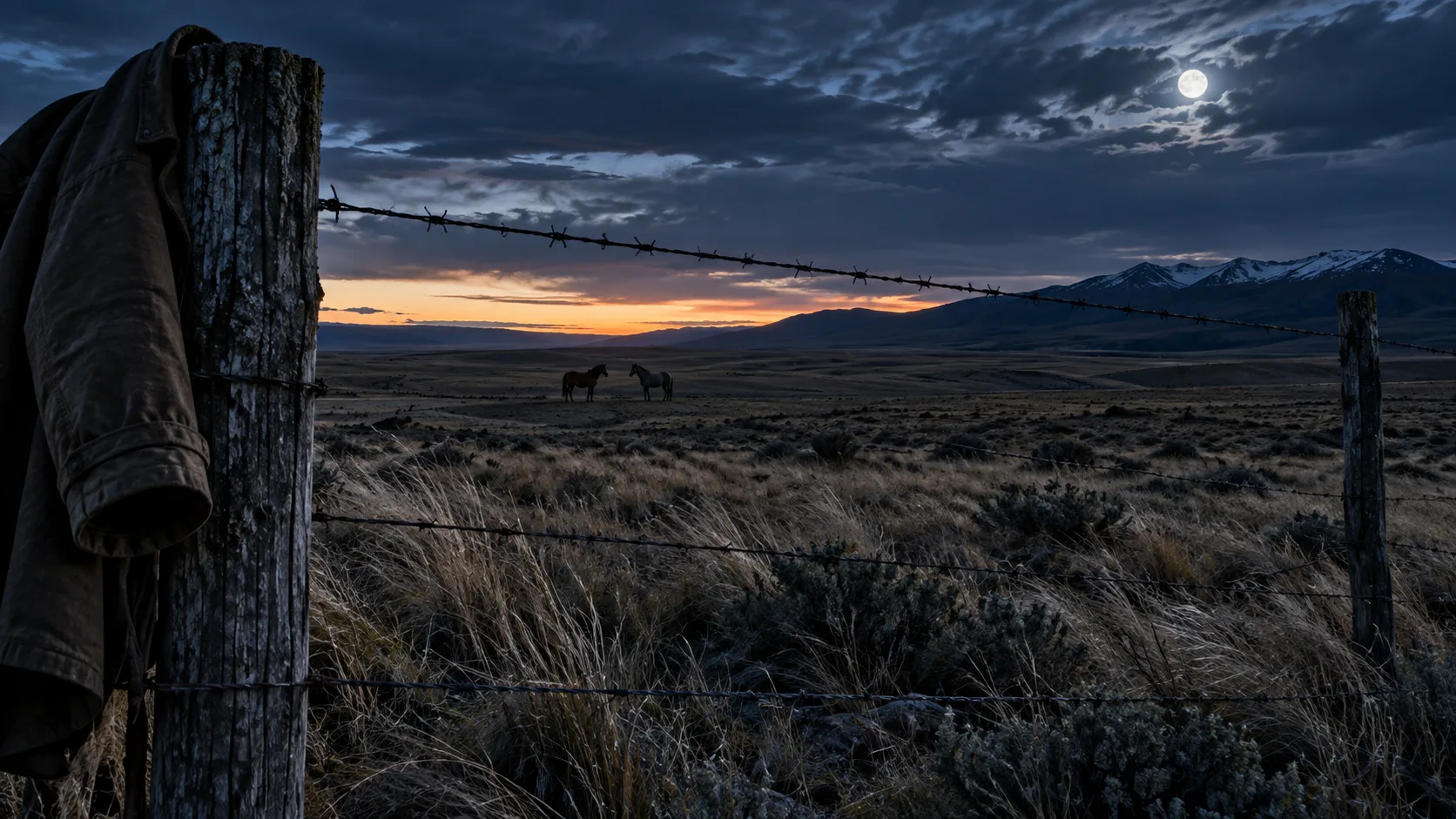
Standard cryptid news Feira Grande / Craibas / Igaci / Sao Bras - Agreste, Alagoas, Brazil (region)
Alagoas Chupacabra Reports: Livestock Losses, Folklore and the Police Dog Theory
Alagoas livestock losses inspired chupa-cabra claims. Local reports describe witness accounts, a police dog theory and unanswered questions.
Sign in to save stories to your shelf.
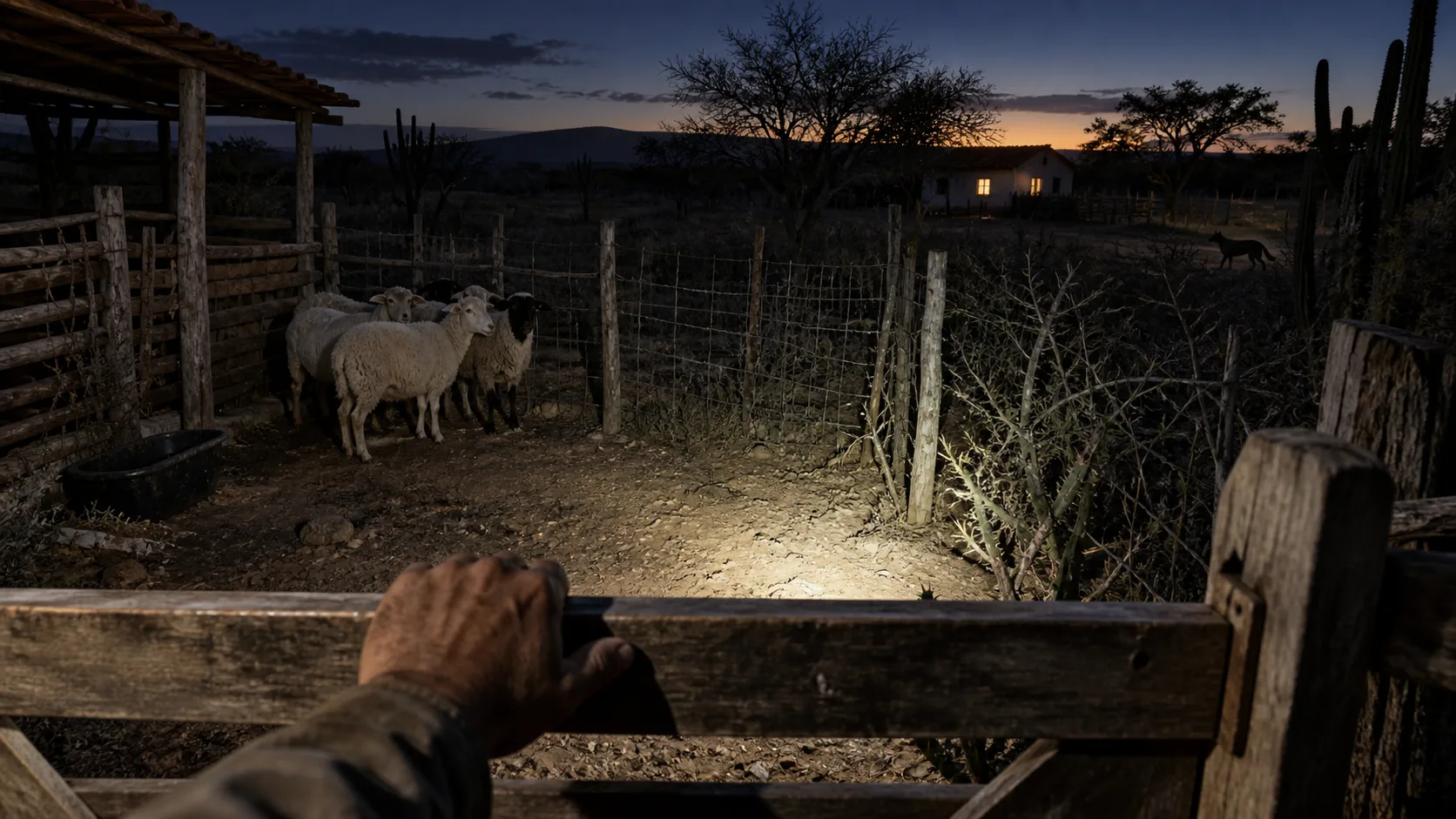
Something is emptying small herds in the Agreste of Alagoas before the coffee is on. That is the claim in local press from March through July 2026: sheep, goats, chickens, even rabbits found dead in the dark hours. Neighbors say chupa-cabra. The Civil Police desk in Craíbas says dogs, or wild animals, or at least not a person. They have not named a cryptid. They have not closed the file as one either.
The fight is the story. Folklore won the street. Police will not sign the legend.
Four towns, one whisper — and a number that wants to be a headline
Jornal de Alagoas on July 13, 2026 put the latest kill on a farm in Feira Grande, where sheep were found dead that Monday morning. The paper then zoomed out: the same pattern, it says, had already been logged in Craíbas, Igaci, and São Brás — four municipalities in the dry inland belt west of Maceió. According to that report, the attacker favors the madrugada, and more than a hundred animals in the region have been killed or vanished without a trace. That is a press tally, not a Civil Police spreadsheet we can audit. Hold it like a hot pan.
Gazetaweb ran a matching Feira Grande item the same day: an unknown animal, extreme violence in the papers' wording, plus rabbits and goats in the run of reports. Neither outlet produced a body of the alleged predator, and both said night vigils had failed to catch it. Treat “100+” as press-claimed, attributed, unverified by us.
March: a bloodless morning, and no blotter yet
The cluster started, in the public record, with g1 Alagoas on March 23. Residents of Povoado Lagoa Nova, about 3.5 km from downtown Craíbas, told reporter Lucas Leite that roughly twenty animals turned up dead on the morning of March 22 with punctures in the neck. The detail that lit the legend: they say there was no blood on the ground.
Renilda Conceição, 35, told g1 her son lost nine sheep, a hit she put at about R$ 3,000. Dogs had barked in the night; four surviving animals would not go back to the pen. The week before, she said, animals had been found the same way in Povoado Marruás. She told the outlet she had no enemies who would explain the killings and that she believed a chupa-cabra could be responsible. A neighbor, Maria do Socorro Santos, 44, lost four sheep and reached for the same name, saying she could not believe a person had done it.
Civil Police, g1 reported that day, were not yet investigating, because nobody had filed a formal report (Boletim de Ocorrência). The state agriculture secretariat said it knew of the case but not the circumstances. That is how a folklore outbreak outruns a police file: the street names the monster before the blotter exists.
April: a video, a delegate, and a third animal
By April 8, TNH1 had a video — sheep, goats, and chickens on the ground in Craíbas, some shredded — over which a resident narrates his conviction that a chupa-cabra is loose, counting off how many animals were taken. TNH1 reminded readers the urban legend blew up in Puerto Rico in 1995. That is the import stamp, not a field ID.
The Civil Police of Alagoas, through the Delegacia de Craíbas, were by then taking statements and collecting security-camera images. Delegate Manoel Acácio Júnior told TNH1 there were no indications of human action; if a person were proven, he said, an inquiry would open against a suspect. The working idea was an attack by animals, probably dogs. No conclusion yet. A poultry keeper in another clip reported chickens hit while a protective screen stayed intact — a detail folklore treats as a locked-room miracle, though a dog already inside the yard needs no miracle.
On April 22, TNH1 reported that Henrique, 28, sat with Civil Police after an attack in the rural zone of Craíbas in the early hours of April 7. He said he came home near midnight, heard dogs, then walked out on two medium mixed-breed dogs and a third animal. It moved with a dog's build and speed, he said, but insisted: não era pata, era garra — it was not a paw, it was a claw. The delegate, restating Henrique on the record, said the witness could not define the third animal, calling it dog-shaped with claws and, in Henrique's words, resembling a lobisomem (werewolf). Henrique claimed six sheep dead and seven injured. Police took the statement; they did not issue a werewolf bulletin.
The vet who will not say the word
The same TNH1 package gave the counter-spell. Epitácio Correia, a veterinarian with a master's in animal science and a former fauna-and-flora manager at the state environment institute, looked at images from rural Craíbas and Igaci. His suspect was not the 1995 import.
Stray dogs, he suggested, that pack up, hunt on group instinct like wolves, and behave like predators he has seen in other states. On the missing blood, Correia offered a general veterinary possibility rather than a diagnosis: bites do not always open large vessels, deaths can come from asphyxia, and a carcass whose flesh has been partly eaten can show little pooled blood. The “drained” look, on this reading, can be an impression rather than proof of a blood-drinker. That framing does not make Henrique a liar or make the July tally vanish. It means a bloodless yard is not, by itself, a cryptid field test.
May: the clock moves up
Jornal de Alagoas on May 1 said the hits were no longer only a madrugada problem. A sheep was found dead around 7 p.m. on April 30 at Sítio Logradouro, rural Craíbas; a similar episode hit rural Arapiraca around 8 p.m. the night before. Animals were found with signs of violence but, the paper said, without clear evidence the meat had been eaten, and in some cases a suspected absence of blood. Families pulled animals closer to the house, added lights, and hung cameras. Civil Police said they were following the occurrences, still with no conclusion.
Grain of salt, served on caatinga dirt
Possible mundane reads, the ones police and the vet already sketched: stray-dog packs, feral dogs that already know the yards, a wild predator the camera never caught, scavenging after a different cause of death, or copycat panic that turns every dawn carcass into the same legend. The non-mundane read the street already bought: something clawed, dog-shaped, not-quite-a-dog, working four municipalities.
We are not picking. Civil Police have spent months saying animals, probably dogs. The people who own the herds have spent months saying chupa-cabra. No outlet we fetched has published a necropsy series or a trapped animal. Livestock loss is a police and veterinary problem first: producers in that belt should file the formal report the March story said was missing, not wait for a legend to take their statement. Do not film a neighbor's carcass for clicks.
Where the story stands
From late March through mid-July 2026, reputable Alagoas press — g1, TNH1, Jornal de Alagoas, Gazetaweb — reported a livestock-kill cluster in the Agreste, across Craíbas, Igaci, São Brás, and Feira Grande. Locals and at least one on-tape narrator blame a chupa-cabra. Delegate Manoel Acácio Júnior has said there is no sign of a human hand and that dogs or wild animals are the working idea. A veterinarian who reviewed the pictures points to stray dogs, asphyxia, and eaten tissue as possibilities behind the “no blood” shock.
That is a folklore-versus-police split with real animals dead and no cryptid in custody. Not proven. Monstrum Athenaeum will update if Civil Police close the inquiry with a named predator, if a necropsy is published, or if the hundred-animal tally is sourced to an official count.
Sources
- Jornal de Alagoas — July 13, 2026 (Feira Grande; four-town spread; 100+ claim)
- Gazetaweb — July 13, 2026 (Feira Grande corroboration)
- TNH1 — April 8, 2026 (Craíbas video; delegate: probably dogs)
- TNH1 — April 22, 2026 (Henrique witness; vet Epitácio Correia)
- g1 Alagoas — March 23, 2026 (Lagoa Nova; no report filed yet)
- Jornal de Alagoas — May 1, 2026 (attacks shift to early evening)
This article summarizes publicly available claims for news, commentary, and criticism. Descriptions of alleged cryptid activity are attributed to named third-party sources and have not been independently verified by Monstrum Athenaeum. Veterinary explanations are offered as general possibilities, not a diagnosis. Video, images, and lengthy quotations remain the property of their owners; we link out rather than republish. MonstrumAthenaeum.org is for mature audiences and does not claim scientific confirmation of any cryptid.