Historical report Greenville County, South Carolina (Fleetwood Manor area origin reports); multi-state U.S.; England, United Kingdom (October 2016 echo)

The 2016 Creepy Clown Panic: Greenville Spark, National Wildfire, UK Echo (2026 Archive)

Archival 2026 feature on the 2016 creepy-clown scare — Greenville, S.C. woods claims, U.S. copycats, UK police warnings. Historical moral panic, not current.

By Cryptid deskFirst published Updated 5 min read
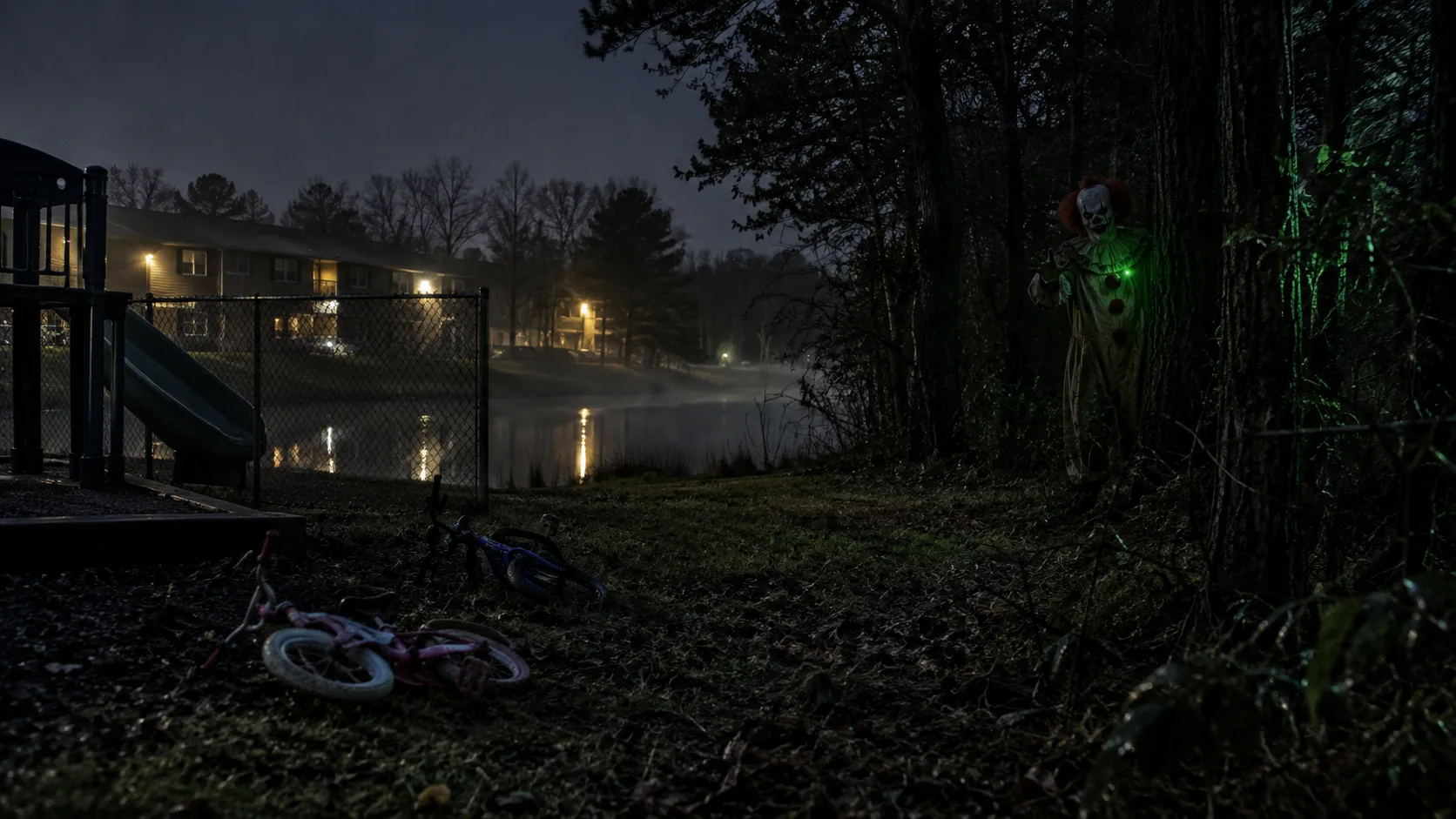
A wooded edge of a Southern apartment complex at night near Greenville, a chain-link playground fence and a stormwater pond, and among the dark trees a costumed clown figure half-lit by a stray green laser dot, beckoning, with children's bikes abandoned on the grass.

Sign in to save stories to your shelf.

Origin blotter window: reports beginning around 21 August 2016, Greenville County, South Carolina.

Original Athenaeum filing: 17 October 2016 — mid-scare English-language digest that treated the wave as live weather.

This is a brand-new 2026 archival feature. The October 2016 URL is a historical predecessor. The creepy-clown epidemic of 2016 is over as a news event. Retellings and Halloween cosplay continue; the national panic cycle does not get a present-tense “beware tonight” banner here.

Greenville: woods, money, green lights

According to Greenville County Sheriff’s Office-related reporting amplified by BBC, NYT, and later local retrospectives, residents near Fleetwood Manor Apartments said people in clown makeup / costume tried to lure children toward woods — money offers, strange noises, green lights or lasers, a house-by-a-pond story that sounds like every campfire’s second cousin.

Officers searched and, in early statements, reported no clown paraphernalia and no confirmation matching the wildest kid accounts. Extra patrols still happened. Parents still locked down. A building manager reminder about curfew made the fear official enough to feel real.

That gap — vivid testimony, thin physical evidence — is where moral panics breed.

The copycat continent

Through September and October 2016, clown reports metastasized across U.S. states. The Athenaeum’s contemporaneous list flagged Colorado, Pennsylvania, Illinois, Wisconsin, and more, alongside knife-chase and candy-offer tales that may have been hoax, hysteria, prank, or genuine intimidation using a mask.

Authorities in multiple jurisdictions eventually arrested some costume pranksters and false reporters. Schools in some regions reacted hard. The White House press corps even fielded clown questions — a tell that the story had escaped the weird column into national mood.

Stephen King did not cause this. It (novel and later film chatter) rode shotgun on a phobia that was already loaded. Coulrophobia did not need a peer-reviewed outbreak to empty sidewalks after dusk.

UK October: same mask, different constabularies

By early–mid October 2016, UK forces logged clusters of “killer clown” pranks — Thames Valley’s busy 24-hour blotter, plastic machetes, kids in masks near schools, public-order fines. The Metropolitan Police warned that dressing to intimidate could be an offense. Professional clowns complained the craze was wrecking birthday-party gigs. The Guardian and BBC treated it as an imported American contagion timed for Halloween.

The Athenaeum’s 17 October piece sat exactly on that hinge: U.S. origin story plus UK arrival, still asking whether hoax or something darker, still advising (then) to watch kids at Halloween.

What 2026 owes the file

Honesty about chronology. This was a 2016 media-amplified scare with real frightened people, some real criminal pranks, and a lot of rumor oxygen. It was not proof of a coordinated interdimensional clown cartel. It was not nothing, either — if someone in a mask chases a child, that is a police matter regardless of folklore.

Conspiracy-curious angle: Did platforms algorithmically reward fear? Did a few hoaxers puppet a nation? Sociologists of rumor will be unpacking that longer than any latex nose lasts. Our job is narrower: date it, attribute it, stop speaking in present-tense “on the loose” language.

Grain of salt: absence of photos in many early Greenville claims does not magically prove every later arrest was theater. Presence of arrests does not prove every viral story was true.

Moral panic mechanics in a sharing age

Sociologists have watched clown panics, satanic daycare scares, and phantom-attacker waves before. The 2016 edition ran on fiber-optic rails. A Greenville blotter detail became a national script: woods, money, children, mask. Once the script existed, any figure in whiteface could cast themselves — or be cast by frightened narrators — as the next scene.

That does not require a mastermind. It requires incentives: attention, laughs, malice, and news cycles that reward escalation. Some participants were kids with dollar-store masks. Some were adults who earned fines or worse. Many “sightings” were probably anxiety wearing greasepaint.

Halloween aftertaste

By late October 2016, professional performers begged the public to remember birthday clowns are not slashers. Police begged pranksters to pick a less stupid hobby. Parents begged schools for guidance. Then November arrived, the costumes went back in bins, and the panic cooled — leaving a tidy case study for anyone writing about rumor in the platform era.

A 2026 archival feature should resist nostalgia for the fear itself. The useful residue is the pattern recognition: how fast a local weird report can become international costume policy.

For searchers landing from Halloween queries

If you typed “creepy clowns near me 2026” and got this page, read the year stamps twice. The epidemic this feature documents peaked in 2016. Seasonal pranks recur; the specific Greenville-to-UK contagion was a historical media event. Call local police about real harassment. Do not cosplay intimidation. Do not treat archival panic as a live map overlay.

Evidence hygiene, then and now

Early Greenville searches found little physical clown kit; later weeks produced arrests elsewhere for pranks and false reports. Both facts can be true without canceling each other. An archival desk records the thin forensic start, the thick rumor middle, and the enforcement tail — then stops narrating as if the woods behind every apartment complex still hide a salaried lure team.

Bottom line: From August 2016 Greenville woods claims through an autumn of U.S. and UK copycats, the creepy-clown panic owned the news cycle. The Athenaeum’s 17 October 2016 warning is a time capsule. This 2026 archive keeps it on the shelf labeled historical, not a live clown advisory.


Sources

  • Claim element: Athenaeum Oct 2016 digest — Attribution: Monstrum Athenaeum historical predecessor, 2016-10-17 — Link: Beware: Creepy Clowns On The Loose
  • Claim element: Greenville origin reporting — Attribution: NYT; BBC; Fox Carolina retrospective — Link: NYT · BBC
  • Claim element: UK police warnings / incidents — Attribution: The Guardian; BBC England — Link: Guardian · BBC

About this article

This article summarizes publicly available historical claims for news, commentary, criticism, and entertainment. Descriptions of alleged cryptid, paranormal, or anomalous activity are attributed to named third-party sources and have not been independently verified by Monstrum Athenaeum unless explicitly stated. This 2026 piece is a brand-new archival feature; linked earlier URLs are historical predecessors, not prior publications of this text. Links are for attribution and reader verification. We link out rather than republish original media files. Grain of salt always. MonstrumAthenaeum.org is intended for mature audiences and does not claim scientific confirmation of any cryptid’s existence. Not medical, legal, or safety advice.

Original publication credit

Original title: Beware: Creepy Clowns On The Loose. The preserved copy has no named writer credit. Originally published October 17, 2016.
Continue reading.

Stay with the strange.

Explore the front page →