Historical report Highway 16 corridor / Highway of Tears discourse region, British Columbia (Prince George midpoint proxy)

Highway of Tears Archive: What Athenaeum Said in 2015 — and What It Must Not Claim Now

Careful 2026 archival feature on Athenaeum’s Oct 8, 2015 Highway of Tears piece—E-PANA history, dated vampire speculation, no present-tense case claims.

By Cryptid deskFirst published Updated 6 min read
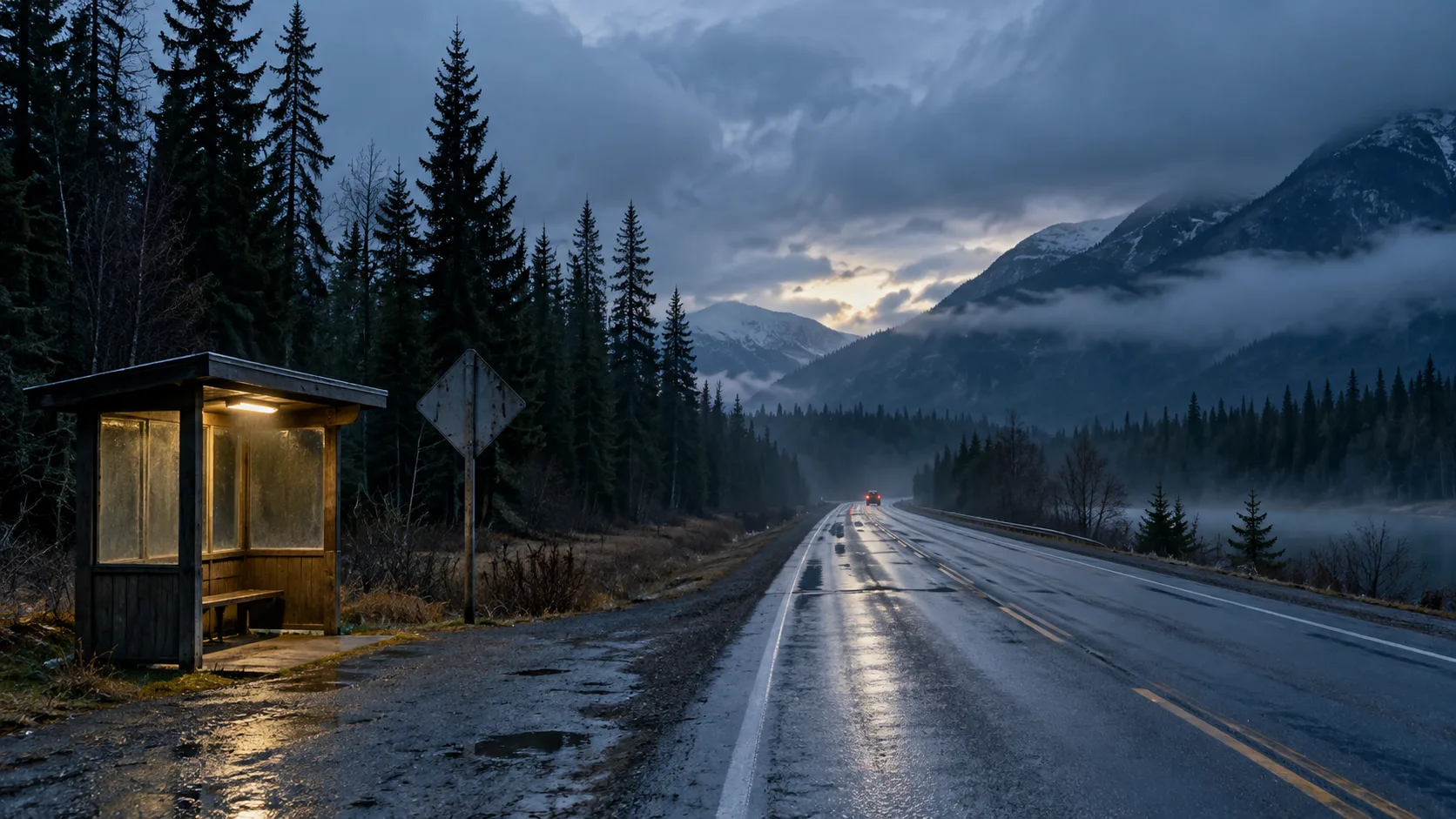
A remote northern British Columbia highway at dusk, a two-lane road threading dark spruce and distant blue mountains, a bus-stop shelter and a weathered warning-shape sign at the roadside, mist pooling in the ditch, no people.

Sign in to save stories to your shelf.

Original Athenaeum reporting date: October 8, 2015.

Careful archival note up front: the Highway of Tears is not a campfire cryptid playground. It is a corridor of real grief — missing and murdered women and girls, many of them Indigenous, along British Columbia highway country. This 2026 feature archives what Monstrum Athenaeum published on October 8, 2015, including the site’s dated vampire speculation. It does not claim a supernatural killer. It does not state current investigative status for any case. It does not invent victim counts beyond what public historical sources already published.

Hold the salt. Hold the respect. Keep reading only if you can do both.

What the corridor is (historical framing)

Canada’s northern road networks are vast. Among them, British Columbia’s Highway 16 corridor — and, in expanded police historical framing, related stretches of Highways 97 and 5 — became known in public discourse as the Highway of Tears.

According to The Canadian Encyclopedia and RCMP historical materials around Project E-PANA, the force’s specialized review grew from linked cases in the mid-2000s. Early work centered on Highway 16 between Prince Rupert and Prince George. By October 2007 public announcements, the project’s publicly discussed list had grown to eighteen female homicide and missing-person investigations spanning roughly 1969–2006, with geography widened toward Interior routes and even toward Hinton, Alberta in some descriptions.

An RCMP historical overview describes the task force’s composition in blunt inventory language: homicide files and missing-person files under one investigative umbrella, with investigators publicly skeptical that a single serial killer explained every case. Community advocates and family voices have long said the true scale of harm along the corridor is larger than any single police list. Athenaeum will not invent a higher number to sound darker.

The 2006 Highway of Tears Symposium and later advocacy work (including Carrier Sekani Family Services’ public education) framed prevention, family support, and community development — human policy, not monster lore. A UNBC research guide reminds students that the nickname itself is relatively recent compared with the timeline of violence, and that searching only the phrase can hide older reporting.

What Athenaeum said in 2015 (and how we cage it)

The October 8, 2015 Athenaeum article described the desolate highway, cited the RCMP’s then-circulating figure of eighteen known cases on the official list, noted local belief that more cases existed, and then made the leap this desk specialized in: maybe a vampire was hunting the corridor.

That leap is entertainment speculation dated 2015. It is not evidence. It is not respectful as a primary explanation. In 2026 we keep it only as a historical specimen of how weird-news culture tried to metabolize an atrocity through supernatural metaphor.

The original also claimed some dump sites seemed too difficult for “a mortal man,” and that decades-long patterns “matched” a vampire’s hunting logic. Those are folklore moves — narrative convenience dressed as fieldwork. Hard terrain does not equal fangs. Long timelines do not equal immortality. They equal under-resourced justice systems, hitchhiking economies born of transit gaps, and predators who are devastatingly human.

RCMP historical statements around E-PANA publicly doubted that one offender owned the entire list. Multiple human offenders — and systemic failures that left Indigenous women unprotected — are the serious conversation. Athenaeum’s 2015 vampire riff was never that conversation. Archiving it means showing the riff and refusing to let it wear a detective badge.

Side roads, hitchhiking warnings, and the ethics of atmosphere

Period Athenaeum copy lingered on hundreds of side roads, milk-carton-like warning signs, and the advice that women especially should beware stranger rides. Those atmospheric details were already part of public safety folklore along the corridor. Repeating them as travel-porn “adventure backdrop” is a failure mode this refresh declines.

This package refuses tourism cosplay. No trail itinerary. No “go see the signs” checklist. No private addresses. Geography below uses a Prince George region centroid as a public map midpoint for Highway 16 discourse — not a crime-scene pin.

The original’s private-investigator anecdote — countless spur roads offering concealment — works as geography 101 and as fear theater. In an archive, we keep the geography lesson and retire the wink that a vampire needs a gravel turnout.

Why a cryptid desk is touching this at all

Because the 2015 URL exists in the legacy inventory, and leaving it uncontextualized is how old sensationalism keeps poisoning search results. A brand-new 2026 package can do the adult job: date the predecessor, summarize the public historical record, and put the vampire line in quarantine.

Conspiracy-curious readers sometimes want one elegant monster. Reality offers bureaucracy, racism, poverty, predation, and unfinished grief. That is harder to click. It is also the only honest frame.

Archive rules for 2026

  • Retain October 8, 2015 as the original Athenaeum reporting date.
  • Attribute E-PANA’s historical eighteen-case expansion to public encyclopedia/RCMP summaries.
  • Label vampire talk as dated Athenaeum speculation, not fact.
  • Do not declare which cases are open, cleared, or cold as of today.
  • Do not imply a supernatural offender is “still at large.”
  • Center that real families, real communities, and real advocacy exist outside this archive.

If you came for a vampire dossier, leave with a conscience check instead. The Highway of Tears is a human wound. Folklore that parasitizes it belongs in a labeled jar — dated, salted, and not allowed to pose as investigation.

Grain of salt: No Athenaeum confirmation of a vampire on Highway 16. No present-tense case-status claims. The 2015 article is a historical predecessor; this text is new; the victims remain people, not plot points.


Sources

  • Claim element: Historical predecessor (2015-10-08) — Attribution: Monstrum Athenaeum original — Link: Highway Of Tears
  • Claim element: Highway of Tears / E-PANA historical overview — Attribution: The Canadian Encyclopedia — Link: Highway of Tears
  • Claim element: Project E-PANA historical description — Attribution: RCMP “E” Division historical release — Link: Project E-PANA
  • Claim element: Advocacy / symposium context — Attribution: Carrier Sekani Family Services Highway of Tears program page — Link: highwayoftears.org
  • Claim element: UNBC research guide framing — Attribution: University of Northern British Columbia subject guide — Link: UNBC guide

About this article

Entertainment / historical media commentary with heightened care — not investigative reporting, not a claim of supernatural offenders, not tourism guidance to crime-associated locations. The Highway of Tears concerns real missing and murdered women and girls; treat victims and families with dignity. This 2026 article is a brand-new legacy refresh; the 2015 URL is a historical predecessor, not a prior publication of this text. MonstrumAthenaeum.org is for mature audiences. If you have information about crimes, contact appropriate Canadian authorities — not a cryptid comments section.

Original publication credit

Original title: Highway Of Tears. The preserved copy has no named writer credit. Originally published October 8, 2015.