Hoax / costume Mundo Novo, Bahia, Brazil (primary pin: the town of the police denial); additional pins in notes
One Blurry "Lobisomem," Three Brazilian Towns: The Werewolf Photo That Kept Travelling
A werewolf photo went viral in Taubaté, Mundo Novo and Jequitinhonha in 2016. Extra says it circulated in 2015. A police chief says it isn't real.
Sign in to save stories to your shelf.
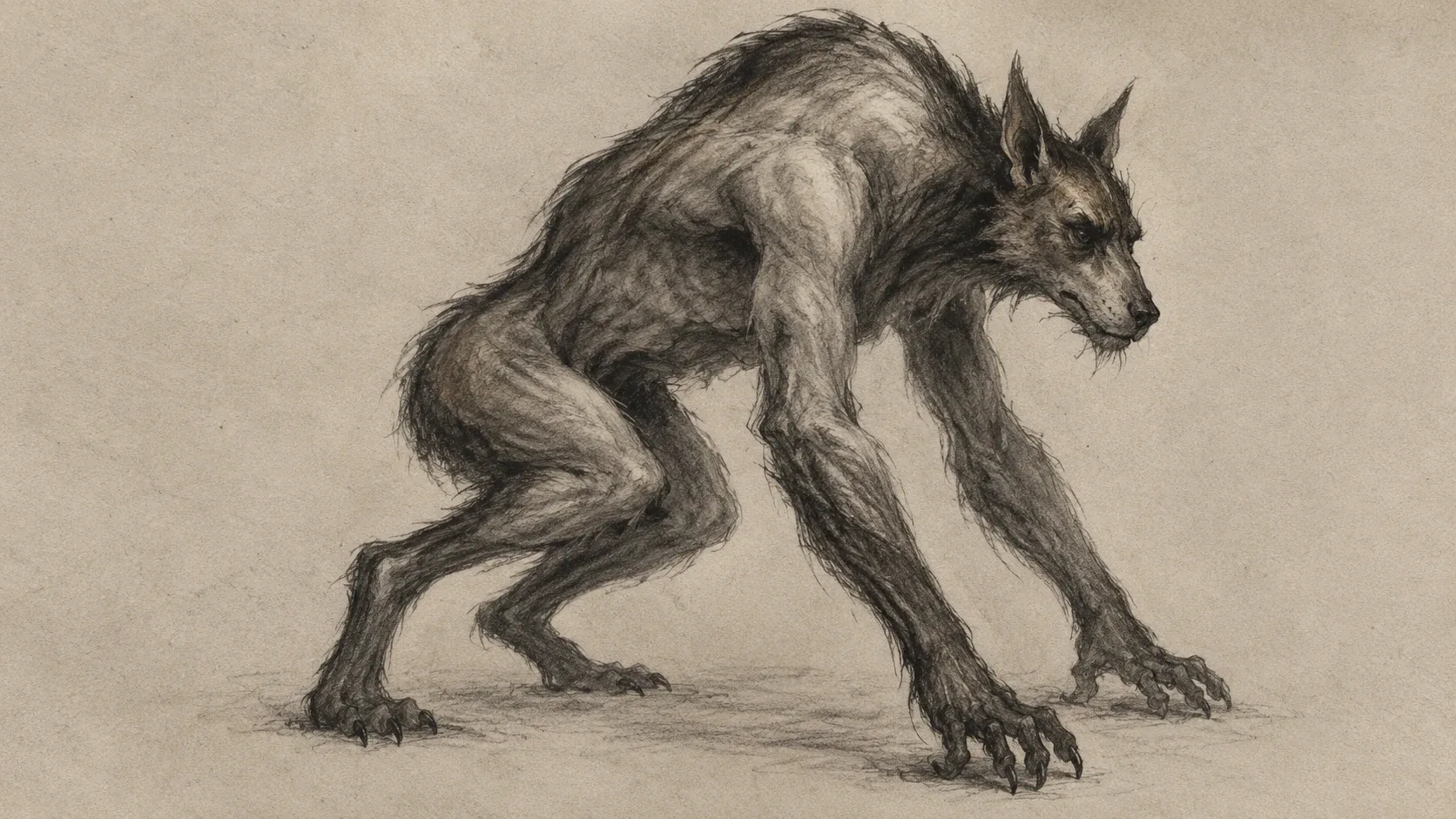
A crouching shape. Long arms. Pointed ears. A hump.
In the last days of February 2016 that picture crossed Brazil's group chats, and a Bahia town started avoiding its own streets after dark. Then a police chief went on camera to say the creature does not exist. By September, a newspaper was reporting that the photo had been seen before. Here is how the lobisomem travelled, and what the sources actually say about it.
Taubaté: "on tour"
On February 29, 2016, the Rio newspaper Extra reported that "the Taubaté werewolf" was taking over the web that week. It was an image said to have been caught by a security camera on a street in the São Paulo-state town. On a Facebook page for local residents, the paper said, it had more than 2,000 shares in two days.
Extra added a twist. It said the creature was "very probably on tour." According to the paper, a werewolf had been reported in Barra Bonita, also in São Paulo state, in July 2015, and residents of Ceilândia, in the Federal District, had reportedly seen it the next month. "On all three occasions," Extra wrote, the published images "are exactly the same." (Quotes translated from Portuguese.)
So the paper's claim is plain. One picture, three claimed places, two of them in 2015.
Mundo Novo, Bahia: the night streets empty
The same day, Bahian news sites ran a different town. Alta Pressão Online, citing the local blog Macaubense Life, said a supposed werewolf had been seen in the streets of Mundo Novo at around 2:30 in the morning and that some residents were avoiding going out at night. Bocão News said residents claimed it was seen on Thursday, February 25, eating another animal, when the picture was taken. Citing regional sites, it said police were investigating whether the reports were true. Both Bahian reports rest on local blogs and unnamed regional sites, not on a named witness, so they are one rumor reported twice.
Months later, a contributor for the São Paulo daily Folha visited the town, in the state's centre-north, and described the picture. A local blog, Folha said, had posted a blurry image of a figure crouching, with arms much longer than its legs, pointed ears and a prominent hump. The blog's owner, Agmar Rios, told the paper he received the photo in WhatsApp groups where people said they had seen a man howling "and looking like a dog" in the bush. The story spread, Folha says, across Bahian sites, and TV Bahia, the Globo affiliate, gave it part of a morning news programme.
Folha dates the blog post to March. Alta Pressão Online and Bocão News published on February 29. That date mismatch is unresolved, and the earlier one fits the first reports.
The police chief's video
Then, per Folha, the town's police chief at the time, José Adriano da Silva, recorded a 42-second video to calm people. In the clip, which the paper says TV news aired, he says: "It's all just rumors (…) We calmed the population by saying this creature doesn't exist."
Folha adds a twist of its own. The chief had joined a political party six months earlier and was running for mayor in the October 2 election. The paper's headline says the werewolf myth boosted his candidacy. He told the paper he doesn't know that so many people watched the video and credited his police work instead.
What matters for the werewolf is what the blogger told Folha next. After publishing, Rios said, he found out that the same image had already been used in news about supposed werewolf appearances elsewhere in Brazil. "Someone took it from the internet and said it was from this town," he told the paper. "It's all mischief." (Translated.)
Residents interviewed by Folha mostly shrugged. An 84-year-old farmer said cattle now and then get attacked by a jaguar or a boa, "but people always think it's a werewolf." A 70-year-old hotel owner joked that the tale is probably cover for men sneaking out to see their lovers. Folha says the werewolf's existence in town "leans toward the jocular." (Translated.)
Jequitinhonha: the picture meets a legend
A similar claim turned up in Minas Gerais. On March 8, O Tempo said an image said to come from a security camera in the town of Jequitinhonha, showing a man changing into an animal, had spread on WhatsApp "in the last week" and revived an old local story, the Bicho de Pedra Azul.
According to the paper, the Bicho is a kind of sertão werewolf, part of the imagination of the Jequitinhonha valley since the 19th century. Residents told the reporter it can turn into a dog, a horse or a mule and shows up at dusk or at night. In the telling the paper heard, it is a farmer and politician who died around 1900 and was cursed by his mother. Not everyone buys it. An 83-year-old woman said it sounds like something to scare children into sleeping or eating.
O Tempo also reported that a Mariana ghost-hunters' association said it would add the Bicho to its survey of local hauntings.
One picture, or three?
Here is the open question. Extra says the Taubaté image matches the 2015 Barra Bonita and Ceilândia images. Folha's blogger says the Mundo Novo image was lifted from somewhere else. O Tempo describes a security-camera frame of a man transforming. None of the three reports puts these pictures side by side, so the sources do not establish that the Taubaté, Mundo Novo and Jequitinhonha images are the same file.
What they do establish is a pattern: a single-frame monster, a town name stuck on it, a WhatsApp or Facebook push, and a legend already waiting to receive it. In Mundo Novo, the police chief says the creature does not exist, and the blogger calls the picture's reuse mischief. A recycled photo is only part of it. The panic around it, and the folklore that welcomes it, is the rest of the story.
Brazil's older werewolf coverage on this site is worth a read alongside it: Werewolf Filmed in Brazilian Backyard, and the history of internet-age fakes in Hoaxes: The Real Life Origins behind the Argentine Werewolf Boy.
Bottom line
Per Extra (Feb 29), a 2016 "Taubaté werewolf" photo matched images posted in 2015. Per Alta Pressão Online and Bocão News, Mundo Novo residents said a werewolf was seen there in late February. Per Folha (Sep 30), the police chief said the creature does not exist, and the blog owner said the picture had been used elsewhere. Per O Tempo (Mar 8), a similar picture revived Jequitinhonha's Bicho de Pedra Azul legend.
Attribution / source table
- Claim: Taubaté image; 2,000+ Facebook shares in two days; same image in Barra Bonita (Jul 2015) and Ceilândia (Aug 2015); "on tour"
Attribution: Extra (Globo), Feb 29, 2016
Link: Extra - Claim: Mundo Novo: reported sighting around 2:30 a.m.; residents avoiding the streets; citing Macaubense Life
Attribution: Alta Pressão Online / Bahia Notícias, Feb 29, 2016
Link: APO - Claim: Mundo Novo: seen Feb 25 eating another animal; residents avoiding the streets; police investigating per regional sites
Attribution: Bocão News (BNews), Feb 29, 2016
Link: Bocão News - Claim: Image description; blogger Agmar Rios on WhatsApp origin and reuse of the picture; TV Bahia coverage; police chief's 42-second video and quote; candidacy; local skeptics
Attribution: Folha de S.Paulo (contributor André Uzêda), Sep 30, 2016
Link: Folha - Claim: Jequitinhonha image; Bicho de Pedra Azul legend and 19th-century roots; ghost-hunters' survey
Attribution: O Tempo (Belo Horizonte), Mar 8, 2016
Link: O Tempo - Claim: Earlier Monstrum coverage (2014, 2015)
Attribution: Monstrum Athenaeum
Link: Werewolf Filmed in Brazilian Backyard · Hoaxes
Legal / disclaimer footer
Entertainment and cryptid-news commentary only. Nothing here confirms a werewolf or any other creature. Reports, quotes and statements from the police chief, the blogger and residents are given as the cited outlets published them (Portuguese quotes are translations), and the claims belong to the people who made them. The map location is approximate to town level.
Original illustration of folklore, a costume or an imagined setting, as described above.