News feature Ozark Plateau (Arkansas–Missouri–Oklahoma); Springfield, Missouri media proxy
Garden & Gun Put the Ozark Howler on Southern Letterhead — And the Devil Cat Still Won't Sit Still
Garden & Gun (Oct. 2024) and State of the Ozarks (Jan. 2025) revived the Ozark Howler: settler devil-cat roots, a documented late-1990s web hoax, and 2015 Devil's Den photos wildlife officials called fake.
Sign in to save stories to your shelf.
Timeline: the Ozark Howler's roots are old settler "devil cat" / panther folklore; its modern named brand traces to a late-1990s internet hoax campaign. The news peg here is a pair of recent features — Garden & Gun (Oct. 23, 2024) and State of the Ozarks (Jan. 19, 2025). This dossier walks that history backward. Monstrum Athenaeum is summarizing the record, not confirming an animal.
Forget Sasquatch. This one has horns, a scream that ruins campfires, and — as of late 2024 — a Garden & Gun byline.
On October 23, 2024, Garden & Gun published Helen Bradshaw's Meet the Ozark Howler, the South's Most Cryptic Cryptid, built around Arkansas essayist Lillian Stone and her lifelong Howler fixation (also explored in Stone's essay "Beware the Howler"). Three months later, on January 19, 2025, State of the Ozarks editor-in-chief Joshua Heston answered with Our Very Own Ozark Howler — a regional-identity essay that treats the beast as meta-phenomena: tourist tall tale, cryptozoology specimen-in-waiting, and reminder that the hills still know how to scare a phone call from Los Angeles.
Monstrum Athenaeum has not independently verified a living horned devil cat padding the Boston Mountains. We have verified that prestige Southern media and Ozarks cultural press put the same creature on consecutive letterheads — and that the trail behind them runs from settler "painter" folklore through a documented late-1990s web hoax fight to a 2015 photo flap Arkansas Game and Fish called fake.
This is a different creature’s story. Not Bigfoot with a drawl. Not Fouke's swamp biped. A highland howler with contested ancestry and excellent SEO.
The dual peg: lifestyle magazine + regional essay
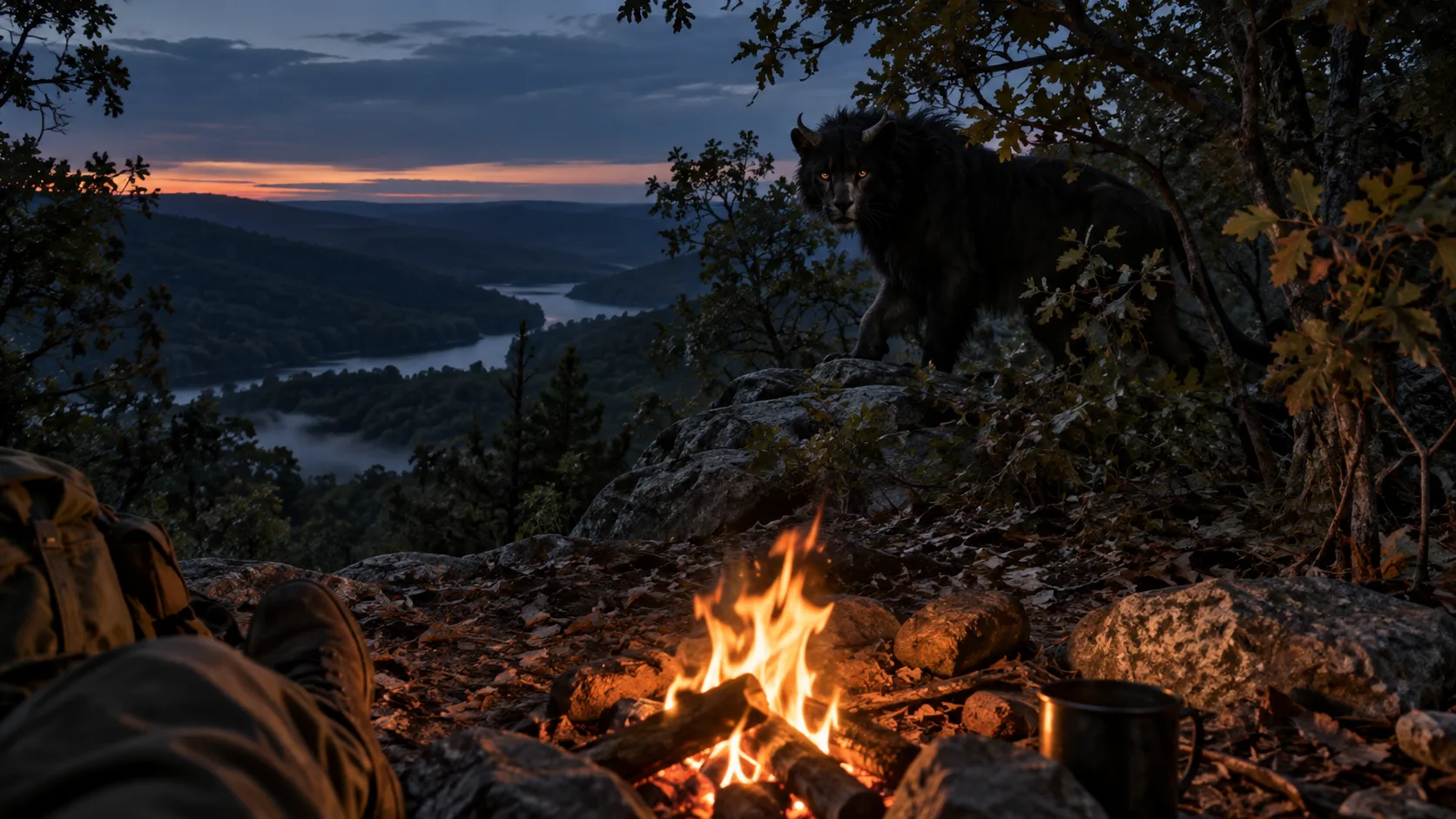
Bradshaw's Garden & Gun piece is the national-Southern prestige spike. Stone's Howler is deliberately unstable: a massive cougar-like animal to some witnesses; a wolf-goat-cat mashup to others; in Stone's mind, "a shaggy, giant hyena with big, glowing red eyes and also Beauty and the Beast–style curly horns." Skeptics hear that as proof nobody is seeing one animal. Stone hears the perfect mascot for a region nobody can place — Midwest, South, or "another third thing." Keith Stephens of the Arkansas Game and Fish Commission, fielding the occasional Howler call, gives the practical line Bradshaw prints: treat it like a bear — back away slowly; let them be.
Heston's State of the Ozarks follow is the cultural twin. He remembers a 2012 California producer asking him to locate someone who had seen the Howler — as if the creature sat on a tourist-book list next to the Jimplicute, the Sidehill Hoofer, and Heston's beloved Snawfus. He expected jackalope energy. What surprised him was the meta-phenomena: websites, blogs, TV pitches, books, and fans treating the Howler like the Ozarks' answer to Nessie, Mothman, or Bigfoot. His essay keeps the layers honest — a 1930s "Land of a Million Smiles" tourist pastiche selling hillbilly fiction until fiction felt real; underneath that, genuine settler terror of wild panthers ("painters") screaming in unsettled dark. The Howler, for Heston, lives as one-part folkloric fantastic beast and one-part cryptozoology hope. Autopsy day, he suggests, would be a sad reduction of enchantment.
That is the 2024–2025 peg: not a fresh carcass, but a prestige-and-regional revival that treats the Howler as Southern cultural infrastructure. Then walk the timeline backwards.
Work the timeline backwards — folklore before the brand name
Before Garden & Gun, before the websites, before the word "cryptid" had a Reddit, the Ozarks already knew how to scare themselves with large dark animals and wrong sounds at night.
The settler "devil cat" / painter / black-howler folklore layer is nineteenth- and early-twentieth-century substrate, not a notarized first sighting. Unlock the Ozarks and Only in Arkansas both circulate the modern campfire package: a bear-sized or thick-cat build, shaggy black fur, glowing eyes, sometimes horns or long ears, a cry mixing wolf howl and elk bugle — or, in the scarier tellings, a woman's scream. Territory talk spans southern Missouri to northern Arkansas with Oklahoma and Texas bleed. Treat every anonymous howl as oral tradition until a carcass shows up. It almost never does.
Immigrant folklore comparisons travel with the settlers: Scottish Cù Sìth / Irish Cú Sídhe / Welsh Cŵn Annwn death-hound traditions get cited as possible scream-and-harbinger DNA. Daniel Boone "Yahoo" / ten-foot hairy-creature talk sometimes gets drafted into Howler origin sermons; Garden & Gun notes internet sleuths floating late-1700s Boone hooks, Indigenous substrate, or Irish immigrant carryover. Contemporaneous paper trails for a named Ozark Howler in Boone's day are thin to nonexistent. What is solid is the ecological memory Heston names: panthers screamed in the dark when help was a hard ride away. A howling black "painter" is folklore with teeth even when the horns are optional.
Late 1990s: the web invents (or hijacks) a brand
Here the desk has to hold two truths without blending them into mush.
In the late 1990s, a named creature called the Ozark Howler began circulating hard on the early internet — dramatic evidence emails to working cryptozoologists, a cluster of websites presenting ancient pedigree, the whole packaged look of a forgotten highland predator suddenly rediscovered online. According to Chad Arment's Cryptozoology: Science & Speculation (2004) and accounts associated with Loren Coleman, those messages traced to a University of Arkansas student who later described the project as a bet / experiment: could he fool the cryptozoology community the way chupacabra panic had spread, and undercut monster-tale credibility by manufacturing one? Coleman-linked retellings describe fake websites engineered to make the legend look older than the inbox stamps.
Conspiracy-curious read: a skeptic manufactured the cryptid to prove cryptids are easy to manufacture — and then the culture kept the toy. Skeptical read: the horned devil-cat search results are mostly digital theater dressed in old panther clothes. Folklore-first read: Arment's student did not invent every black-animal scream in the Ozarks; he may have branded, amplified, and backdated a name that stuck to older unease. Our line: report the hoax investigation as investigation, not as a wipe of every campfire story told before dial-up. Older "medium-sized black cat" talk and painter folklore can predate a late-1990s email campaign without validating horns, hyena laughs, or a new species. A documented web hoax can seed a brand without being the only animal ever heard in a hollow.
That tension is the Howler's actual modern origin story. Not Bigfoot. Not a police blotter. A folklore substrate meeting an internet prank and refusing to divorce cleanly.
2005–2010 and the 2015 Devil's Den photo flap
Garden & Gun notes a Northeast Arkansas sighting string between 2005 and 2010. Secondary packages talk trail-cam and Fort Smith television interest in Boston Mountains cats while wildlife officials maintained no breeding cougar population — "pet panthers" and dispersers becoming the bureaucratic shrug. Sound and silhouette keep doing the work: black bear, coyote chorus, bobcat, reintroduced elk bugle, fox scream, fighting raccoons. The Howler remains the name people file the night under.
Then came the photo year.
On December 15, 2015, 40/29 News (KHBS) aired viewer photos claimed from the Yellow Rock Trail at Devil's Den State Park, Arkansas — a dark, horned, glowing-eyed shape half-hidden in timber. The station contacted the Arkansas Game and Fish Commission. AGFC said it had no documented Howler sightings in the area; a biologist ranked the legend with Bigfoot-class tales; the commission's posture across local coverage treated the images as a hoax. Only in Arkansas names the submitter as John Meyers and points readers to a Springfield News-Leader cycle of similarly unconvincing "horned puppy" energy — the same visual Garden & Gun remembers as looking more like a German shepherd puppy with horns than a fearsome beast. Believers called Photoshop unfair. Agencies called fiction. The photos still travel every Halloween.
Do not rehost them. Link outbound. Salt heavily. A viral still is not a voucher specimen.
Why the prestige revival hits different
Most cryptids sell fear or footprints. The Howler sells ambiguity — and that is why Stone's contradictory-region thesis and Heston's tourist-pastiche thesis both work. A creature that might be cat, dog, goat, bear, or a Photoshop layer is perfect for a highland culture that has spent a century selling "authentic" hillbilly to outsiders while keeping real danger stories about painters in the family oral vault. Once Garden & Gun and State of the Ozarks put the Howler on consecutive stages, the old hoax argument stops being a kill shot and becomes chapter two of a cultural biography.
Conspiracy-curious desks will notice the loop: invent (or amplify) a cryptid to mock belief → belief and tourism absorb the invention → magazines treat the absorption as Southern weird worth celebrating. Skeptical desks will notice AGFC still has no carcass and 2015 still looks fake. Folklore desks will notice that panthers screamed here before anyone had an email client. All three can sit on the same page if you refuse to flatten them.
Geography without the trespass fantasy: the story is region-scale — the Ozark Plateau across Arkansas, Missouri, and Oklahoma, with occasional Texas claim bleed. Springfield, Missouri is one regional media center, not an encounter location. Devil's Den, the Boston Mountains, and other claim corridors are narrative geography. Film and hike where you are allowed. The Howler does not need your misdemeanor, and neither does Arkansas State Parks.
Bottom line
In October 2024, Garden & Gun — via Helen Bradshaw and Lillian Stone — put the Ozark Howler on Southern lifestyle letterhead as the South's most cryptic cryptid. In January 2025, Joshua Heston's State of the Ozarks answered with a regional essay on the Howler as cultural meta-phenomena. Behind those dual pegs sits a layered file: settler devil-cat / painter folklore, a late-1990s University of Arkansas–linked web hoax investigated by Chad Arment and Loren Coleman that shaped the modern named brand, mid-2000s claim clusters, and a 2015 Devil's Den photo flap Arkansas Game and Fish called hoax.
That is a real Cryptid News peg. It is not a species confirmation. It is not a full conviction that every Ozarker who ever heard a wrong scream was in on a college bet. It is proof that in the multi-state Ozarks — and on every search result that still argues horns versus hoax — a howling black devil cat can outrun a clean origin story and still earn Garden & Gun.
Salt the photos. Credit the folklore. Report the hoax. And if something bugles like an elk and laughs like a hyena after midnight, check whether you're meeting a cryptid — or meeting the Ozarks refusing to be only one kind of place.
Sources
- Prestige feature; Stone's Howler description; contradictory-Ozarks thesis; Boone/immigrant lore notes; 2005–2010 NE Arkansas string; News-Leader horned-puppy image; AGFC's "treat it like a bear" advice — Garden & Gun, Helen Bradshaw, Oct. 23, 2024, Meet the Ozark Howler
- Regional meta-phenomena essay; 2012 producer call; tall-tale bestiary; tourist pastiche vs. painter terror — State of the Ozarks, Joshua Heston, Jan. 19, 2025, Our Very Own Ozark Howler
- Folklore description; multi-state range; sighting anecdotes; immigrant-lore comparisons — Unlock the Ozarks, Ozark Howler
- Campfire-legend frame; Boone origin talk; 2015 Devil's Den / Meyers photo tradition; AGFC hoax posture — Only in Arkansas, Julie Kohl, Oct. 30, 2019, Ozark Howler
- Dec. 15, 2015 Devil's Den Yellow Rock Trail viewer photos; AGFC no documented sightings; hoax posture — 40/29 News (KHBS), Ozark Howler sighting at Devils Den, Game & Fish say photos are a hoax
- Late-1990s web circulation; UA-student hoax; Chad Arment's Cryptozoology: Science & Speculation (2004); Loren Coleman confession trail; folklore-vs-manufactured-brand split — general reference, Wikipedia: Ozark Howler
This article summarizes publicly available claims for news, commentary, and criticism. Descriptions of alleged cryptid activity, eyewitness accounts, and folklore history are attributed to named third-party sources and have not been independently verified by Monstrum Athenaeum unless explicitly stated. Outbound links are provided for attribution and reader verification (fair-use / commentary). Disputed photos and lengthy quotations remain the property of their respective owners; we link out rather than republish original media files. Regional place names do not identify verified sightings or authorize access to private land or closed areas. MonstrumAthenaeum.org is intended for mature audiences and does not claim scientific confirmation that the Ozark Howler is a real animal or a wholesale hoax.
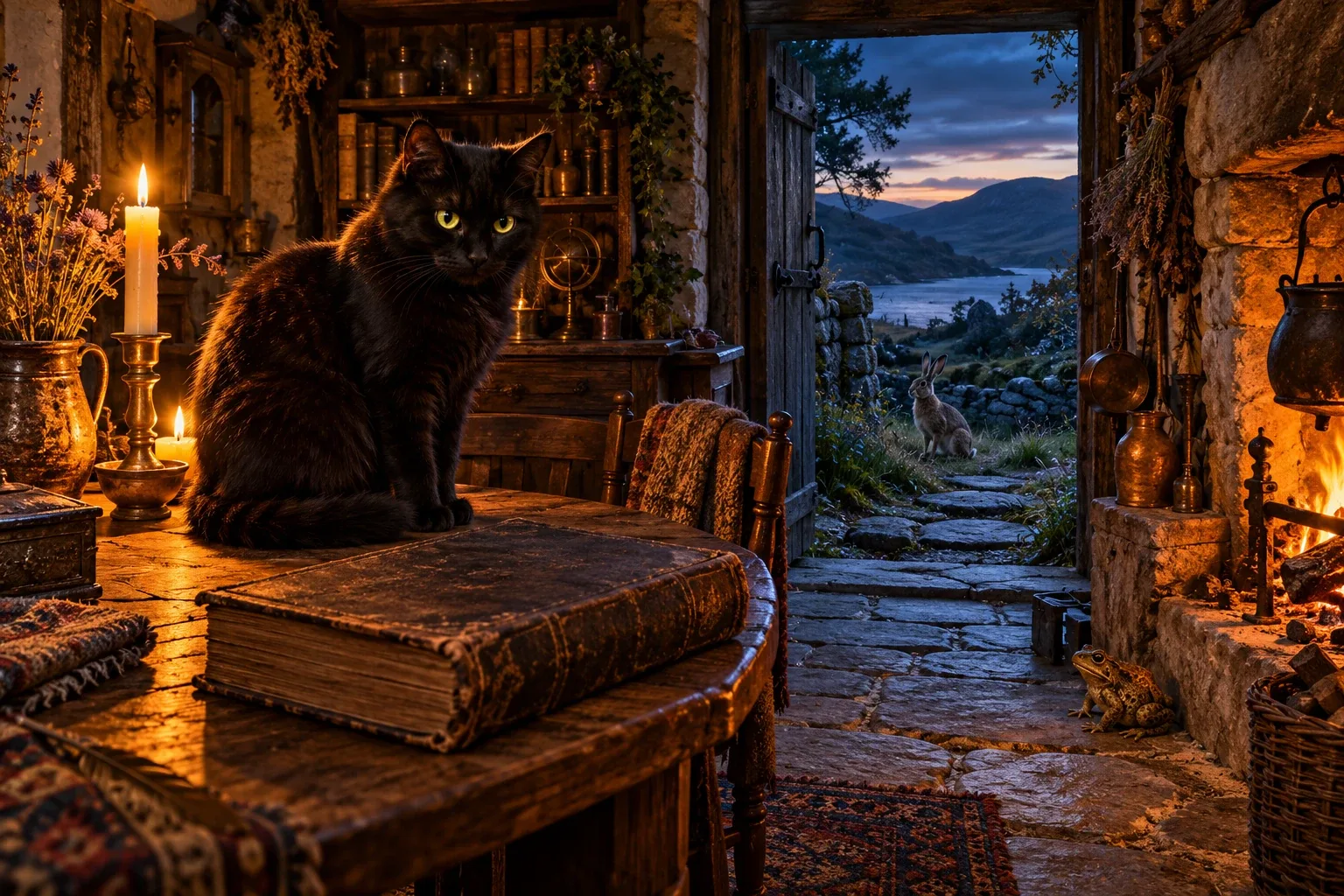
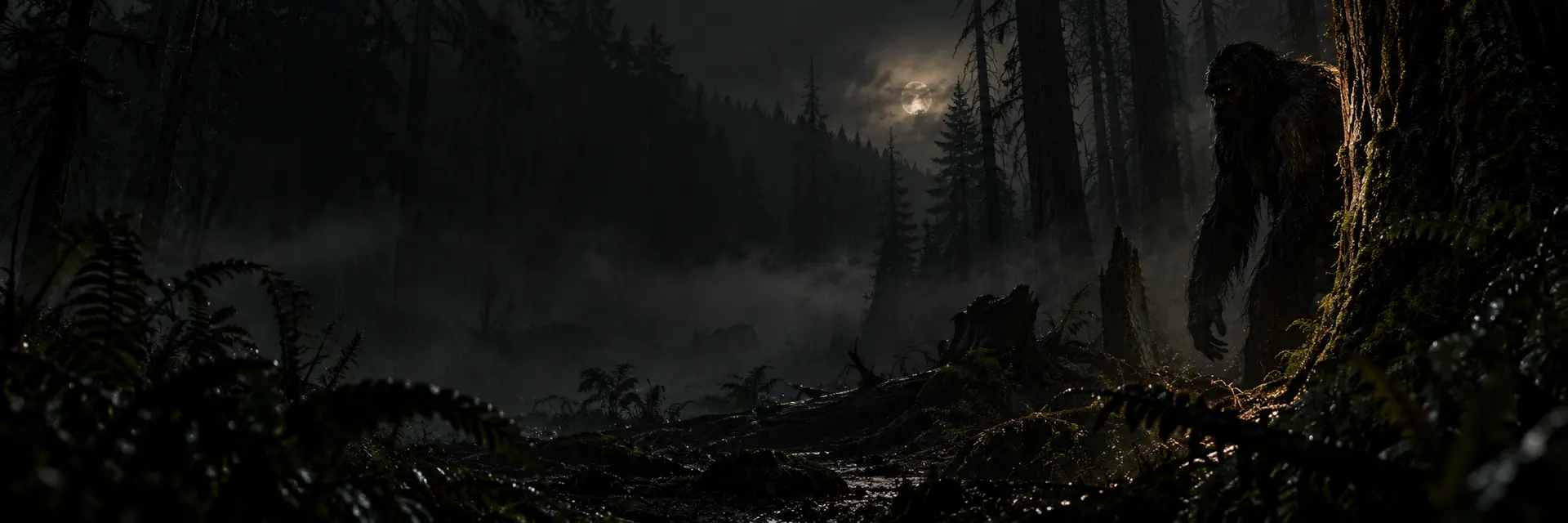
Monstrum Athenaeum · Conceptual illustration based on the reported description—not actual encounter footage.