
Cultural history Northern Arabian Peninsula / Bedouin narrative tradition
Salu'ah, the She-Wolf of Arabia
The Salu’ah of Arabian folklore can approach as an old woman before revealing a wolf-like predator. A 2016 study follows her unsettling tales.
Sign in to save stories to your shelf.
An old woman alone in the desert seems to need help. In the Salu’ah’s stories, coming closer is the mistake.
The wolf-like female figure of northern Arabian folktale can pass as a woman before revealing teeth, hair and a predator’s strength. Hanan Alazaz examines these narratives in “Salu’ah: The She-Wolf of Arabia,” published in Revenant in 2016.
Alazaz draws particularly on Fatmah Alblui’s 2011 collection of Bedouin oral tales. The Salu’ah is often dangerous to men; in the stories surveyed, women and children can prove more capable of defeating her. The study reads that reversal through the figure’s gender: a supposedly vulnerable woman becomes the being before whom a male traveler is vulnerable instead.
The stranger who understands hospitality
The disguise gives this monster a particular intimacy. She does not merely outrun a traveler. She understands the human response that might bring him within reach. A request for help can become an opening, and a familiar human shape can conceal a radically unfamiliar appetite.
Alazaz’s feminist and psychoanalytic reading is an interpretation of collected tales, rather than a single explanation imposed by their tellers. The study considers both local relationships with wolves and the circulation of transformation stories between cultures.
The Salu’ah therefore deserves more than a borrowed European costume. Her stories make their own use of the wolf, the traveler and the woman by the road. The fear begins before the teeth appear: it begins when someone decides the stranger is safe.
Sources
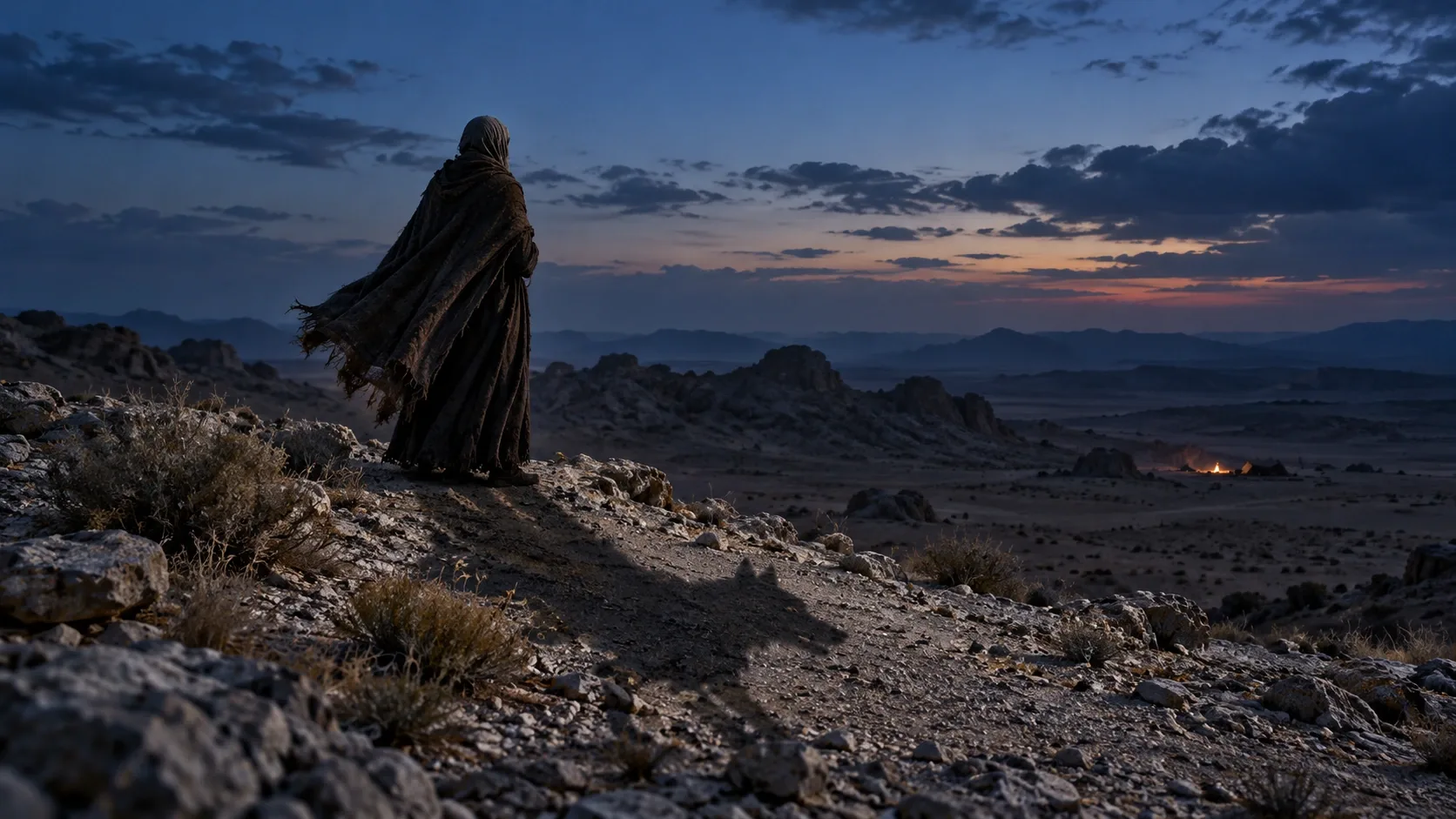
Original illustration of the folklore described in the article.