Folklore and cultural history County Meath / Boyne Valley, Ireland (sidhe mound & Samhain lore region)
Sidhe, Disguises, and Why Costumes Started as Camouflage
Halloween costumes didn’t start as fandom flex—Samhain lore says disguises hid you from the sidhe. Fairy-kidnap fear, guising, grain of salt, real links.
Sign in to save stories to your shelf.
Before costumes meant Marvel and influencers, disguise meant don’t get taken.
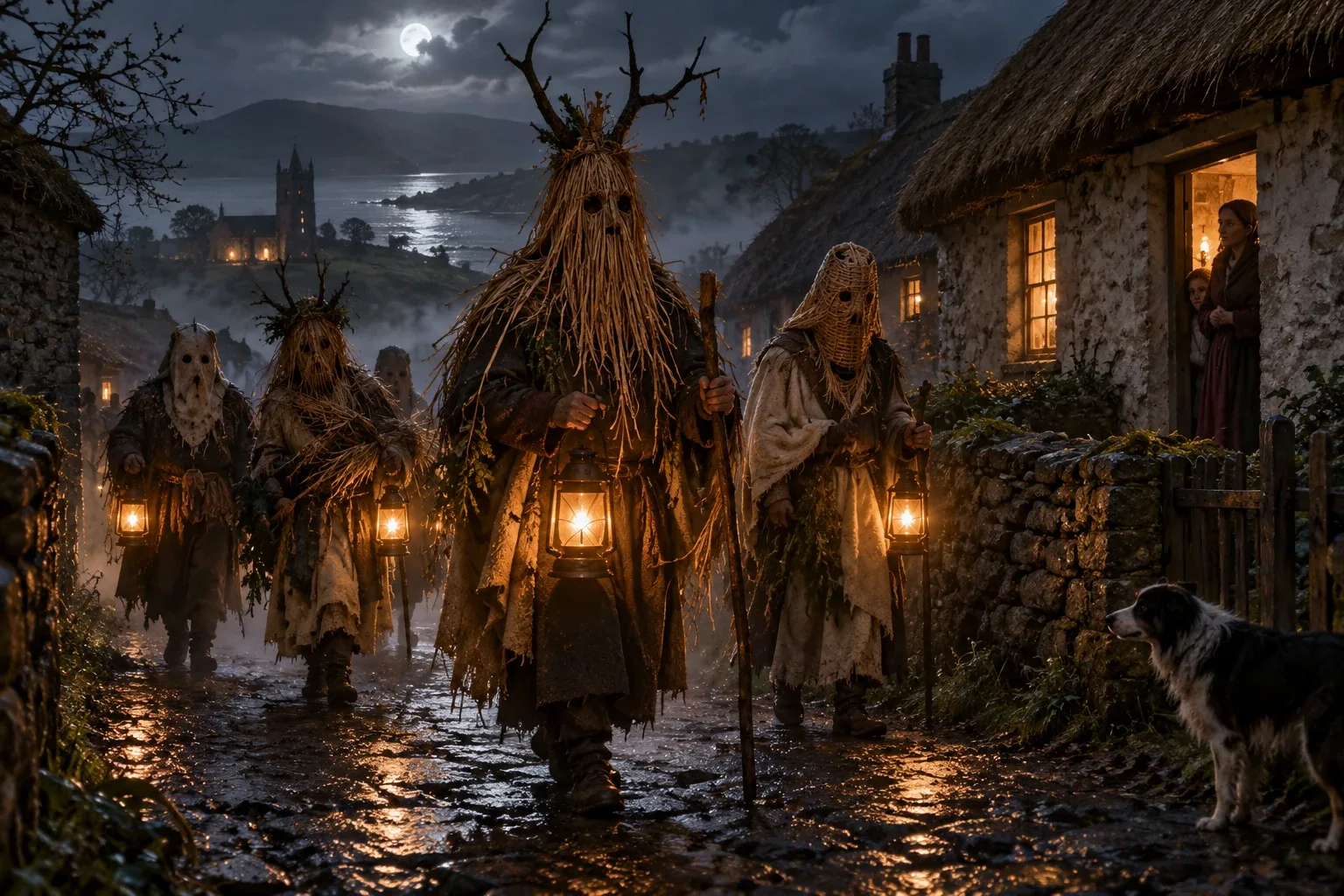
History.com’s Samhain overview states the claim bluntly: because Celts believed the barrier between worlds could be crossed, they expected ancestors — and they left offerings for fairies, or sidhe, while people dressed as animals and monsters to avoid being kidnapped by those sidhe.
Britannica’s Halloween origin notes say people wore masks and other disguises to avoid being recognized by ghosts believed present. Witches, hobgoblins, fairies, demons — the guest list writes itself.
BBC Culture ties early dressing-up rituals to spirit-season logic before Christian reframing hung saints on the same night.
That’s the seed of your Spirit Halloween run: camouflage first, content cosplay much later.
Who are the sidhe / aos sí?
In Irish tradition, the aos sí (people of the mounds / sidhe) are not glitter fairies from a cereal box. Popular and scholarly overviews (Wikipedia’s Aos Sí entry; Irish folklore syntheses) treat them as powerful Otherworld peoples associated with mounds, taboo etiquette, and dangerous generosity.
You don’t “believe in fairies” the twee way. You mind your manners around certain hills, times, and gifts — or so the stories insist.
Samhain, as a liminal hinge, is exactly when manners matter most in those stories.
Kidnap season — Sluagh, púca, and bad company
History.com’s Samhain monsters section names a roster:
- Púca — shape-shifter receiving harvest offerings
- Lady Gwyn — headless woman in white with a black pig, chasing night wanderers
- Dullahan — headless rider, death omen
- Sluagh / Faery Host — said to roam, kidnap, steal souls
Are these “cryptids” in the BFRO sense? No — and we won’t claim they caused historical events. They’re folklore threat models. They explain why a culture might invent looking like a monster as PPE.
If the Host is riding, looking human is a spotlight. Looking otherworldly is camouflage.
Guising — from ward to performance
Britannica’s trick-or-treat history calls the disguise practice guising and traces it forward into souling and eventually candy night. History.com’s Scottish/Irish guising notes add the performance-for-food layer: you don’t only hide; you enact.
That double use is very human. Protective magic becomes theater becomes door tax becomes Snickers.
Christian costume reframing
BBC Culture describes church-era pressure to incorporate saints into night-warding display — dress the season in holy armor against sprites. Allhallowtide pageants could costume angels and demons without admitting fairy politics.
Result: Halloween inherits both stacks — saint/devil play and older blend-with-spirits logic — then American pop culture forgets why the mask was ever anything but fun.
What modern costume culture erased
- Older claim: Don’t be recognized by ghosts/sidhe
Modern default: Be recognized as a franchise - Older claim: Offerings to buy safety
Modern default: Candy as child tribute - Older claim: Mimic the threat
Modern default: Mock the threat - Older claim: Seasonal etiquette
Modern default: Seasonal content
A cynical take: we still perform Otherworld drag once a year and call it branding.
Skeptical take: people like dressing up; folklore stuck a spooky caption under a universal urge.
Monstrum take: read both captions.
Iron, salt, turned clothes — etiquette debris
Irish fairy folklore is full of protective gossip: iron, salt, bread, turned clothing, avoiding certain routes at certain times. We’re not issuing a field manual. We’re noting that disguise sits inside a wider manners system for sharing a landscape with the aos sí — especially near mounds in places like Meath’s ritual countryside, where modern festivals still lean into púca branding (BBC Travel).
Offerings as the other half of disguise
History.com pairs costume camouflage with food left outside for the sidhe. Disguise alone is incomplete etiquette; bribery completes the set.
Modern trick-or-treat inverts the flow: living children collect tribute. Older Samhain logic, in these tellings, has householders paying out to keep trouble moving past the door.
Same porch. Different payee.
Púca festival branding — folklore goes civic
BBC Travel’s Meath coverage shows towns leaning into púca and Samhain tourism — shape-shifting mischief as civic identity. That’s not proof of mounds opening. It is proof the camouflage-and-fairy narrative still sells tickets.
When a county markets itself as Halloween’s birthplace, disguise lore becomes economic infrastructure.
Why cryptid readers should care
Sidhe stories sit next door to cryptid storytelling: liminal beings, bad timing, rural coordinates, etiquette for not getting got. The difference is genre packaging. Fairies got literature departments; cryptids got forums. Samhain is one of the nights both crowds still feel in their teeth.
No, the sidhe did not “cause” a documented historical disaster in this article. Yes, the kidnap-fear model explains costume origins better than “because parties.”
Camouflage thesis in one breath
If the Otherworld can draft you, don’t look draftable.
Wear the night’s face. Leave the tax. Survive until Beltane’s fire.
That’s the folklore briefing Halloween watered down into polyester — and somehow the shiver still makes it through the fabric.
Bottom line
Costumes started as camouflage because Samhain stories said the sidhe and the dead could see you clear as day.
History.com, Britannica, and BBC Culture all keep some version of that disguise claim in the public record. Candy-night America kept the mask and lost the mission briefing.
Wear what you want on October 31. Just know the older rationale wasn’t “express yourself.” It was “don’t get collected.” The fairy host, in these tellings, never cared about your brand fandom.
Attribution / sources
- Claim element: Sidhe offerings; dress as animals/monsters to avoid kidnap; named Samhain beings
Attribution: HISTORY.com Samhain
Link: history.com/articles/samhain - Claim element: Masks/disguises vs ghosts; fairy associations
Attribution: Britannica Halloween / origins
Link: britannica.com/topic/Halloween; britannica.com/topic/Where-did-Halloween-come-from - Claim element: Guising → later door customs
Attribution: Britannica History of Trick-or-Treating
Link: britannica.com/topic/History-of-Trick-or-Treating - Claim element: Early dressing-up / Christian reframing
Attribution: BBC Culture Samhain to Soulmass
Link: bbc.com/culture/article/20241030-samhain-to-soulmass-the-pagan-origins-of-familiar-halloween-rituals - Claim element: Aos sí overview
Attribution: Wikipedia Aos Sí
Link: en.wikipedia.org/wiki/Aos_Sí - Claim element: Meath / púca festival cultural echo
Attribution: BBC Travel Meath Halloween
Link: bbc.com/travel/article/20241030-meath-county-the-birthplace-of-halloween-in-ireland
Protective footer
This article is entertainment and folklore commentary for a mature audience. It summarizes publicly available claims about sidhe/aos sí lore and Samhain disguise customs. It is not historical proof of fairies, nor occult instruction. No ritual recipes or “protection procedures” are provided. Folklore should be taken with a grain of salt. Links are for attribution and verification.
Dramatic recreation — Monstrum Athenaeum