Folklore and cultural history Rathcroghan / Cruachan (Oweynagat, “Cave of the Cats”), near Tulsk, County Roscommon, Ireland; secondary Ossory (historic kingdom covering much of mod
Werewolves at the Threshold: Samhain Wolf Lore from Cruachan (Not a How-To)
Irish Samhain lore put wolves at Cruachan’s cave and cursed Ossory. Folklore claims, harp tricks, and grain-of-salt history — not a transformation guide.
Sign in to save stories to your shelf.
Halloween wants Lon Chaney moonlight and latex fangs.
Irish tradition wants something older, colder, and weirder: wolves at the threshold when the year turns.
According to medieval Irish storytelling, Samhain was not just candy season. It was the night the Otherworld leaked. And at Cruachan — the ancient royal complex now mapped as Rathcroghan in County Roscommon — the leak had teeth.
Grain of salt, always. These are stories scholars and folklorists discuss, not field manuals. This is here for the intrigue, not the cosplay recipe book.
If you only know werewolves from Universal sets and teen soaps, Cruachan will rewire you. The threat is seasonal. The cave has a name. The music is a weapon. The moral of the story is rarely “find yourself.” It is “the flocks are gone again, and the hill is laughing.”
Cruachan: where the cave breathes wolves
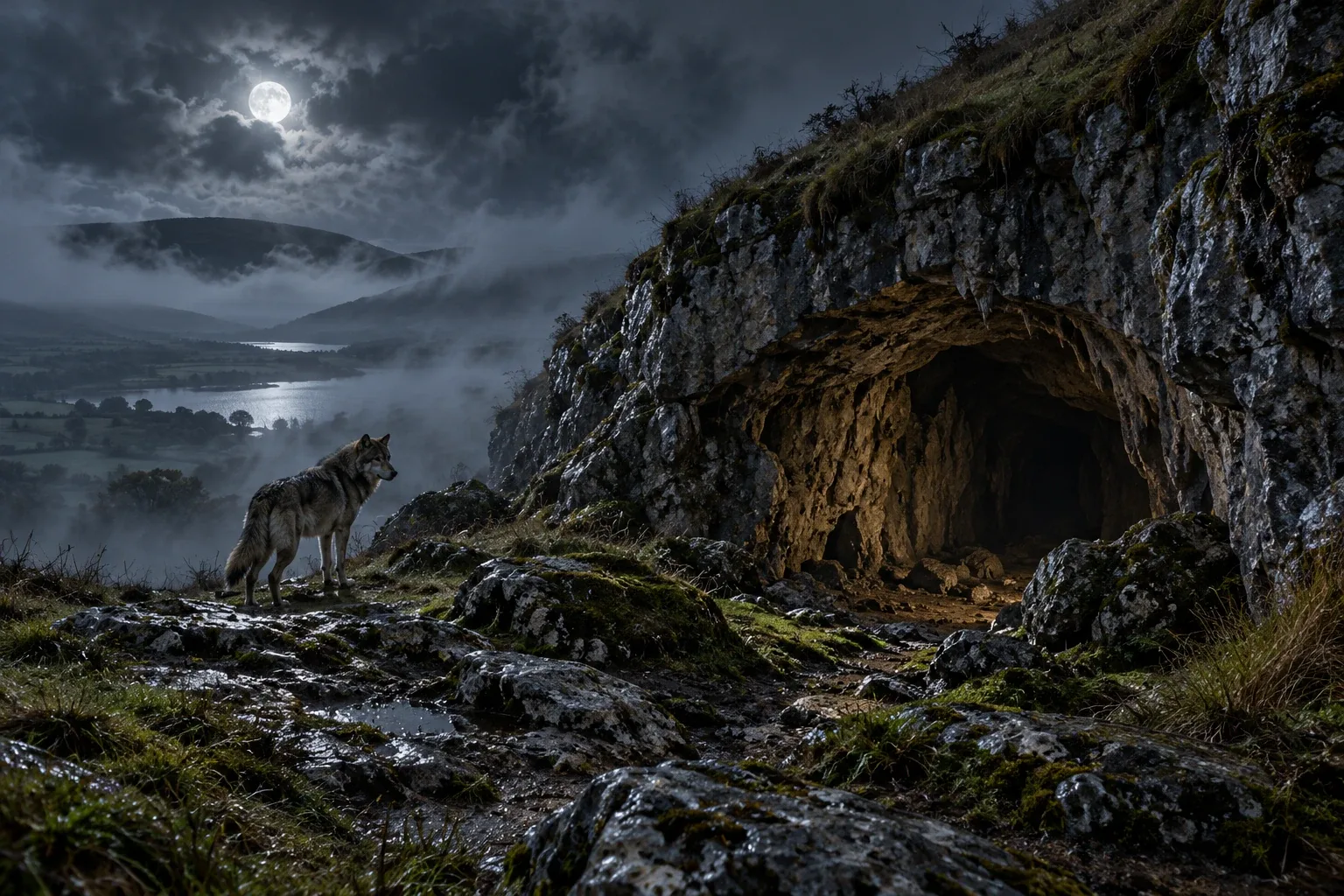
Oweynagat — the Cave of the Cats — sits in the Rathcroghan landscape like a throat into the sidhe. Modern guides and heritage interpreters treat it as a Samhain-associated Otherworld gateway: the kind of place medieval poets used when they wanted the veil to rip on cue.
In Fenian lore retold through later manuscript tradition, the steward of the land complains of a seasonal horror. Every year around Samhain time, three she-wolves emerge from the Cave of Cruachan and wreck the flocks. According to the tale cycle summarized in popular Irish myth retellings (and traced in Fenian narrative material), they are not ordinary predators. They are the daughters of Airitech — Otherworld women who find robbery easier in wolf-shape than in human skin.
That detail matters for Halloween brains. The story does not claim a lonely farmer “becomes” a wolf with a DIY kit. It claims the sidhe already know how, and they use Samhain logistics like a seasonal raid calendar.
A digression: maybe the tale encodes real winter livestock panic dressed as fairy politics. Maybe it encodes warrior-band wolf symbolism. Maybe it’s just a killer campfire beat. Scholars argue; the sheep stay dead either way.
The harp trick (and why this is still not a how-to)
According to the Cruachan wolf-women episode, music is the lure. A harper — Cas Corach in the versions that name him — plays until the wolves draw near. The claim in the story is that if they were ever women, they would rather listen as women. When they resume human form to hear the music, the Fianna warrior Caílte strikes.
Romantic? Not really. It’s a hunting story wearing a fairy mask.
What it is not: instructions. No ointments. No “try this at home.” No blood-pact checklist. The narrative’s “method” is Otherworld deception + spear, which is useless to anyone who is not a legendary warrior with a sidhe soundtrack.
If someone on the internet tries to sell you Cruachan cosplay as a lifestyle plan, that person is monetizing fog. We decline.
Ossory’s cursed wolves: the other Irish lane
Irish werewolf interest does not stop at Cruachan. The Werewolves of Ossory — a medieval legend cluster covering much of what is now Kilkenny and Laois — appear in Irish name-lore and, most famously, in Gerald of Wales’s twelfth-century Topographia Hibernica.
According to Gerald’s account (as summarized by heritage interpreters and encyclopedic overviews), a priest traveling in Ireland meets a talking wolf. The wolf claims he and his wife are natives of Ossory, compelled by an old saint’s curse to spend seven years in wolf form before others take their place. The tale leans Christian: the “wolves” remain human under the skin, seeking a sacrament for a dying partner.
Kilkenny Castle’s public heritage note puts the warrior angle beside the curse angle: early Irish literature often compared raiders to wolves; “going wolfing” and wolf-skin imagery may sit behind the legend’s bones.
Again: claims in sources, not lab results. Gerald was a clerical traveler writing for an Anglo-Norman audience. Take the exotic Ireland brochure energy into account.
Samhain, thresholds, and why Halloween still howls
Samhain folklore — as Britannica, History.com, and BBC Culture all circle in different words — treats late October as a boundary night: harvest over, dark half beginning, spirits and sidhe more free to walk.
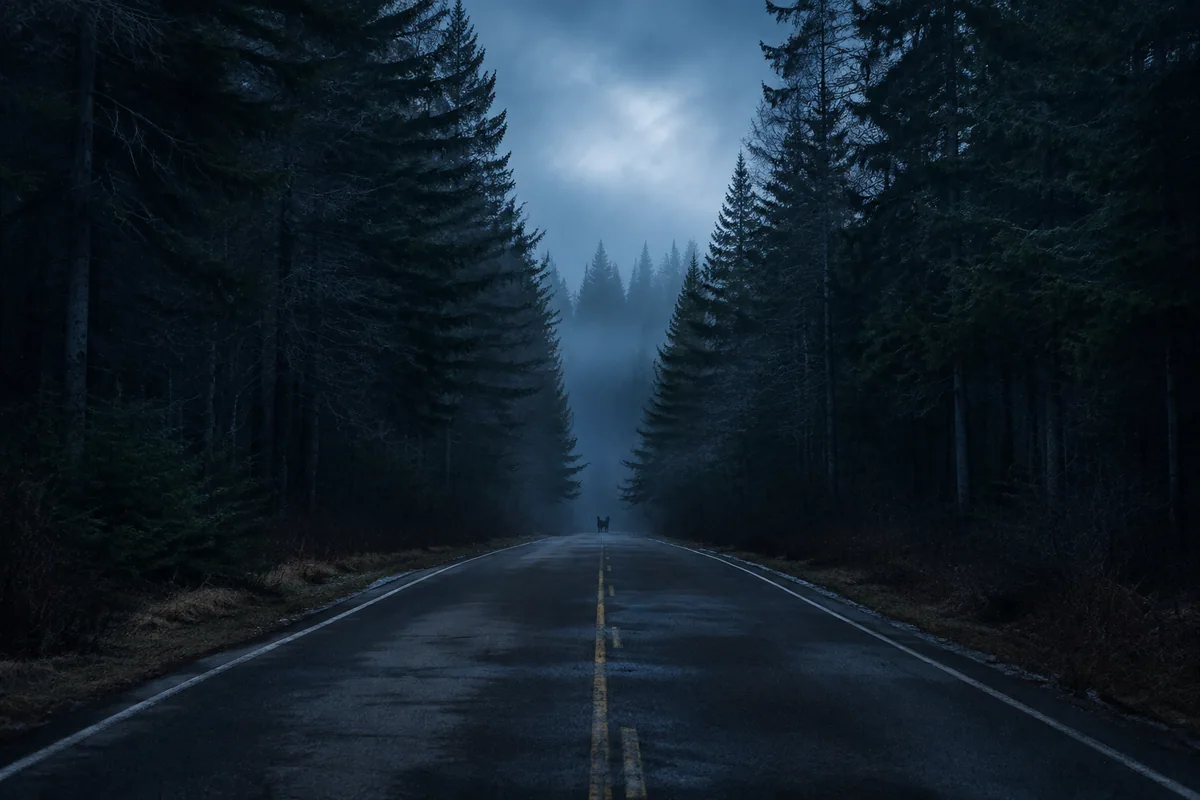
Werewolf stories fit that weather system. Wolves are liminal animals in European imagination: forest edge, flock edge, village edge. Put them on Samhain and you get a holiday icon that predates Universal Pictures by a millennium.
Modern Halloween “werewolf” culture is mostly movies and costumes. Fine. The Irish tradition offers something juicier: fairy-raid wolves, cursed pilgrims in pelts, and a cave that tourism boards still treat with Otherworld side-eye.
A summary you can take to the porch: Ireland did not invent Lon Chaney. It invented seasonal predation with a harp soundtrack and then baptized the panic with saints and seven-year sentences.
What this page refuses to do
- No “how to become a werewolf” steps.
- No psychoactive folklore recipes presented as usable.
- No animal-product or blood instructions.
- No encouragement to harm wildlife, livestock, or yourself.
We archive what legends claimed. We do not workshop them into lifestyle content.
American cryptozoology — Dogman triangles, hotline chaos, Bray Road cousins — is a different story. This one stays in the Gaelic threshold fog where it belongs.
Wolf warriors, “faoladh,” and the metaphor problem
Irish tradition also preserves a warrior-wolf register that scholars keep arguing about: men compared to wolves, luchthonn (“wolf-skin”) imagery, and the adjective-energy of “going wolfing” on raids. Heritage notes tied to Ossory often float this as a possible social root under later curse legends — raiders mythologized into shapeshifters.
Is every wolf metaphor a werewolf? No. That would make half of epic literature a Monster Manual.
But Halloween readers should hear the tension: sometimes the “werewolf” is a fairy raid; sometimes a saint’s curse; sometimes a poetic way to say these fighters scared the cattle and the chroniclers. Some readers will pick one reading and tattoo it. All three stay on the table here, labeled as claims.
Threshold nights vs. full-moon Hollywood
Modern pop lycanthropy sold the full moon as a hard rule. Medieval Irish material in these lanes is more interested in calendar festivals, curses, and Otherworld logistics than lunar HR policy. Gervase of Tilbury and later continental lore play with moon motifs elsewhere in Europe; Cruachan’s episode is a Samhain livestock heist story first.
Translation: if you arrived via Wolf Man posters, Irish Samhain wolf lore will feel like a different film genre — less silver-bullet melodrama, more sidhe special ops.
Why this still matters in October
Because the werewolf is October’s civilian on-ramp. Some readers bounce to Dogman triangles and trail-cam arguments. Some stay in folklore.
What we refuse is the funnel that turns a Fenian spear episode into a dangerous how-to. The archive exists to say: here is what people claimed; here is who wrote it down; here is why you should not try to reinvent it in a basement.
Bottom line
Cruachan’s Samhain wolves and Ossory’s cursed pair are folklore pressure systems, not species reports. According to the stories, the Otherworld already had the keys. According to historians, wolf-warrior metaphor and medieval travel writing did a lot of the heavy lifting.
Believe the vibe. Verify the citations. Leave the cave alone unless a legitimate guide says otherwise.
The howl stays on the archive shelf — sensational, curious, and permanently salted.
Sources
- Claim / topic: Samhain as Celtic festival / Halloween root framing
Attribution: Britannica — Samhain
URL: https://www.britannica.com/topic/Samhain - Claim / topic: Halloween / Samhain / Allhallowtide overview
Attribution: HISTORY.com Editors — History of Halloween
URL: https://www.history.com/articles/history-of-halloween - Claim / topic: Punkie Night / fire customs / Samhain ritual context (UK echo)
Attribution: BBC Culture — Samhain to Soulmass (Beverley D’Silva, 31 Oct 2024)
URL: https://www.bbc.com/culture/article/20241030-samhain-to-soulmass-the-pagan-origins-of-familiar-halloween-rituals - Claim / topic: Ossory werewolf legend summary (Gerald of Wales; warrior-wolf context)
Attribution: Kilkenny Castle — The Ossory Werewolves
URL: https://www.kilkennycastle.ie/the-ossory-werewolves/ - Claim / topic: Ossory werewolves overview (Cóir Anmann; Topographia Hibernica)
Attribution: Wikipedia — Werewolves of Ossory (secondary overview; verify against primary)
URL: https://en.wikipedia.org/wiki/Werewolves_of_Ossory - Claim / topic: Cruachan / Fenian wolf-women episode (popular myth retelling)
Attribution: Shee-Eire — The Cave of Cruachan (Fenian narrative retelling)
URL: http://www.shee-eire.com/Magic&Mythology/Myths/FinnMacCool/The-Cave-Of-Cruachan/cavecruachan.htm - Claim / topic: Rathcroghan / Oweynagat visitor & folklore framing
Attribution: Tuatha — Oweynagat Cave
URL: https://www.tuatha.ie/oweynagat-cave/
Protective footer
This article summarizes publicly available folklore, heritage interpretation, and secondary scholarship for news, commentary, and criticism. Descriptions of werewolves, curses, Otherworld beings, and Samhain rites are attributed to named sources and are not presented as verified natural history or as instructions. Monstrum Athenaeum does not provide rituals, recipes, or methods claimed to cause transformation. Do not trespass on private farmland at Rathcroghan/Oweynagat; follow official visitor guidance. Links are for attribution and reader verification. MonstrumAthenaeum.org is intended for mature audiences and does not claim scientific confirmation of any cryptid or supernatural being’s existence.
Dramatic recreation — Monstrum Athenaeum