
Folklore and cultural history Roman Britain / British Isles Halloween party tradition (popular Pomona–Samhain blend narrative); secondary Rome as Pomona cult geography
Bobbing for Apples: Pomona, Marriage Omens, and Sticky Romance
Why Halloween parties still dunk for apples: Roman Pomona lore, marriage omens, and sticky romance — History, Almanac, and a grain of salt.
Sign in to save stories to your shelf.
Before candy buckets, there was a tub.
Before the tub, there was an omen industry dressed as a party game.
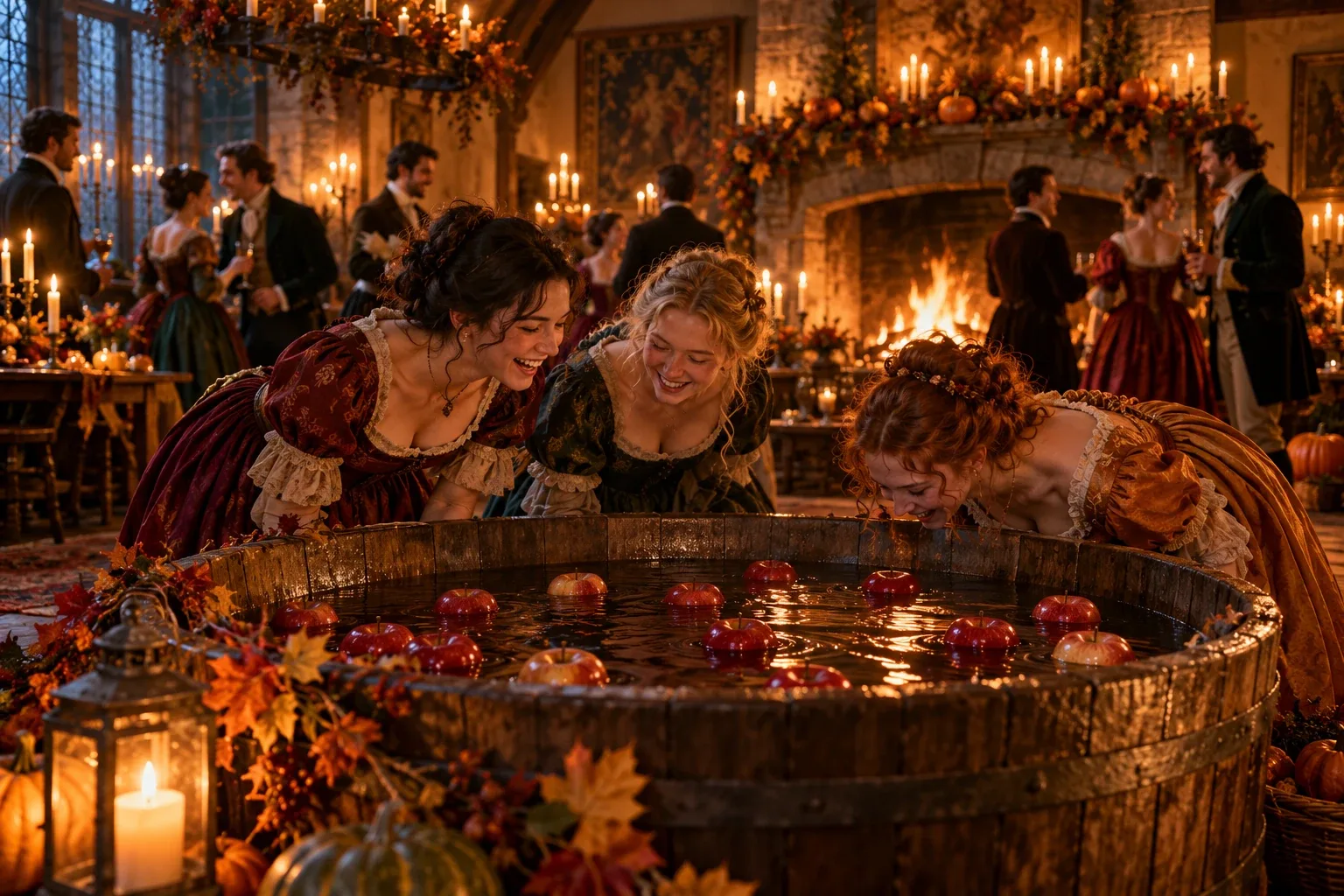
Bobbing for apples — face in water, hands banned, teeth hunting a floating fruit — still shows up at classroom Halloweens and ironic adult bashes. According to mainstream holiday histories, the sticky romance is the point: catch the apple, catch a wedding timeline. Or at least catch a story you can tell while your mascara dies for art.
Halloween has always been half death festival, half matchmaking with snacks. Grain of salt: your dental work did not consent.
The Pomona pitch (popular history’s favorite braid)
HISTORY.com’s Halloween overview says that after Rome conquered Celtic lands, Roman commemorations mixed with Samhain. One strand honors Pomona, goddess of fruit and trees; her symbol is the apple. HISTORY suggests that braid likely explains apple bobbing’s Halloween career.
The Old Farmer’s Almanac repeats the party-line omen: Romans (in this telling) held that the first person to catch a bobbing apple with their teeth would marry first in the new year. Almanac also keeps the apple-peel trick — peel in one strip, toss over the shoulder, read the initial of your true love like fruit-based runes.
BBC Culture’s 2024 Samhain feature notes historian Lisa Morton dating apple bobbing imagery at least to the fourteenth-century Luttrell Psalter, and floats the Roman-apple / Pomona romance argument as one origin lane among others.
A skeptical murmur: some online historians side-eye a tidy “November Pomona festival” as too neat. Fair. Popular Halloween writing loves clean merges. Archaeology and calendar studies are messier. That’s the standard explainer, and it shouldn’t be tattooed as gospel.
How the omen game worked (as claimed)
According to the BBC Culture summary of the romance versions: a bobber might aim for an apple marked with a suitor’s name. First bite = destined love; second try = rocky start; third = save your dignity and dry off.
HISTORY adds the competitive party note: at some gatherings, the first successful apple-bobber was said to be next down the aisle. Same energy as chestnut hunts and hazelnut fireplace trials — autumn as a low-tech dating algorithm.
None of this is science. All of it is socially useful when you need an excuse to get close to someone without inventing small talk.
Why it survived into candy season
Apples were seasonal, cheap, and symbolic. Water made it a spectacle. Marriage anxiety made it viral before virality. When American Halloween shifted toward children and candy in the twentieth century, bobbing lingered as retro texture — less common than trick-or-treat, still legible as “old Halloween.”
Samhain’s deeper weather was death and winter. Apple bobbing is the holiday’s flirty subplot. Both can share a night. Humans contain multitudes and wet hair.
From Roman fruit goddess to classroom tub
Even if the “Pomona festival on November 1” tidy merge is more journalism than ironclad ritual calendar, the cultural function holds: autumn fruit + water game + marriage gossip = durable Halloween software. HISTORY’s matchmaking section piles on sister rites — hazelnuts in fireplaces, egg yolks in bowls, mirrors and candles — proof that romance anxiety once rivaled ghost anxiety for October mindshare.
American candy Halloween sidelined many of those rites. Bobbing survived because it is photogenic, communal, and slightly humiliating in a festive way. Humiliation, historically, is excellent social glue.
Monstrum’s salted party note
If you run the tub: hygiene matters, allergies matter, and nobody’s engagement should depend on a McIntosh. The folklore is the flirtation with fate. The reality is a wet shirt and a story. Keep both. Invent neither a sacred Pomona liturgy nor a fake “ancient Celtic bobbing law.”
Bottom line
Bobbing for apples is less about fruit athletics than about autumn divination wearing a party hat. Popular sources braid it to Pomona and Roman-Celtic cultural mashup; manuscript art shows the dunk game centuries ago; marriage omens did the rest.
Try it if you want tradition theater. Believe the wedding prophecy only if you also believe peel letters are a postal service. Monstrum’s position: charming, sticky, salted.
Sources
- Claim / topic: Pomona / apple bobbing link; Halloween matchmaking games
Attribution: HISTORY.com Editors — History of Halloween
URL: https://www.history.com/articles/history-of-halloween - Claim / topic: Pomona festival bobbing omen; apple-peel love charm
Attribution: Old Farmer’s Almanac — Origins of Halloween Traditions
URL: https://www.almanac.com/origins-halloween-traditions - Claim / topic: Luttrell Psalter dating; Pomona romance variants
Attribution: BBC Culture — Samhain to Soulmass (31 Oct 2024)
URL: https://www.bbc.com/culture/article/20241030-samhain-to-soulmass-the-pagan-origins-of-familiar-halloween-rituals
Protective footer
This article summarizes publicly available holiday-history explainers for seasonal education and commentary. Folk marriage omens are cultural claims, not predictions. Apple bobbing can pose choking or hygiene risks; participate at your own judgment. Monstrum Athenaeum links out for attribution. MonstrumAthenaeum.org is for mature audiences.
Dramatic recreation — Monstrum Athenaeum