Science feature United States and Canada (continental statistical model; not a single site)
If Bigfoot's There, Could It Be a Bear? What Foxon's 2024 Study Actually Measured
Floe Foxon's Journal of Zoology study links sasquatch reports to black bear numbers — about 4% more sightings per 1,000 bears. It's a continental correlation, not a Class A kill shot, and it doesn't erase daylight encounters.
Sign in to save stories to your shelf.
Timeline: this is a science dossier. The study it examines — Floe Foxon's "Bigfoot: If it's there, could it be a bear?" — was published online in the Journal of Zoology on Jan. 13, 2024, and built on black bear population figures from 2006 matched against a growing sightings database. Monstrum Athenaeum is summarizing and contextualizing that peer-reviewed work, not conducting it.
Somewhere between the trail-cam still that won't sit still and the skeptic who calls every upright shape a bruin, there is a spreadsheet.
In January 2024, Journal of Zoology published a peer-reviewed paper by Floe Foxon with a title that sounds like a dare and reads like a methods abstract: Bigfoot: If it's there, could it be a bear?. The short version that hit science desks — including Ars Technica's write-up by John Timmer — is this: after you adjust for how many people live somewhere and how much forest that somewhere has, sasquatch report counts still track American black bear (Ursus americanus) population estimates.
Not "Bigfoot is canceled." Not "every BFRO Class A is a cinnamon-phase sow on hind legs." A continental association, with confidence intervals, built on 2006 bear numbers and a geo-tagged sightings database. The line Foxon lands is the one you will see everywhere: "If bigfoot is there, it could be a bear."
Monstrum Athenaeum is conspiracy-curious and stats-honest. Those are not opposites. Hold the finding. Hold the caveats. Hold the daytime walkers the model never filmed.
What Foxon measured (and what the model is not)
According to the published abstract and the earlier bioRxiv preprint (v4), the research question is blunt: could black bears explain a significant number of purported North American "unknown hominid" sightings?
Prior work, Foxon notes, had already sniffed a correlation in the Pacific Northwest using ecological niche models and simpler expected-sightings math. This paper widens the map to the United States and Canada, modeling sasquatch sightings against bear populations by state and province (37 U.S. states and 7 Canadian provinces), while adjusting for human population and forest / natural area in a generalized linear model.
Sightings came from the Bigfoot Field Researchers Organization's geographic database. Bear population numbers leaned on the most recent comprehensive peer-reviewed continental snapshot available for the design — 2006. Census data supplied humans. Government estimates supplied forested area.
Two model flavors: one without a bear term, one with it. The version that included black bear population fit the data better. That is the scientific claim on the table — not a midnight ambush on your favorite witness.
Important: this is not an encounter-site investigation. There is no single ridge, no single Class A GPS pin, no chain-of-custody on a hair. Geography for this dossier is the continental model. It is not a place you drive to "find the study's Bigfoot."
The 4% / 1,000-bears hook — read it like an adult
Here is the number that launched a thousand comment wars, from the preprint abstract that matches the published paper's claim pattern:
On average, every +1,000 black bears in the modeled bear population is associated with a ~4% increase in sasquatch sightings (95% CI: 1%–7%), after controlling for human population and forest area.
And the rate line: across states and provinces in the 2006 data, after those same controls, there is roughly ~5,000 bears per sasquatch sighting on average.
Say those numbers out loud the way a science desk should:
- Associated with ≠ caused by.
- ~4% per thousand bears is a model coefficient with a confidence interval that does not include zero in the reported band — it does not say "four out of every hundred reports are bears" in the folk-math sense people invent in threads.
- ~5,000 bears per sighting is an average continental ratio under controls, not a coupon that redeems one bruin for every report in your county.
The association is real enough to publish in Journal of Zoology. It is not a warrant to retroactively reassign every upright silhouette in the BFRO database to Ursus.
Correlation is a flashlight. It is not a confession booth.
Methods caveats the honest desk will not sand off
There is an exclusion list, and you should read it before you meme the title.
No known black bear populations in 2006 in a number of states (Delaware, Hawaii, Illinois, Indiana, Iowa, Kansas, Nebraska, the Dakotas, among others). Missing usable population numbers for places including Rhode Island, Texas, Wisconsin, Wyoming, Alberta, Newfoundland and Labrador, the Northwest Territories, and Nova Scotia. The continental frame is wider than a PNW-only niche paper. It is not a complete census of every jurisdiction's bruins.
Foxon also flags that some states without a known breeding bear population still log Bigfoot sightings. That alone should stop anyone from claiming the model "explains everything." Human population can raise opportunity (more eyes) and contribute to other misidentifications — not only bears.
Data vintage matters. 2006 bear estimates vs. a sightings database that keeps growing is a temporal mismatch you can feel in your teeth. Forests change. Bear recoveries and recolonizations since the mid-2000s are not a secret. Sighting culture, smartphone cameras, and report incentives are not frozen in amber either. A model can adjust for the covariates you give it. It cannot invent the covariates you wish you had.
And BFRO's database is reports, not verified species events. Class labels, investigator notes, and "clear look" judgments are research-community tools — valuable, contested, human. A continental regression on report counts is a study of what people file where, entangled with ecology. Anyone who pretends otherwise is selling a simpler world than the woods.
The paper even floats a conservation twist: if sightings partly track bears, folklore density might someday serve as a rough proxy for bear presence where formal surveys are thin. That is an idea, not a wildlife-agency procedure. File it under "interesting." Do not file it under "we replaced radio collars with forum comments."
What believers say the model misses (and why that is not a strawman)
Believer and field-researcher pushback, in good faith, usually lands on the same nails:
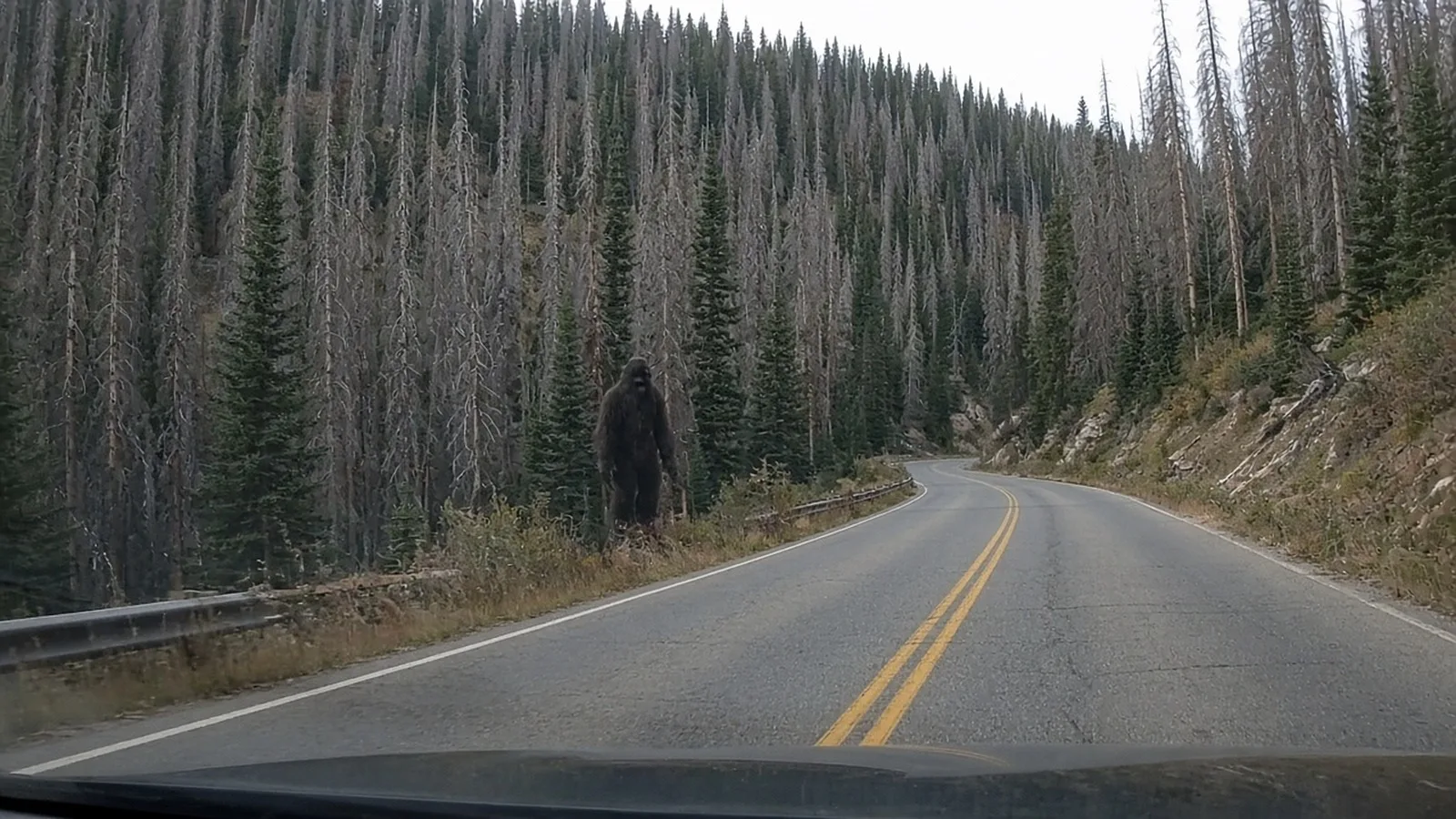
1. Daylight Class A bipeds. A witness who claims a 7–9-foot gliding walker on a cleared highway strip in full afternoon light — the kind of daytime Colorado Class A report also circulating this season — is not the same data type as a state-year count. Foxon's model does not watch one witness's spruce ruler. It never claimed to.
2. Trail-cam stills and multi-camera lines of travel. Claims like the daytime remote-cabin dual-cam packages or the Humboldt night-IR follow-up story live or die on pixels, timestamps, chain of custody, and morphology — not on whether a state's bear estimate and its report tally move together. A continental correlation does not "erase" a frame. It also does not authenticate one. That is the whole point of keeping desks separate: ecology model vs. media forensics.
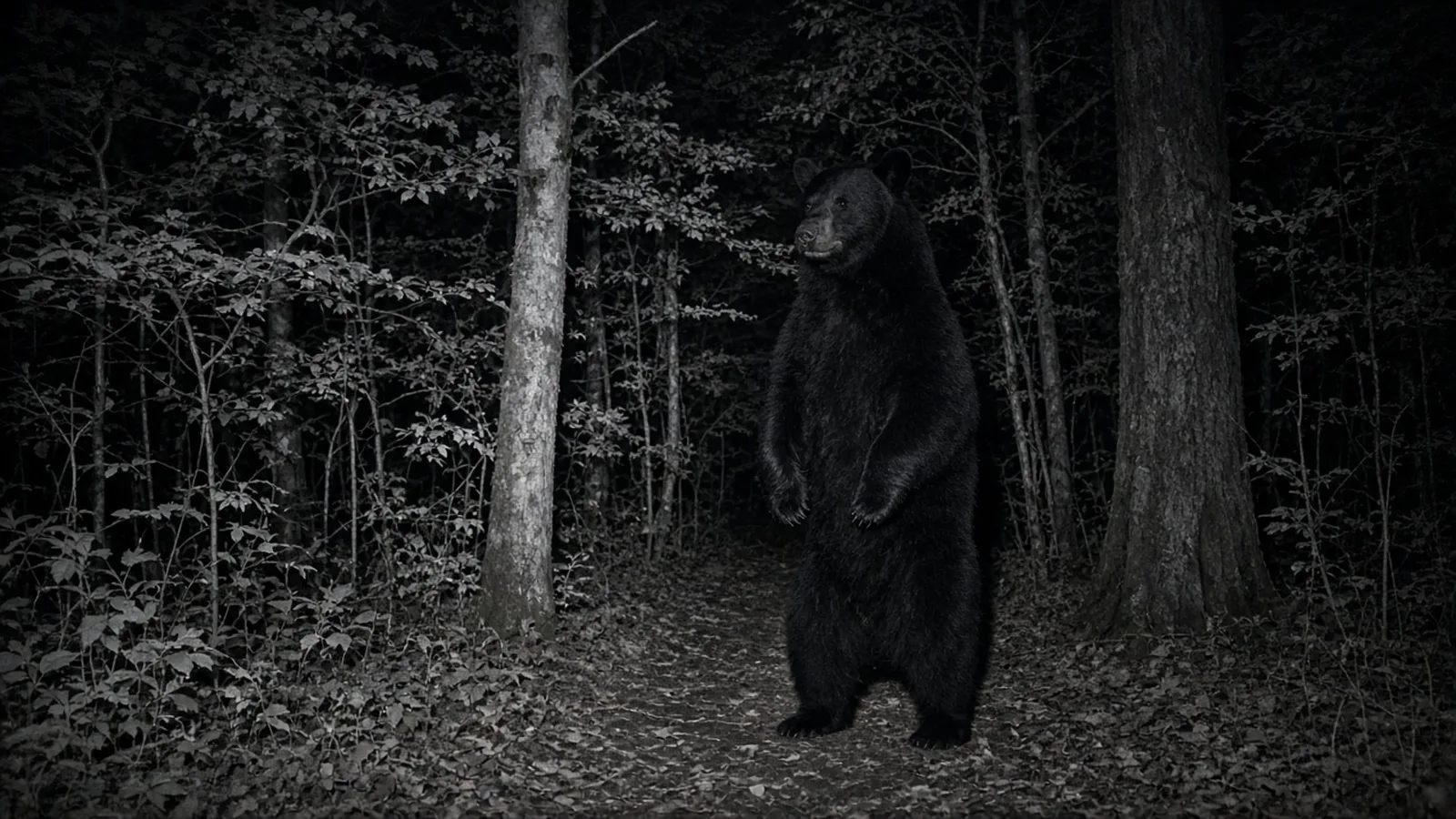
3. Hind-leg bears are real — and still not every gait. Black bears stand. They color-morph. They use forest edges. Foxon leans on that misID pathway, and any honest cryptid desk has eaten that meal for decades. Believers answer: sustained bipedal travel, shoulder-set heads, unusual reported trackways, and mid-stride dynamics that do not match Ursus when the look is long and the light is good. Sometimes that answer is wishful. Sometimes the skeptic's "always a bear" is lazy. Grain of salt both ways.
4. Absence of a body is not a regression coefficient. The paper argues many supposed sasquatch are likely misidentified known forms based on statistical considerations. That is a population-level inference. It is not a necropsy. Treating it as a species disproof is a category error.
Foxon is not the cartoon villain of the forums. The abstract does not claim every sighting is a bear. If your rebuttal needs a straw scientist who said otherwise, you are arguing with a ghost you built.
How to read 2026 camera claims after Foxon
Use the study as a prior, not a delete key.
When a 2026 clip drops — Humboldt timber, a Colorado pass in daylight, a cabin approach in sun — ask the Foxon questions and the Class A questions:
- Is the habitat also high black-bear country? If yes, raise the misID prior. Do not auto-close the case.
- Is the claim a state-aggregate vibe or a specific bipedal sequence with duration, gait, and scale references?
- Does the poster show plantigrade bear mechanics, ear shape, snout, or a clear quadrupedal drop — or are we staring at a shoulder block and vibes?
- Has anyone ruled out costume, neighbor, or edit with anything stronger than a comment-section oath?
- Are you confusing "associated with bear populations" with "this pixel is a bear"? Those sentences share a noun. They do not share a logic.
Foxon's continental map is useful precisely because it pressures the folklore where bears are dense. It is useless as a remote-control debunk of a single daytime walk you have not examined. The model does not know about your trail cam. Your trail cam does not know about a 2006 regression.
That tension is the beat. Live in it.
FAQ
Does this prove Bigfoot is a bear? No. The paper reports a significant association after adjustments and concludes many supposed sasquatch are likely misidentified known forms. "If bigfoot is there, it could be a bear" is conditional, not a species death certificate.
Does this prove Bigfoot is real? Also no. Correlation between reports and bears does not conjure an unknown primate. It constrains how we read report geography.
Why 2006? That year held the most recent comprehensive peer-reviewed black bear population data suitable for the design. Newer local estimates exist in patches; a clean continental table is harder.
What about places with Bigfoot reports and no breeding bears? Foxon notes that pattern. Those residuals matter. They are why "everything is a bear" fails as a slogan even if the average association holds.
Should I ignore Class A and trail-cam stories now? No. Read them harder. Use ecology as a prior. Demand gait, light, duration, and custody.
Bottom line
Floe Foxon's 2024 Journal of Zoology paper — DOI 10.1111/jzo.13148, preprint trail on bioRxiv — finds that after adjusting for people and forest, sasquatch sighting counts still rise with black bear numbers: on the order of ~4% more sightings per +1,000 bears (95% CI 1–7%), with roughly ~5,000 bears per sighting on average in the 2006-controlled frame.
That is a serious continental signal. It is not a night-vision autopsy. It does not delete daylight Class A claims or dual-cam cabin walks. It does not anoint every upright bear as folklore's final boss.
If Bigfoot is there, Foxon says, it could be a bear. If the next trail-cam still is a bear, say so. If it isn't, the spreadsheet will not save you — or sink you — by itself.
Sources
- Peer-reviewed paper: title, author Floe Foxon, Journal of Zoology, online Jan. 13, 2024, vol. 323 pp. 1–8; U.S./Canada GLM adjusting for human population and forest; significant association; many supposed sasquatch likely misidentified known forms; closing line "If bigfoot is there, it could be a bear." — Foxon, F. (2024), doi.org/10.1111/jzo.13148
- ~4% (95% CI 1%–7%) increase in sightings per +1,000 bears; ~5,000 bears per sighting (2006, after controls); methods framing — Foxon bioRxiv preprint (v4), biorxiv.org/content/10.1101/2023.01.14.524058v4
- Popular-science summary (PNW prior work expanded; BFRO GDB; 2006 bear data; excluded states/provinces; model-with-bears fits better; bears don't explain everything; possible conservation proxy) — John Timmer, Ars Technica, Jan. 2024, Study finds Bigfoot sightings correlate with black bear populations
- Sightings database referenced by the study — Bigfoot Field Researchers Organization, Geographic Database
This article summarizes publicly available scientific claims and news coverage for commentary and criticism. Statistical associations, confidence intervals, and conclusions are attributed to Foxon (2024) / bioRxiv preprint materials and secondary reporting and have not been independently re-analyzed by Monstrum Athenaeum unless explicitly stated. Correlation is not proof that any individual sighting is a bear, nor proof of an unknown primate. Outbound links are for attribution and reader verification. MonstrumAthenaeum.org is intended for mature audiences and does not claim scientific confirmation or disproof of Sasquatch as a biological species.
Illuminator · Conceptual illustration based on the reported description—not actual encounter footage.