Historical report Sam Houston National Forest along FM 1375 toward I-45, Montgomery County area, Texas, USA
Husband & Wife Encounter Wood Ape In Sam Houston National Forest
Did you know there’s a large bipedal creature roaming the forested areas of Arkansas, Louisiana, Oklahoma and Texas called the Wood Ape? If so, then congratulations.
Sign in to save stories to your shelf.
Did you know there’s a large bipedal creature roaming the forested areas of Arkansas, Louisiana, Oklahoma and Texas called the Wood Ape? If so, then congratulations.
Now, here’s a harder question. Did you know there’s a Wood Ape Conservancy, a group dedicated to studying a species of primate unknown to science occupying wooded parts of the US with their own website documenting sightings? Well, there is!
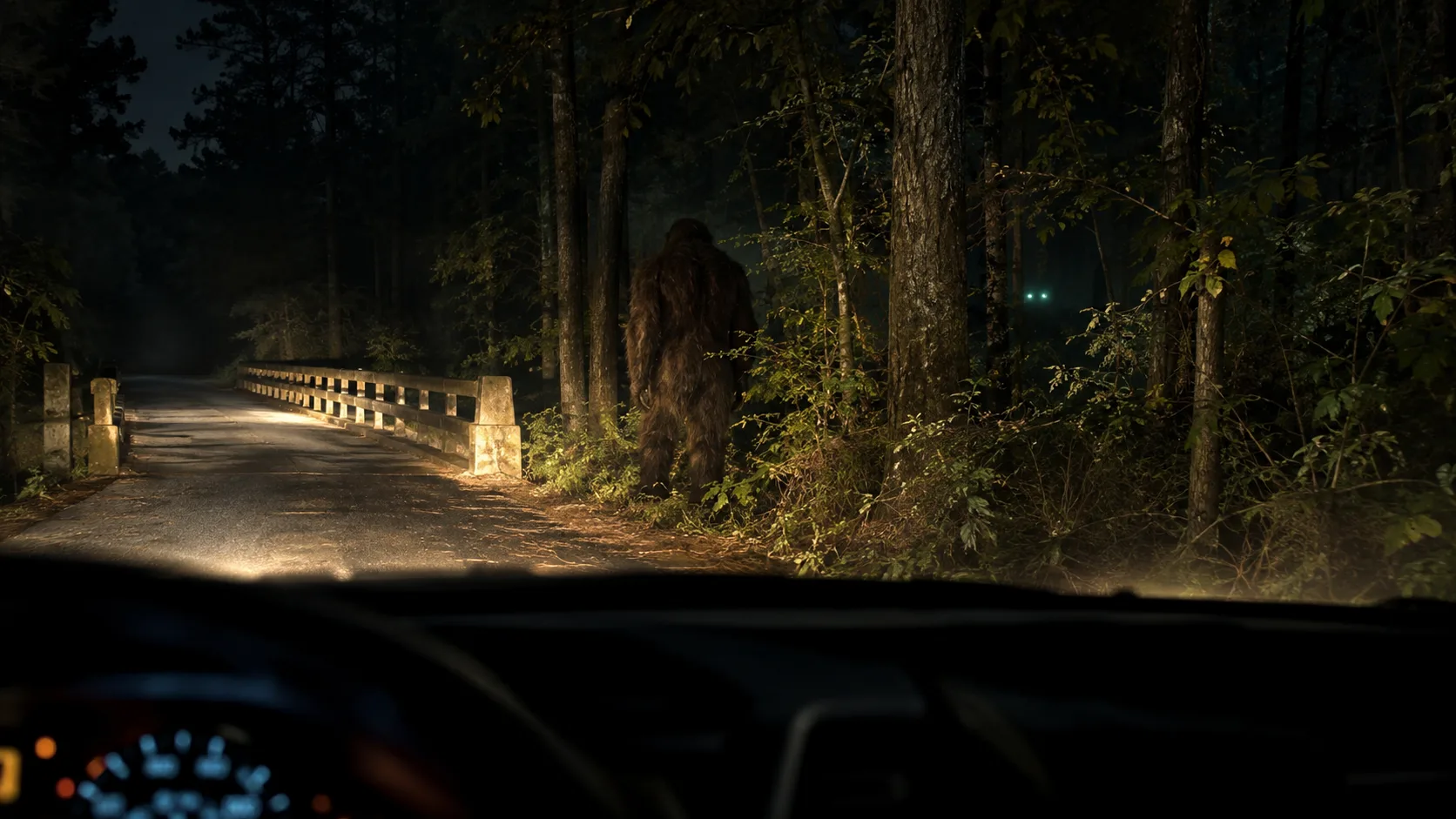
A recent sighting of the Wood Ape was reported this past January in the Sam Houston National Forest, Texas, by a man heading east along FM 1375 towards the I-45. As he drew close to the river bridge, he saw eyes flash from the woods, near the road and immediately thought it was a deer. However, he quickly realized it wasn’t
The owner of those shiners was darkly colored and stood some seven to eight feet tall. The man’s first impression was that a bear was standing on its legs, but it looked oddly human, and those eyes had a strange green-blue tint.
Not too long after that, the man’s wife called to say she had seen ‘something’ earlier along the same stretch. Although he hadn’t mentioned his encounter, his wife described a similar creature – black in color, at least seven to eight feet tall and standing with its back to her as she drove up to the bridge. She passed within around 10-15 feet of the create and was stunned by what she saw.
Original publication credit
Original title: Husband & Wife Encounter Wood Ape In Sam Houston National Forest. The preserved copy has no named writer credit. Originally published May 26, 2016.