Folklore and cultural history Ireland (Stingy Jack / turnip-lantern folk center); cultural centroid Dublin region
Why We Carve Jack-o’-Lanterns: Stingy Jack, Turnips, and the Pumpkin Upgrade
Before pumpkins, there was Stingy Jack and a cursed turnip lantern. Here’s the Irish folklore-to-American porch pipeline—sources, not campfire fluff.
Sign in to save stories to your shelf.
That grinning pumpkin on the porch isn’t cute harvest décor.
It’s a migrant.
According to History.com’s jack-o’-lantern origins feature, the carved Halloween face tradition ties back to Irish folk practice — turnips first — and to a nasty little morality play about a man nicknamed Stingy Jack. National Geographic’s transatlantic lantern history and Britannica’s jack-o’-lantern entry tell rhyming versions of the same pipeline: Old World root vegetables, a damned wanderer with a coal ember, Irish and Scottish immigrants, then the American pumpkin industrializing the glow.
Grain of salt: folktales mutate. Printed “Stingy Jack” versions surge in the nineteenth century. Will-o’-the-wisp lights had the “jack-o’-lantern” name before every porch had a gourd. Still, the claim chain is public, sticky, and better than “because Home Depot said so.”
Stingy Jack — the man heaven and hell both rejected
History.com’s oft-retold version goes like this:
Jack invites the Devil for a drink. Too cheap to pay, he talks the Devil into becoming a coin. Jack pockets the coin beside a silver cross, trapping him. Freedom costs the Devil a promise: leave Jack alone for a year, and don’t claim his soul at death. Jack tricks him again later. When Jack finally dies, heaven won’t take the scoundrel. Hell — keeping the bargain — won’t take him either. The Devil gives Jack a burning coal to light his way. Jack stubs it into a carved turnip. He walks forever. People call him Jack of the Lantern.
Britannica’s summary matches the trap-and-reprieve structure: Devil coerced twice, Jack barred from both afterlives, glowing coal in a hollowed turnip.
NatGeo notes dozens of variants and an 18th-century Irish framing of Jack as a mischievous, boozy type — often a blacksmith in popular tellings. Snopes’ folklore roundup (useful for origin hygiene) also reminds readers that “jack-o’-lantern” earlier named marsh lights / will-o’-the-wisps that led travelers astray — ghost lights before vegetable mascots.
So the carved face isn’t only “scare the kids.” In story logic, it’s a memorial to a man stuck between destinations — and a ward against him and his kind.
Turnips, beets, and the pre-pumpkin face
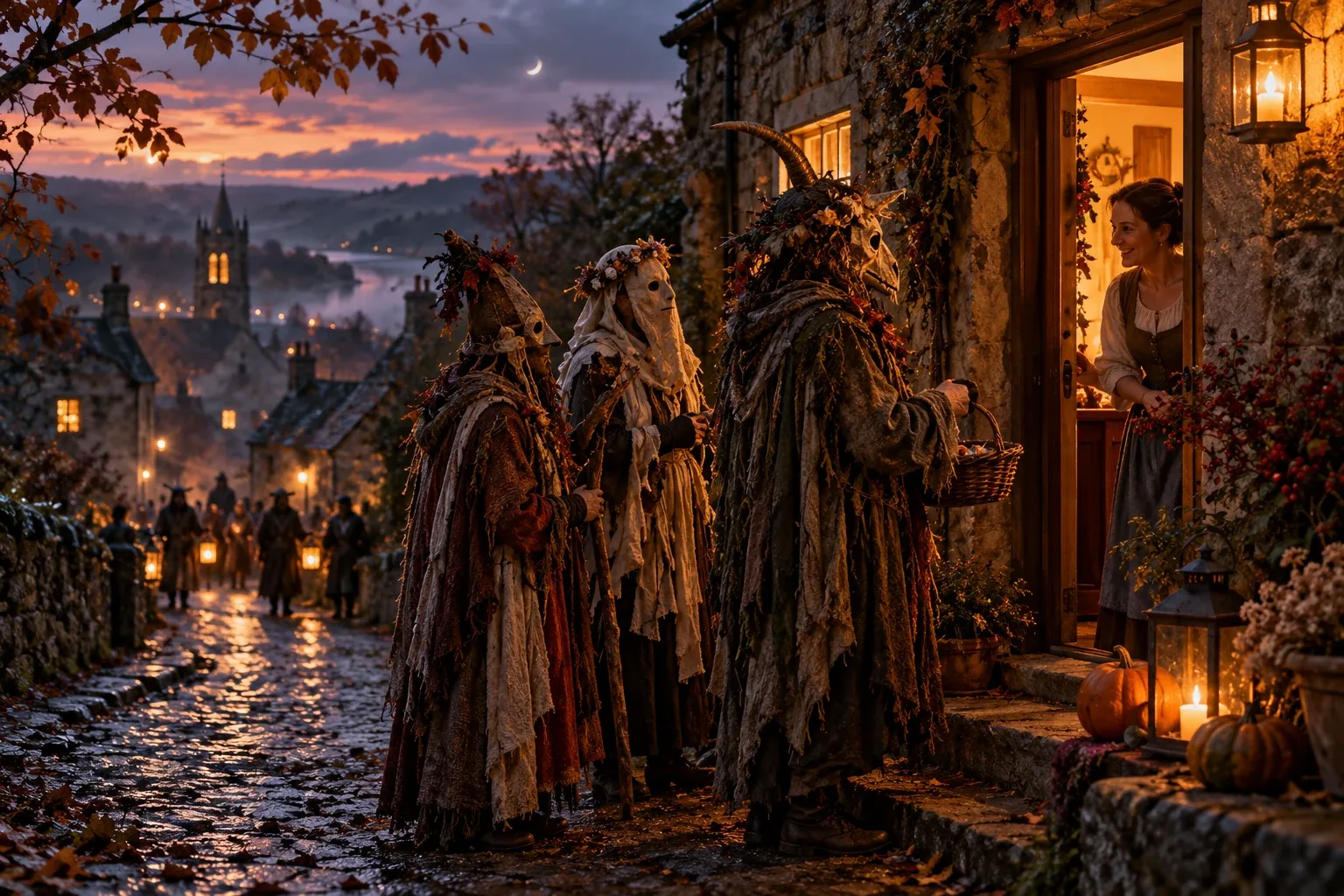
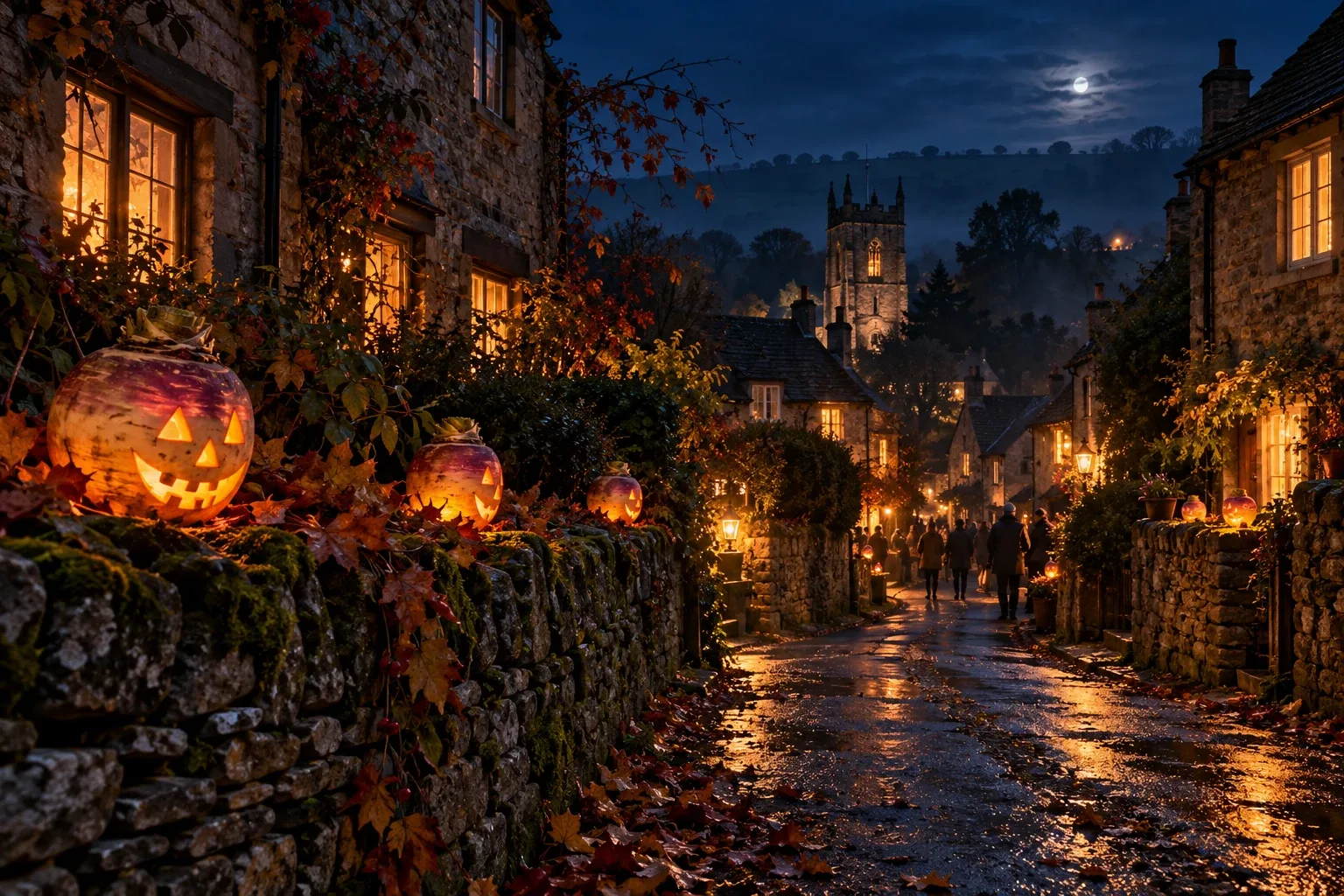
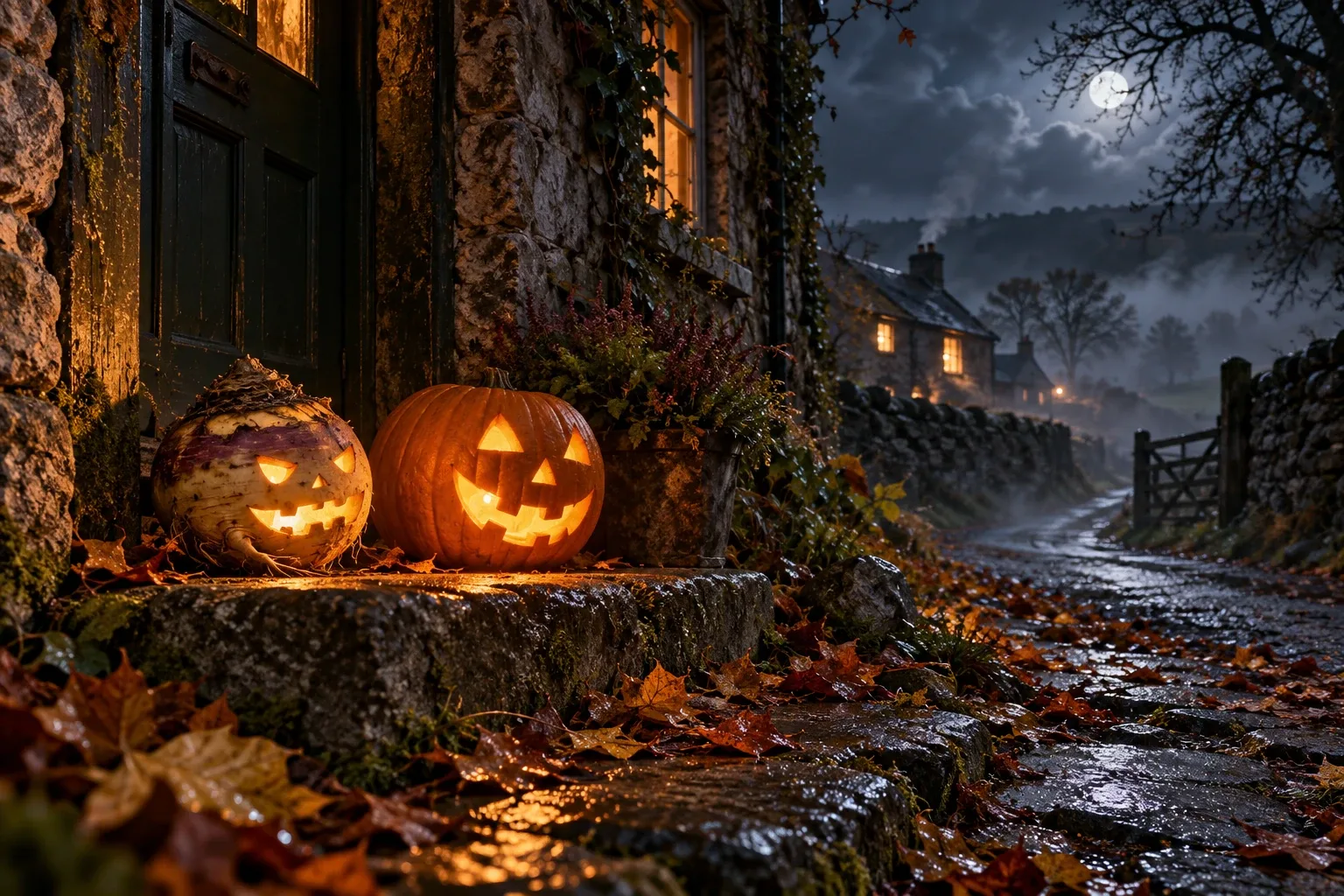
Britannica states the custom of making jack-o’-lanterns originated in the British Isles using large turnips or other vegetables. History.com says the Irish carved scary faces into turnips and set them in windows or near doors to frighten away Stingy Jack and other wandering evils; England used large beets in some tellings.
These were not Instagram props. They were small, bitter, hard-to-carve threshold devices — folk security lighting for a night already rumored to host the restless.
America had better hardware: the pumpkin
Irish immigrants, History.com and NatGeo both say, met North American pumpkins and upgraded. Pumpkins were larger, softer, and theatrical. The lantern custom hitchhiked on that botanical luck.
NatGeo cites author Cindy Ott on pumpkins as American icon, and notes literary breadcrumbs: Nathaniel Hawthorne referencing jack-o’-lantern imagery in the nineteenth century; the wider culture already flirting with glowing gourds before Halloween fully branded them. (Washington Irving’s Headless Horseman hurling a pumpkin is cousin energy — projectile squash as spook theater — even when it isn’t a carved “Jack” per se.)
By the time electrification dimmed some Old World ghost-story voltage in Ireland — NatGeo quotes folklorist commentary that lights-on modernity dulled certain night fears — the American pumpkin face was already going national.
From folk ward to seasonal logo
Modern jack-o’-lanterns do triple duty:
- Decoration — the porch signal that October is operational
- Folk memory — a watered-down Stingy Jack / will-o’-wisp echo
- Community craft — suburban ritual labor replacing older protective logic
A cynical read: we still put a watch-light at the threshold on the old thin night, then laugh about it with candy. Protective tech demoted to aesthetic — classic modernity move.
Skeptical read: people like carving faces into squash because it’s fun and photogenic.
Both can sit in the same window.
Will-o’-the-wisp — the other Jack
Before Jack was a vegetable, Jack was a light that lied.
Folklore writers and Snopes’ origin roundup note that “jack-o’-lantern” (and cousins like will-o’-the-wisp / ignis fatuus) named those weird marsh gleams that seem to drift just out of reach. Naturalists later blamed swamp gases. Storytellers blamed fairies, ghosts, or damned souls steering travelers into bogs.
Stingy Jack’s coal-in-a-turnip tale is one way oral culture personified that phenomenon: give the lying light a biography and a moral. NatGeo’s history piece also flags older British uses of the name for night watchmen — human lantern-bearers — before Halloween branding locked the pumpkin smile.
So when someone says jack-o’-lantern “comes from” Stingy Jack, the sharper answer is: the legend explains a name that already haunted wetlands and night roads.
Why faces? Because blank gourds don’t threaten back
A hollowed root with a candle is a lamp. A hollowed root with eyes and a mouth is a presence.
History.com’s window-and-door placement detail matters: these things faced outward. They weren’t centerpieces. They were threshold statements — half welcome, half warning — on a night folklore already filled with roaming dead and fairy traffic.
American suburbia kept the face and forgot the negotiation. Classic.
Carving culture as seasonal labor
There’s a quiet anthropology hiding in pulp-stained newspapers: families ritualize autumn by destroying a squash together. Seeds roasted, candles jammed in, photos posted. The “why” becomes “because we always do.”
That always-do is how folk tech survives after belief thins. You don’t need to fear Stingy Jack to maintain his lamp. You only need a calendar and a kid who wants to use a serrated plastic knife.
Irish Times and the “forsaken craythur”
Irish press retrospectives (including Irish Times folklore features) have walked the same ground: jack-o’-the-lantern as pity object as much as monster — a forsaken wanderer with a bad reputation and a worse commute between afterlives. That pity angle rarely makes U.S. décor packaging. It should. The lantern isn’t only apotropaic; it’s a tiny shrine to someone the cosmos wouldn’t file.
What the sources actually support
- Irish/British Isles vegetable lanterns precede U.S. pumpkin dominance (History, Britannica, NatGeo).
- Stingy Jack is a popular etiological legend for the name and the wandering light (History, Britannica).
- The name also trails will-o’-the-wisp / night-watchman usages in earlier English (NatGeo/Snopes folklore notes).
- Immigrant adaptation + American pumpkin agriculture explains the modern default gourd (History, NatGeo).
What sources do not hand you: a dated invoice from Jack’s tavern, or proof that carved faces “work” against spirits. Folklore isn’t a lab result. It’s a survival story with a candle inside.
Bottom line
You carve a pumpkin because a cursed Irish cheapskate needed a lamp, because turnips were the original hardware, and because America had better squash.
That’s the public legend-to-porch pipeline. Take it with salt. Leave a light anyway.
Attribution / sources
- Claim element: Stingy Jack narrative; turnip wards; immigrant pumpkin shift
Attribution: HISTORY.com, jack-o’-lantern Irish origins
Link: history.com/articles/history-of-the-jack-o-lantern-irish-origins - Claim element: Transatlantic tale; variants; literary/electrification notes
Attribution: National Geographic jack-o’-lantern history
Link: nationalgeographic.com/history/article/the-twisted-transatlantic-tale-of-american-jack-o-lanterns - Claim element: Definition; Stingy Jack summary; British Isles vegetable origin
Attribution: Britannica, jack-o’-lantern
Link: britannica.com/art/jack-o-lantern-decoration - Claim element: Will-o’-wisp name history / legend hygiene
Attribution: Snopes folklore article on Stingy Jack
Link: snopes.com/articles/373299/stingy-jack-origins-jack-o-lantern
Protective footer
This article is entertainment and folklore commentary for a mature audience. It summarizes publicly available legends and historical claims about jack-o’-lanterns and Stingy Jack. It is not historical or occult professional advice, and it does not claim supernatural efficacy for carved lanterns. Take folklore with a grain of salt. Links are for attribution and verification; media remains the property of its owners.
Dramatic recreation — Monstrum Athenaeum