Folklore and cultural history Eastern European vampire-folklore heartland (Transylvania cultural region / Carpathians as literary-tourism proxy); secondary Western Christian Allhal
Vampires and Allhallowtide: Blood, Saints, and Autumn Fear
Why vampires haunt Halloween: Allhallowtide’s dead-calendar, Eastern European revenant lore, and Stoker’s autumn shadow — claims, cinema, grain of salt.
Sign in to save stories to your shelf.
October does not invent vampires.
It schedules them.
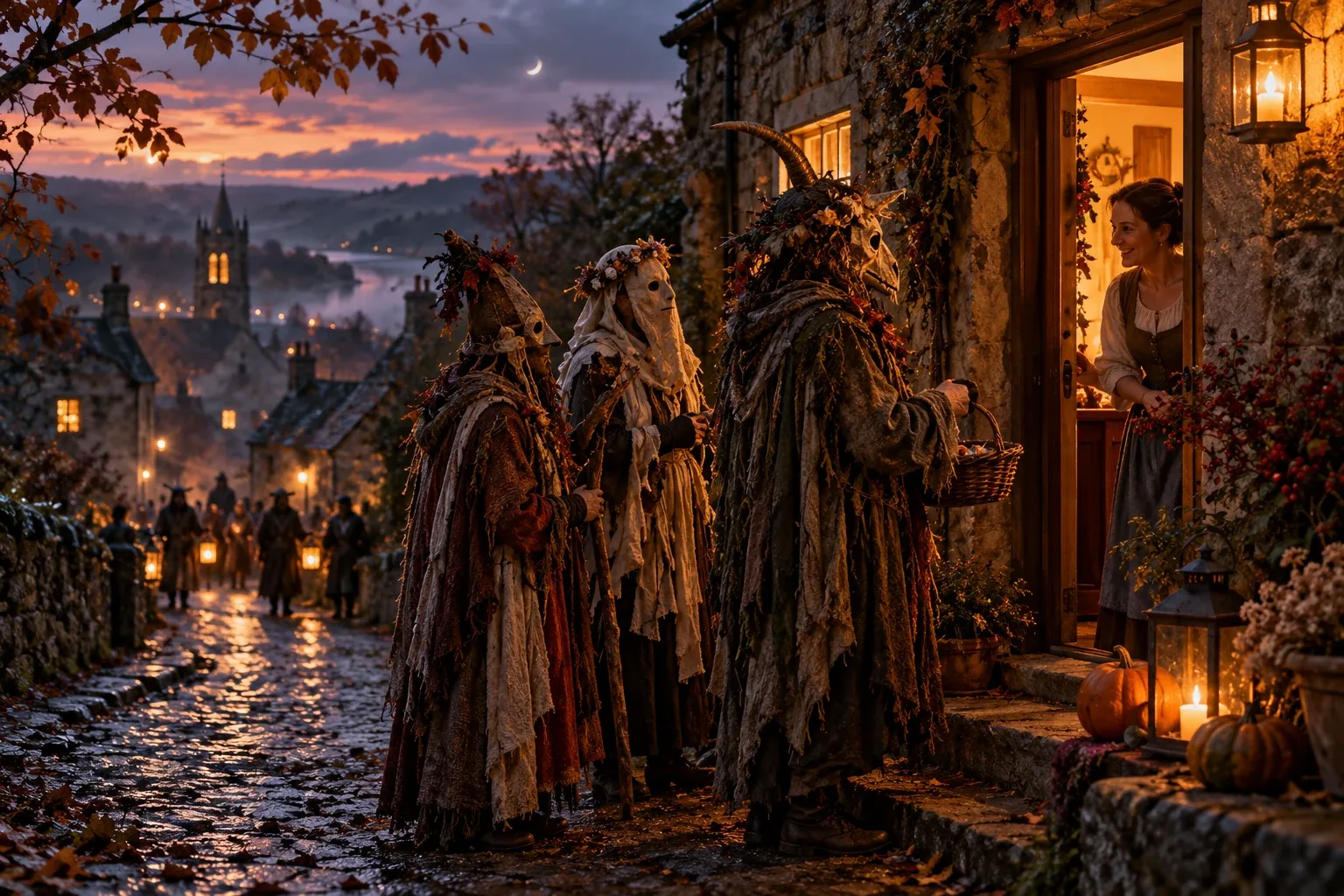
Between Samhain’s thinning veil and the Christian trio of All Hallows’ Eve, All Saints’ Day, and All Souls’ Day — the stretch modern writers shorthand as Allhallowtide — Western culture already had a calendar obsessed with the dead. Add Eastern European revenant panic, nineteenth-century Gothic literature, and a century of Hollywood fangs, and Halloween gets its favorite blood donor.
It’s the season, and it’s fair to ask why autumn keeps renting the same monster. The grain of salt stays on a permanent IV drip.
Also: if your only vampire education is sparkling abstinence cinema, Britannica’s folk catalog will feel like a cold basement. Good. October should sting a little.
Allhallowtide: the church calendar of the restless
According to HISTORY.com’s long-running Halloween overview, the holiday’s Christian layer grows from commemorations of saints and the dead. Pope Gregory III’s era helps fix November 1 as a broad All Saints observance; later tradition adds All Souls’ Day on November 2. The night before All Saints becomes All Hallows’ Eve — Halloween.
That calendar does not say “vampires invited.” It says: remember the holy dead, pray for souls, light the dark half of the year with liturgy instead of only bonfires.
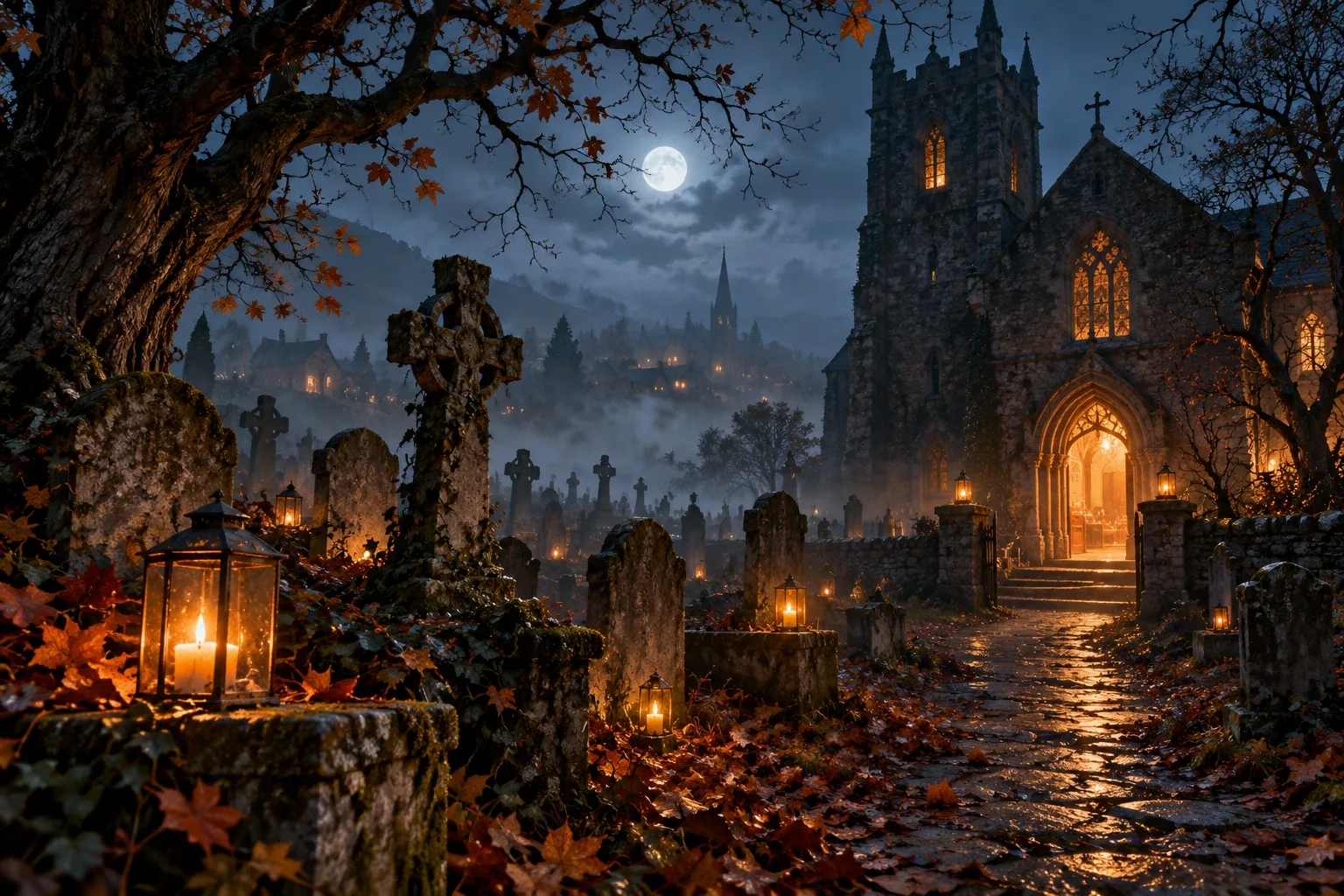
But psychologically? A three-day season about graves and memory is premium real estate for walking-corpse anxiety. Folklore abhors a vacuum. Something always fills the pews after midnight.
BBC Culture’s 2024 Samhain-to-Soulmass feature (Beverley D’Silva) frames the same hinge from the other direction: Celtic fire festival → Christian overlay → modern costume carnival. Soul cakes, souling, and food-for-the-dead customs sit in that blend. Vampires are the rude cousins who show up uninvited and drink the offerings.
What folklore actually claimed about “vampires”
Britannica’s vampire entry is blunt: cultures across Europe told of blood-drinking or essence-draining dead, with especially sticky popularity in eastern Europe. The “how someone becomes one” list in folk belief is messy and moralizing — improper death, suicide stigma, contagion fears, animals disturbing a corpse, babies born with teeth, and more — not a clean Hollywood bite chain.
Worth saying plainly: those are historical claims communities used to explain plague, grief, and decomposition, not tips. Decomposition itself (receding gums, apparent nail growth) fooled plenty of terrified diggers, Britannica notes.
Staking, face-down burial, garlic, holy objects — apotropaic folklore, not lifestyle hacks. We describe; we do not demo.
Dracula’s autumn shadow (literary, not forensic)
Bram Stoker’s Dracula (1897) is, Britannica argues, the pivotal modern vampire text: Transylvanian count, English chaos, aristocratic predator template. The 1931 Lugosi film cemented the tuxedo-and-cape silhouette Halloween still prints on plastic fangs.
Did Stoker invent Allhallowtide vampires? No. Did Gothic literature dock the revenant to English-language October fear? Hard yes.
A sidebar: some readers want Vlad III or Elizabeth Báthory to “explain” the myth as secret history. Scholars treat those as inspiration arguments, not proof that a fifteenth-century prince clocked overtime as undead. Salt liberally.
Why Halloween keeps the fangs
- Calendar rhyme: Allhallowtide already stares at death; vampires are death that refuses the stare.
- Costume economics: Fangs travel well. Better than explaining Ossory’s seven-year curse at a doorstep.
- Romance mutation: From Rice to teen franchises, the monster became a boyfriend. October loves a complicated ex.
- Seasonal appetite: Halloween-week media hunger pulls vampires into the same storm system as ghosts, werewolves, and haunted places — Cryptid October’s civilian on-ramp.
Samhain’s older Irish monster nights (Aillen at Tara, sidhe raids, Cruachan wolves) prove autumn fear did not need Carpathian branding. Vampires won the global merch war.
Samhain’s dead vs. the vampire’s unfinished business
Celtic Samhain framing — as Britannica and HISTORY summarize — emphasizes a blurred boundary: spirits return, prophecy gets easier, bonfires and disguises manage the traffic. That is ancestor weather and hazard weather at once.
Vampire folklore, especially in its eastern European register, often frames the problem as a specific corpse that will not stay corrected. Wrong death. Wrong burial. Wrong reputation. The community’s fear is less “the veil is thin” and more “Uncle won’t stay down.”
Halloween mashups both anxieties into one party: light a jack-o’-lantern for wandering Jack, wear fangs for the neighbor who might climb back out. The mashup is cultural, not archaeological proof that Druids packed garlic.
Allhallowtide’s soft power (and Halloween’s hard sell)
Soul cakes and souling — covered in HISTORY and BBC Culture — show the church encouraging food-and-prayer exchange around the dead. Modern trick-or-treat is a distant, sugary cousin. Vampires crash that exchange by treating people as the offering.
That is why the holiday icon feels theological even when the wearer is headed to a keg party. You are joking with a myth that once organized village panics and cemetery excavations. Funny costume. Heavy shadow.
Cinema October: when folklore became a seasonal SKU
Once Lugosi’s cape became default, retailers and studios could restock fear every October without citing Polish deviant burials or Balkan upiór talk. Useful for commerce. Flattening for history.
The work here is restoration: put the Allhallowtide calendar beside the revenant dossier beside the novel, then admit the costume aisle won. Salt does not mean cynicism. It means you can love the party and still know which century invented which rule.
A question we will not pretend to answer: did institutions encourage saintly calendars partly to overwrite older fire festivals? Historians debate continuity vs. replacement for a living. What we can say from mainstream sources is simpler — the dates stuck, the meanings braided, and the monsters rented the braid.
What this page will not do
No “how to become a vampire” instructions. No blood-drinking guidance. No corpse-desecration tips dressed as folklore tourism. No medical claims about porphyria-as-vampires beyond noting that modern writers sometimes float disease hypotheses as retrospective guesses.
Bottom line
Vampires haunt Halloween because autumn already leased the dead a holiday, and modern culture upgraded the tenant from prayer to puncture. Allhallowtide gave the calendar. Eastern European revenant lore gave the panic. Stoker and cinema gave the face.
According to the sources, belief has waned; costumes have not. Monstrum’s advice stays boring on purpose: read the folklore, cite the books, leave the graves alone.
Sources
- Claim / topic: Vampire characteristics, folk “becoming” claims, literary history
Attribution: Britannica — vampire
URL: https://www.britannica.com/topic/vampire - Claim / topic: Halloween / All Saints / All Souls / Samhain overview
Attribution: HISTORY.com Editors — History of Halloween
URL: https://www.history.com/articles/history-of-halloween - Claim / topic: Samhain → Christian overlay → souling / modern Halloween
Attribution: BBC Culture — Samhain to Soulmass (31 Oct 2024)
URL: https://www.bbc.com/culture/article/20241030-samhain-to-soulmass-the-pagan-origins-of-familiar-halloween-rituals - Claim / topic: Allhallowtide / Halloween naming context
Attribution: Britannica — Halloween
URL: https://www.britannica.com/topic/Halloween - Claim / topic: Samhain festival framing
Attribution: Britannica — Samhain
URL: https://www.britannica.com/topic/Samhain
Protective footer
This article summarizes publicly available folklore, religious-calendar history, and literary commentary for news, criticism, and seasonal education. Vampire lore is attributed to named encyclopedic and historical sources and is not presented as verified biology or as instructions for harm, blood rituals, or corpse disturbance. Monstrum Athenaeum does not endorse illegal or dangerous acts. Links are for attribution and reader verification. MonstrumAthenaeum.org is intended for mature audiences.
Dramatic recreation — Monstrum Athenaeum