
Historical report Darya Khan area, Bhakkar District, Punjab, Pakistan (village reported as Khwawar/Kalam Kalan in wire variants)
Government Cover Up? Pakistani Brothers Might Have Been Ghouls – Not Cannibals
The original 2014 Monstrum report on Pakistan’s Darya Khan grave-robbing case and the ghoul folklore it brought to mind.
Sign in to save stories to your shelf.
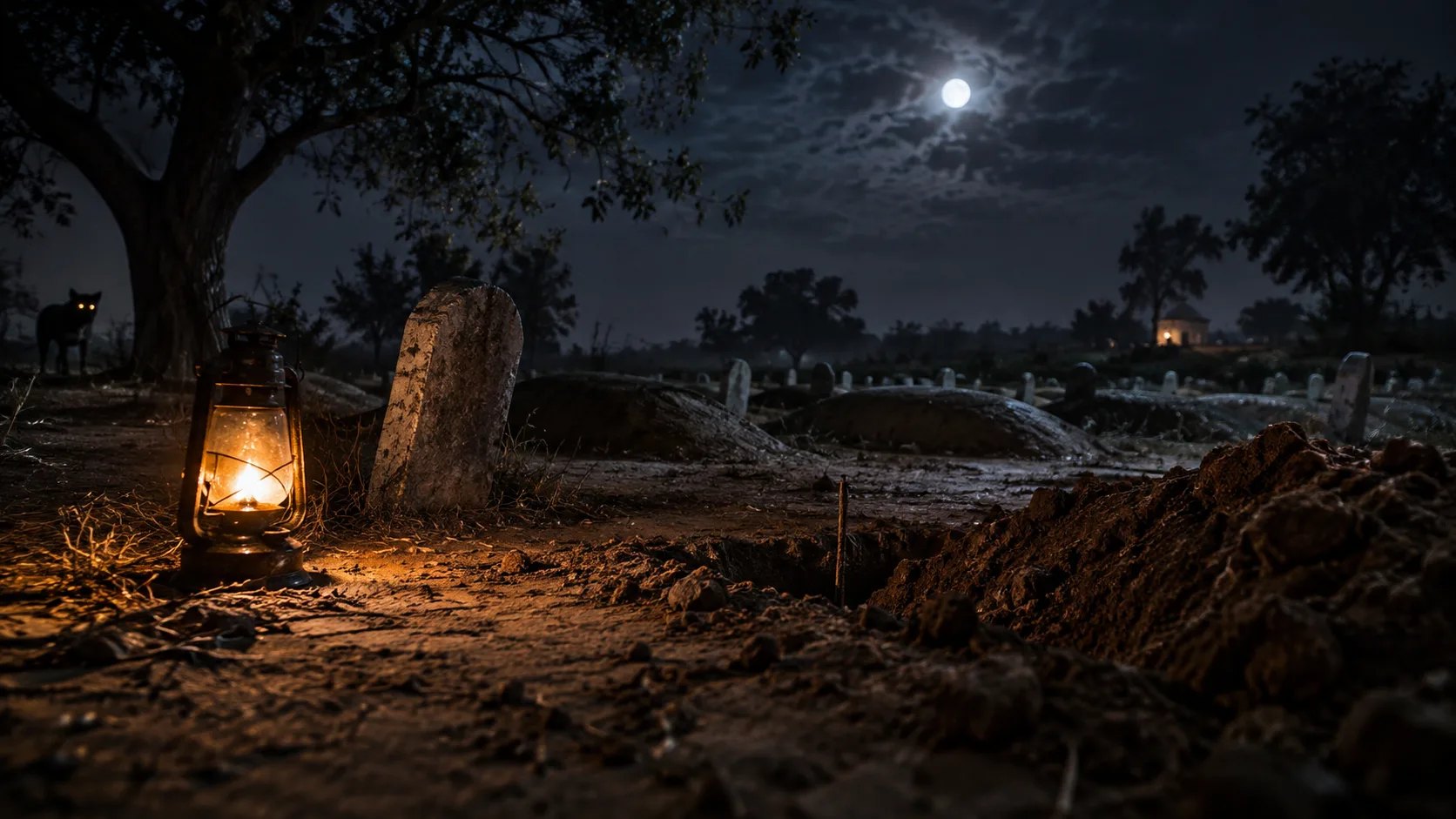
There’s recently been a sensational headline that quietly made news in the UK Mail online that, interestingly enough, is seemingly a news story about two ghouls in Pakistan. The news story reported that two brothers living in Pakistan were apparently digging up bodies out of a graveyard and taking them home and eating them. The pair were arrested after neighbors reported a stench and later found a young child’s head in their home.
The story just makes the more timid not even want to click on the link, feeling that just the cringe-inducing header, “Boy’s HEAD found in home of Pakistani cannibals who had dug up more than 100 corpses from the local graveyard and eaten them,” enough news for them without proceeding to the story. The more adventurous (and morbid) of us are intrigued and want to click on and see what exactly would motivate these individuals to consume dead flesh—did these people consider spoilage or does the area not practice embalming their dead–what gives? We wonder to ourselves.
Is This An Outbreak Making Infected People Attack?
The truth, however, may much more nefarious, and how would we know if there was a cover up implemented by the Pakistani government and carried out by local authorities in Darya Khan, the Pakistan’s interior where the pair were arrested? What if Ameer Abdullah, the District police chief, issued statements to the news after coercion by the Pakistani government, saying that it is not the first time the brothers had been arrested? What we do know is Abdullah stated to the press that officers raided the home after neighbors complained of a bad smell coming from the brothers’ home and found the two cannibals consuming the flesh of corpses from local graveyards.
One proposed theory of zombie origination contends the transformation of a person into a flesh eating ghoul is a slow process, taking years or even decades, and is caused by a yet to be discovered fungal infection named Necrophiliosis Unilateralis. Often referred to as Necrolateralis for simplicity, this fungus is thought to utilize the evolutionary trait of an extended phenotype to manipulate the behavioral patterns of an infected victim. Consistent with other suspected cases of Necrolateralis, the bad smell emanating from the home may have actually came from the family members of the two brothers that were infected by the fungus. The fungus attacks the brain of the affected individual and slowly degrades their brain leaving them to stumble around like they’re drunk and attack other people–and the infected eat the unfortunate individuals after they subdue them.
This may be what actually happened in Darya Khan and two family members living with Mohammad Arif Ali and his brother Mohammad Farman, the two brothers accused of being cannibals. If an outbreak did happen in their neighborhood there’s concern the military will quickly move to take control with deadly force. It’s unclear where the two brothers could have come into contact with the fungus and it’s possible they were the last two in their home to contract the illness. The source might have been an infected family member which seems logical and follows the pattern of events.
If their sister and her son somehow contracted the disease first, they would have begun to show the signs and symptoms of “cannibalism” and the behavior would have compelled the two brothers to tie up them up or at least lock them in the house. Cannibalism is a major crime in Pakistan and it’s not hard to imagine the brothers restraining them to keep them safe from the authorities. As the infection progressed in the brothers, however, they eventually became consumed with their own uncontrollable appetites for flesh, drowning the sister to avoid suspicion and consuming the child.
The change in behavior and reeking stench of the bodies eventually caused neighbors to call local authorities, who took the brothers into custody.
This potential scenario is being played out in cities all over the globe and is being covered up by governments because they are afraid of causing a panic. Right now the outbreaks are contained and no one in charge knows the origin of the fungus or how to cure it. It isn’t a Hollywood Movie, so it may only be a matter of time before it becomes an epidemic never encountered in all of human history. The outlook seems pretty grim at this point.
For those skeptics, I recommend you read this post from the CDC.
Original publication credit
Original title: Government Cover Up? Pakistani Brothers Might Have Been Ghouls – Not Cannibals. The preserved copy has no named writer credit. Originally published April 30, 2014.