Historical report Khumbu Icefall / Mount Everest, Nepal (between Base Camp and Camp I)

Everest 2014, Sherpa Dead, and the “Himalayan Werewolf” Cover-Up Riff: An Archival Corrective

2026 archive of Monstrum’s May 7, 2014 Everest “Himalayan werewolves” riff—Apr 18 ice avalanche killed Sherpas. Official serac collapse; folklore speculation dated.

By Cryptid deskFirst published Updated 6 min read
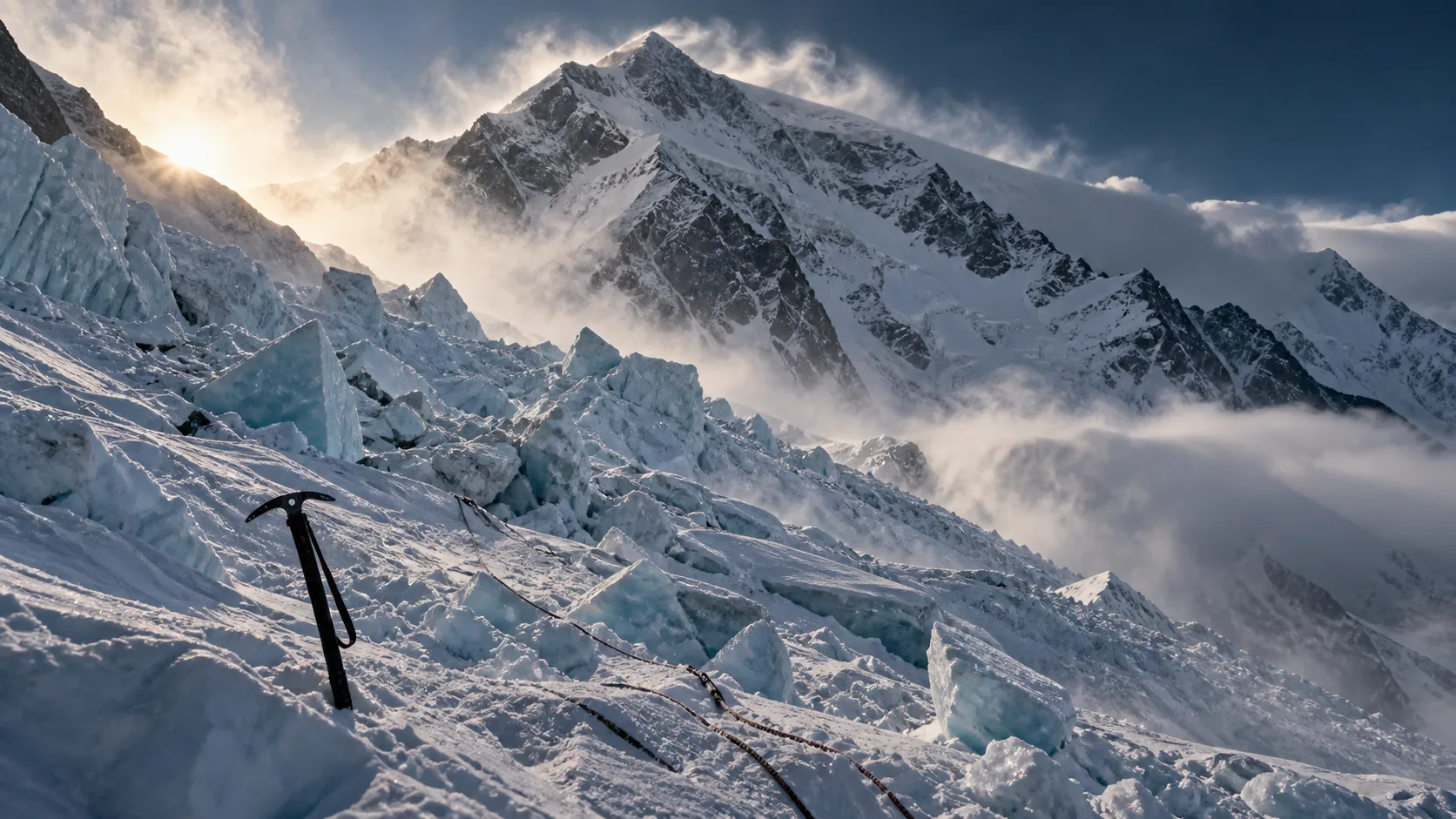
An abandoned ice axe and fixed ropes lie among blue ice blocks on a Himalayan slope at sunrise.

Sign in to save stories to your shelf.

Original reporting date: May 7, 2014.

On April 18, 2014, a block of ice tore off the western shoulder area above the Khumbu Icefall and roared through the path where Sherpa guides were fixing ropes and ferrying loads for the spring climbing season. Sixteen mountain workers died in what became one of Everest’s deadliest days. That is the historical core. Encyclopedic and mountaineering sources describe a serac collapse triggering an ice avalanche — geology and gravity on a hostile mountain — not a cryptid ambush.

Nineteen days later, on May 7, 2014, Monstrum Athenaeum published a conspiracy-curious alternative: ignore the LA Times avalanche framing; maybe starving Himalayan werewolves hit the rope team; maybe officials buried the massacre under “tons of white weight”; maybe ICU “observation” in Kathmandu was infection coaching. It braided Yeti lore into shapeshifting werewolf talk and treated the disaster’s unprecedented toll as suspicious cover.

This 2026 article is a brand-new archival feature with a corrective spine: we document that the Athenaeum said that, we date it hard, and we refuse to present werewolves as a competing official cause. The dead were workers. The mountain failed them with ice. Folklore can sit in the gallery. It does not get to overwrite the serac.

What the 2014 Athenaeum piece claimed

According to the original: Nepal Tourism Ministry presence at Camp I looked like narrative control; early survivor counts froze in a way blogs find ominous; starving winter-hit werewolf packs might abandon their usual secrecy; avalanche trauma would erase bite evidence; survivors at Grandi International Hospital in Kathmandu were being “coached.” It noted Sherpa coexistence folklore with local cryptids and claimed sighting gaps measured in decades.

That is a full conspiracy kit: motive (hunger), means (pack attack), opportunity (pre-dawn rope work), and cleanup (avalanche-as-bleach). It is also, as history and glaciology reporting stand, unsupported spectacle.

What the public record treats as cause

Secondary historical consensus (Wikipedia’s disaster page and technical assessments cited in search) points to a large ice block detaching and pulverizing the Icefall route around 06:45 local time. Death toll in standard accounts: 16 Sherpas killed; additional climbers and season politics followed as the mountain community reeled, protested risk, and largely shut down the 2014 season for many teams. Maoist and labor-politics rumors also circulated in academic/ethnographic writeups of the aftermath — human politics, still not lycanthropy.

Grain of salt for monster blogs: when a death toll is “unprecedented,” the correct first move is hazard analysis, not werewolf logistics.

Yeti, werewolves, and category errors

Himalayan cryptid talk usually centers the Yeti / Abominable Snowman complex — ambiguous bipeds, spiritual beings, misidentified bears, depending on who you ask. The 2014 piece claimed Yeti longevity implies werewolf shapeshifting. That is a category mash: take one folklore file, staple on European lycanthrope pack behavior, declare a cover-up. Conspiracy-curious? Sure. Ethnographically careful? No.

Sherpa communities’ relationships to mountain spirits and tourism economies are real anthropological subjects. Using their dead as props for a shapeshifter thriller is the opposite of respect.

Why disaster cover-up stories go viral

Avalanches are morally unsatisfying villains. They have no face. A werewolf has a face. So do corrupt officials in the imagined second act. Horror desks know this. The ethical 2026 move is to admit the narrative temptation and then put the lid back on. Officials staying on-site after a mass-casualty event is also what disaster managers do. Hospitals observing trauma patients is medicine. Neither requires a lycanthrope infection subplot.

Archival reading rules

  1. April 18, 2014 = Icefall serac/avalanche disaster.
  2. May 7, 2014 = Athenaeum speculative riff (entertainment, dated).
  3. Do not tell searchers “werewolves might have done Everest.”
  4. Do not harass survivors or families for “bite mark” content.
  5. Yeti folklore remains available as separate cultural study without hijacking this memorial fact pattern.

Season politics after the ice

The 2014 disaster did not end when the ice stopped moving. Guiding communities protested risk structures that asked Sherpas to absorb the Icefall’s worst odds for commercial summit bids. Many expeditions packed up. Academic pieces later examined rumor ecosystems — including political rumor — that thrived in the grief and anger. That is a real media-sociology story. It still does not rescue a werewolf thesis. If anything, it shows how many human explanations compete when the mountain kills.

LA Times and the “don’t trust the paper” move

The original opened by warning readers not to accept LA Times avalanche coverage. Distrust-the-mainstream is a growth hack for weird blogs. Sometimes institutions fail. Sometimes ice falls. The archival duty is to check which one the evidence favors. Glaciology-friendly reconstructions and mountaineering histories favor ice. Athenaeum’s May 7 alternative favored narrative spice. Spice is not a peer reviewer.

Kathmandu hospital speculation

Naming a hospital and inventing “infection coaching” about survivors is a particularly ugly conspiracy habit: it recruits living trauma patients into a monster plot without evidence. In 2026 we explicitly reject that move. Trauma observation after an Icefall catastrophe is not proof of lycanthropy quarantine.

What a responsible cryptid desk can still say about the Himalaya

You may still write Yeti folklore essays. You may still discuss sacred geography, misidentification, and colonial myth-making. You may still note that werewolf packs are a mostly European narrative export. What you may not do is draft the 2014 Sherpa dead into a shapeshifter cover-up and leave it unmarked. This refresh marks it.

Bottom line

On May 7, 2014, Monstrum Athenaeum asked readers to distrust the avalanche story and entertain Himalayan werewolves as the true authors of the April Icefall massacre. In 2026 we keep that question only as a museum label for irresponsible monster journalism, recenter the serac collapse and the Sherpa dead, and close the cover-up fantasy. Salt the shapeshifters. Honor the guides. The mountain’s ice was enough monster for one morning.


Sources

  • Claim element: Original May 7, 2014 werewolf cover-up speculation; Yeti braid; hospital “coaching” claim — Attribution: Monstrum Athenaeum historical predecessor — Link: Did Rare Himalayan Werewolves Attack…
  • Claim element: Apr 18, 2014 Khumbu Icefall serac collapse / ice avalanche; 16 Sherpa deaths — Attribution: Wikipedia disaster summary (pointer to RS) — Link: 2014 Mount Everest ice avalanche
  • Claim element: Technical/GIS discussion of serac fall dynamics (supporting avalanche framing) — Attribution: Journal / hazard-mapping coverage via search — Link: e.g. NepJOL / RAMMS-related assessments indexed for 2014 Everest serac

About this article

Archival historical / folklore commentary only — not a claim that werewolves, Yeti, or other cryptids caused the April 18, 2014 Everest Icefall deaths. Standard public accounts attribute the disaster to a serac collapse and ice avalanche. Speculative cover-up scenarios in the 2014 predecessor are entertainment conjecture, not evidence. This article is not a guide to climbing the Icefall and not an invitation to disturb memorials, survivors, or workplaces in Khumbu. The 2014 URL is a historical predecessor, not a prior publication of this 2026 wording. Respect the dead. Mature audiences; grain of salt required.

Original publication credit

Original title: Did Rare Himalayan Werewolves Attack and Authorities Cover It Up?. The preserved copy has no named writer credit. Originally published May 7, 2014.

Continue reading.

Stay with the strange.

Explore the front page →