Folklore and cultural history Hill of Tara (Teamhair), County Meath, Ireland
Aillen Burns Tara: The Irish Samhain Monster You Weren’t Taught
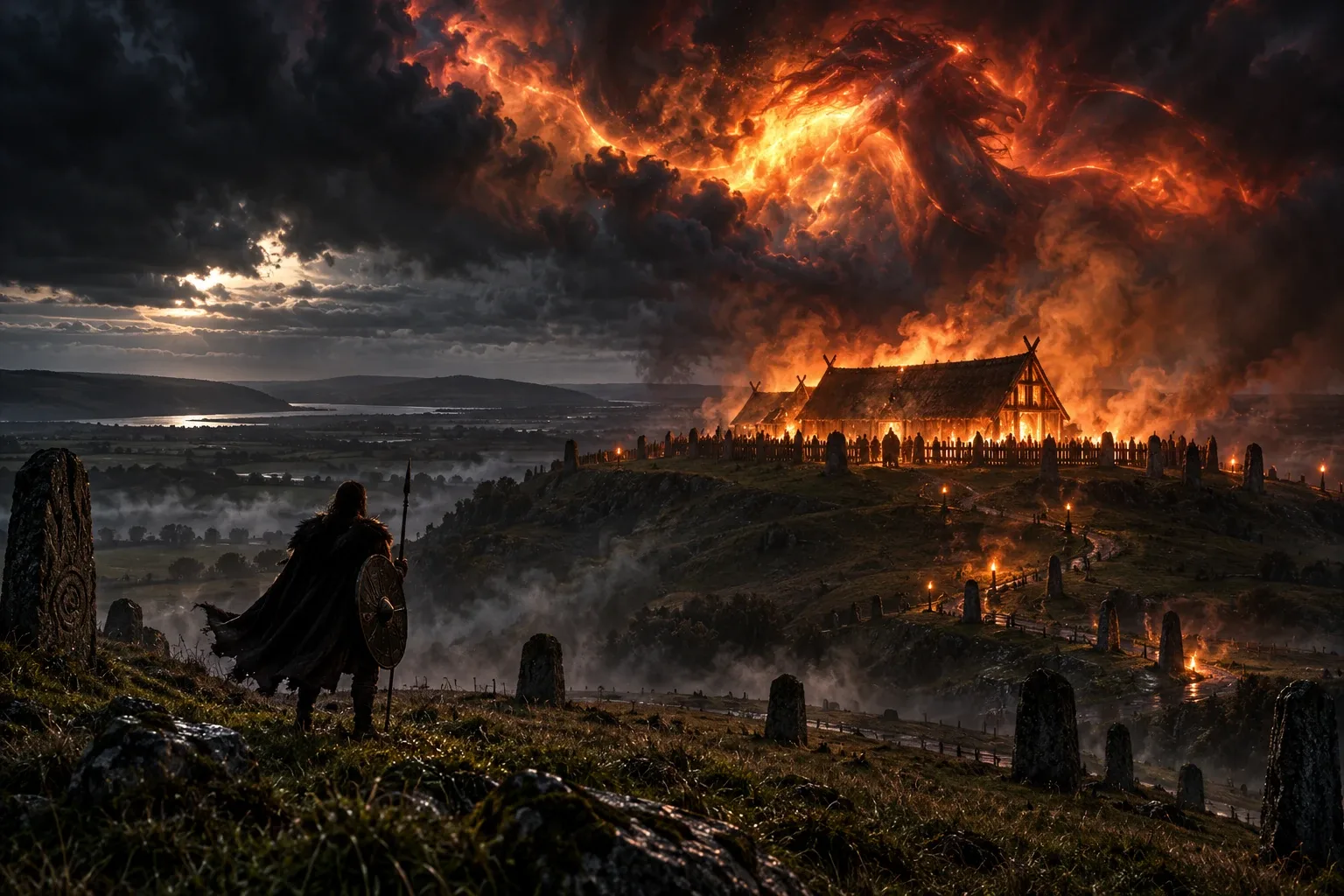
Each Samhain, Aillen mac Midgna lulled Tara to sleep and burned it — until young Fionn mac Cumhaill. Irish myth, sources, and grain-of-salt intrigue.
Sign in to save stories to your shelf.
Schoolhouse Halloween taught you bats and candy.
Irish story tradition taught kings a worse lesson: every Samhain, Tara burns.
The arsonist’s name, in the Fenian cycle, is Aillen mac Midgna — Aillen the Burner — an Otherworld musician-incendiary who puts Ireland’s ceremonial heart to sleep with enchanted music, then exhales ruin. According to the boyhood-deeds tradition around Fionn mac Cumhaill, the nightmare repeats annually until a young outsider refuses the nap.
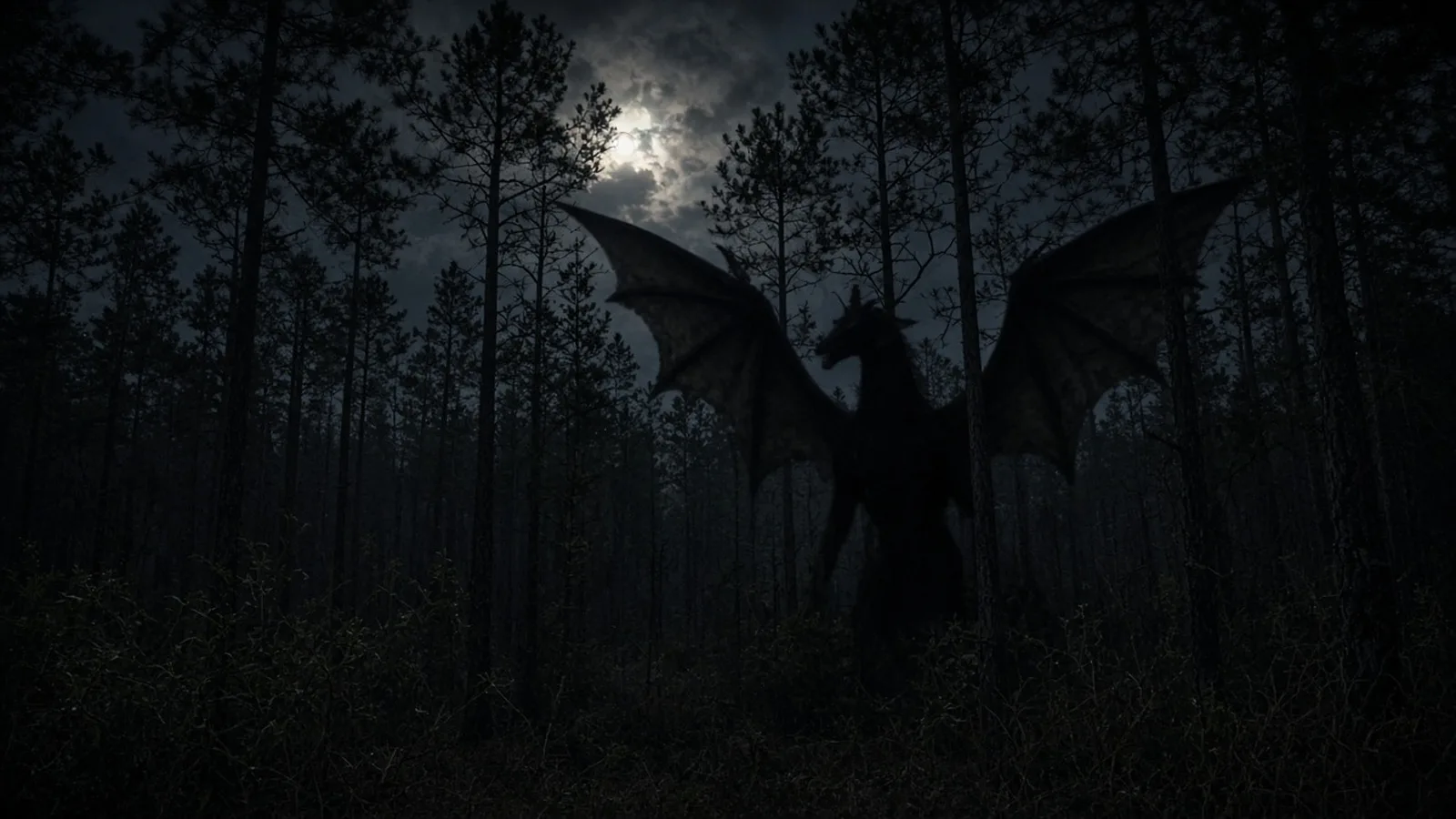
The short version: Ireland’s Camelot had a scheduled dragon without the scales. One reading: maybe the tale encodes political anxiety about royal centers going dark. The grain of salt: it is literature, not a fire marshal’s report from the Iron Age.
The annual Samhain hit
Oxford Reference’s Celtic mythology entry on Aillen (James MacKillop) sketches the role: the “burner” who destroyed Tara until Fionn slew him on the hero’s first major visit. The Fionn Folklore Database’s lay notes on Loscadh na Teamhrach (“The Burning of Tara”) spell the method audiences remember: Aillen arrives on Samhain eve, plays enchanted harp/tímpan music that drops defenders into magical sleep, then sets the place alight.
That is not a random monster-of-the-week. It is calendar horror. Samhain already means open mounds, thin boundaries, and winter’s mouth. Aillen turns the festival into a subscription to catastrophe.
Why weren’t you taught this in elementary candy class? Because American Halloween merchandised jack-o’-lanterns harder than Fenian deep cuts. Tara’s burner stayed in the manuscript and oral-lay pipeline while Count Dracula took the costume aisle.
Fionn’s counter: spear fumes and refusal to sleep
In the Macgnímartha Find / Boyhood Deeds tradition — discussed in Celtic Studies resources such as CODECS and available in public-domain translation mirrors — the young Fionn’s breakthrough is staying awake when the music hits. Popular and database summaries converge on a magical spear whose fumes (or related charm) help him resist the sleep spell; he then pursues and kills Aillen, later presenting proof that unlocks leadership of the Fianna in many tellings.
Read it as hero initiation: the boy who can endure Samhain’s weaponized art becomes the man who polices Ireland’s roads. Read it as folklore engineering: the community wants a story where someone finally patches the annual exploit.
What it is not: a modern ritual script. Nobody needs a “how to summon Aillen” sidebar. The text’s “tech” is mythic spear lore inside a warrior coming-of-age tale.
Tara as stage, not theme park prop
The Hill of Tara in County Meath is a real ceremonial landscape with mounds, legends, and tourist footfall. Mythic Tara is also a literary capital — the place stories use when they need Ireland’s prestige on fire.
The place is the public hill complex; there are no private tunnels or secret brotherhood addresses to give. If you visit, you visit as a guest of heritage management, not as Fionn cosplay with a sparkler.
Samhain monster ecology
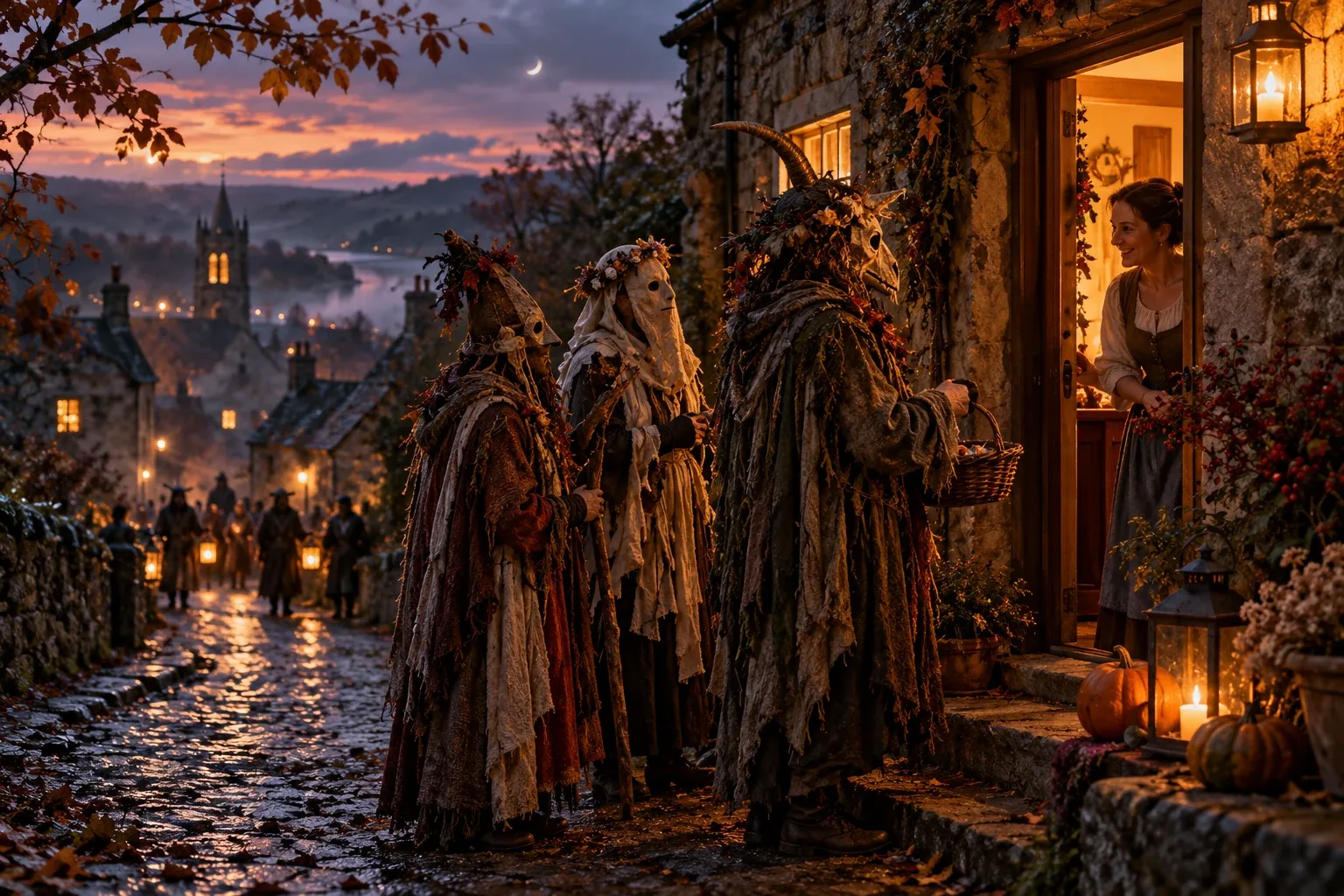
Pair Aillen with Cruachan’s wolf-women and the sidhe disguise customs and a pattern shows: Irish Samhain narratives treat late October as ops season for the Otherworld. Music shows up as both lure and weapon. Sleep is vulnerability. Fire is punctuation.
BBC Culture and Britannica’s Samhain explainers give the wider festival weather — harvest end, dark half, spirits abroad. Aillen is what happens when that weather gets a named antagonist and a royal target.
An open question, left unanswered on purpose: is Aillen a personified fear of winter raiding, a sidelined deity in monster drag, or pure narrative voltage? Scholars can duel. Your porch only needs to know the beat: Samhain had boss fights before Halloween had IP houses.
Music as weapon (a Fenian motif worth stealing for October essays)
Aillen does not kick down the gate first. He plays. Sleep is the payload; fire is the headline. That sequence should haunt every modern “spooky playlist” joke: sound as soft power, then catastrophe.
Irish tradition is full of dangerous music — harp charms, sidhe tunes, sleep-spells. Halloween’s pop soundtrack is mostly jumpscares and novelty singles. Aillen reminds you the older fear was that art itself could switch you off while the palace burned.
Why “you weren’t taught” (without the conspiracy cosplay)
American curricula and retail calendars optimized for pumpkins, witches, and Universal monsters. Fenian deep cuts require manuscript names like Macgnímartha Find and comfort with untranslated titles. That is distribution, not a Illuminati plot to hide Tara’s arsonist.
Still: the gap is real. Anyone curious about Samhain monsters deserves more than a recycled banshee one-liner. Aillen is specific, seasonal, and narratively complete — annual threat, named hero, political reward.
Visiting Tara without cosplaying the burn
The hill complex is a heritage landscape with archaeological sensitivity. Your pilgrimage energy belongs in respect mode: paths, signage, no drone chaos, no “ritual fire” cosplay that gets you removed. Mythic violence stays on the page. The grass has enough problems.
Some readers will want secret tunnels and living Tuatha Dé under every mound. Heritage interpretation already supplies enough wonder without fan-fiction infrastructure. Enjoy the view. Cite the lay. Leave the lighter in your pocket.
Aillen beside the Halloween vampire (quick contrast)
Literary vampires often invade sideways through invitation and appetite. Aillen invades through calendar appointment. That difference is why he belongs in a Samhain story: he is festival malware, not a roaming count. File vampires under Allhallowtide blood anxiety; file Aillen under Irish New Year arson with a soundtrack.
Pronunciation and naming chaos (reader service)
You will see Aillen, Aillén, Aillén mac Midgna, and spelling drift across databases. That is normal for medieval names traveling through manuscripts and Anglicization. Do not let spelling variants trick you into thinking there are five different burners of Tara. Same seasonal arsonist energy; different orthography.
Bottom line
Aillen mac Midgna is the Irish Samhain monster the candy aisle forgot: a yearly burner of Tara, defeated by a boy who would not sleep through the harp. According to Fenian tradition and modern reference works, that kill is Fionn’s door into command.
File it under holiday intrigue, not occult homework. The hill still stands. The story still scorches. Salt recommended.
Sources
- Claim / topic: Aillen mac Midgna overview (burner of Tara; slain by Fionn)
Attribution: Oxford Reference — A Dictionary of Celtic Mythology (MacKillop)
URL: https://www.oxfordreference.com/display/10.1093/acref/9780198609674.001.0001/acref-9780198609674-e-120 - Claim / topic: Burning of Tara lay summary (music, sleep, Fionn)
Attribution: Fionn Folklore Database — Loscadh na Teamhrach
URL: https://fionnfolklore.org/en/lays/dta - Claim / topic: Macgnímartha Find manuscript/context
Attribution: CODECS — Macgnímartha Find
URL: https://codecs.vanhamel.nl/Macgn%C3%ADmartha_Find - Claim / topic: Public-domain Boyhood Deeds translation mirror
Attribution: Mary Jones Celtic Literature Collective — Boyhood Deeds of Fionn
URL: http://www.maryjones.us/ctexts/f02.html - Claim / topic: Samhain festival framing
Attribution: Britannica — Samhain
URL: https://www.britannica.com/topic/Samhain - Claim / topic: Hill of Tara site context
Attribution: Wikipedia — Hill of Tara (secondary; verify on-site heritage)
URL: https://en.wikipedia.org/wiki/Hill_of_Tara
Protective footer
This article summarizes Irish mythological tradition and secondary reference works for cultural commentary. Mythic violence and magical motifs are literary claims, not instructions. Do not attempt fire rituals, sleep-resistance experiments, or site vandalism. Follow official guidance at the Hill of Tara. MonstrumAthenaeum.org is for mature audiences and does not assert the literal existence of Otherworld beings.
Dramatic recreation — Monstrum Athenaeum