Entertainment guide rural Kentucky / Appalachian margins; Waddy, Shelby County, Kentucky, USA

Werewolf Legends of Kentucky: Waddy Lore, Campfire Canines, City Skeptics (2026 Archive)

2026 archival feature on Kentucky werewolf folklore — rural oral tradition, 2012 Waddy livestock panic, media vs. mountain belief. Entertainment history.

By Cryptid deskFirst published Updated 5 min read
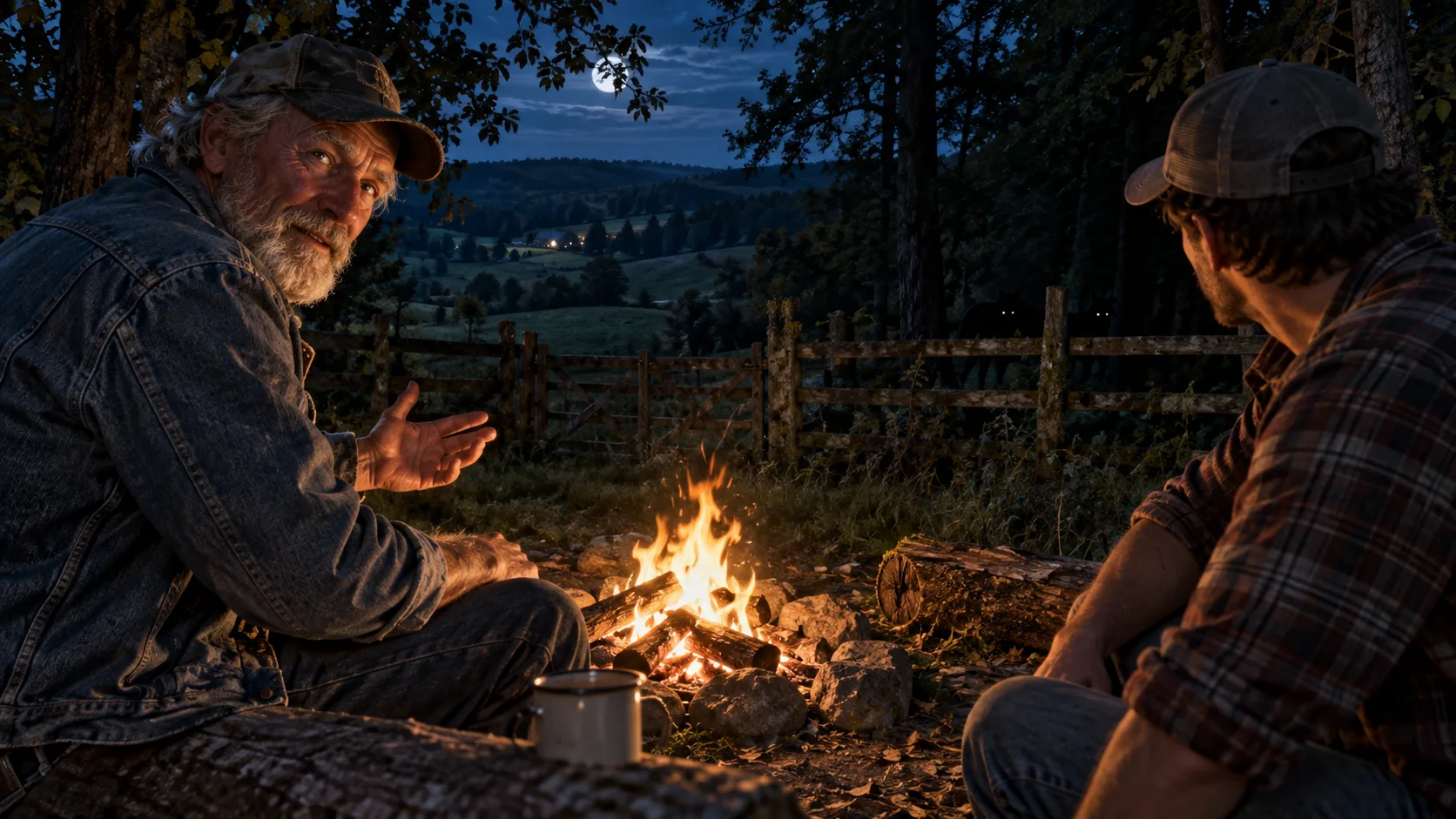
Two adults trade a tense campfire story in Kentucky woodland while small points of eyeshine appear among the trees.

Sign in to save stories to your shelf.

Original Athenaeum essay date: 20 May 2014 — a voicey folklore piece insisting rural Kentucky “knows” werewolves the way cities “know” they do not.

This is a brand-new 2026 archival feature. The 2014 URL is a historical predecessor. We are archiving a cultural argument, not issuing a bipedal-wolf weather alert for the Bluegrass State.

The 2014 desk’s thesis

According to that May 2014 essay, Kentucky werewolf talk is oral infrastructure: campfires, parent warnings, cousin-of-a-cousin sightings. City voices arrive with cameras and skepticism; country voices answer with certainty. Security cameras and phones were supposed to end the debate. Believers, the piece claimed, still saw upright canines at the edge of vision — and argued the animals had simply learned to fear lenses.

The essay name-checked:

  • A long local memory of wolf-men beyond any single viral week
  • Contrast with mid-Kentucky “Gateway” / media-dubbed “Bearilla” gray-giant lore dating to mid-century talk
  • “Recent” (relative to 2014) sightings of a werewolf with a black face and green eyes that had “made the news”
  • Fan chatter and footprint photos online, including a Twitter presence around the Waddy Werewolf nickname tied to 2012 attention

Grain of salt: “everyone has seen one” is folkloric absolute, not a survey cross-tab. Treat the essay as atmosphere and claim, not a census.

Waddy 2012: livestock blood, werewolf nickname, dog DNA

Public reporting around Waddy / Shelby County in 2012 described farm animals mauled at night. Online and local rumor engines reached for a large, dark, hairy attacker. The werewolf label stuck in paranormal blogs the way ketchup sticks to a diner counter.

Follow-up local television (WLKY and related) later carried authorities’ assessment that a domestic dog was responsible for at least the tested livestock attacks — DNA pointed away from the movie monster. That mundane resolution does not erase the nickname from the internet. Folklore eats corrections for breakfast and asks for seconds.

Conspiracy-curious readers will ask whether “dog” was a convenient lid. Skeptics will ask why cryptid sites skipped the DNA graph. Archival practice: report both the panic brand and the official animal-control direction without inventing a cover-up document we do not have.

Why Kentucky keeps the upright wolf

Appalachian and Bluegrass night country offers the right stage: timber edges, farm gaps, coal-dark hollows, oral tradition that never needed Hollywood permission. Dogman / werewolf overlap in neighboring states bleeds across the Ohio River in conversation if not in tracks. The 2014 essay’s chip-on-shoulder voice — rural knowers vs. urban scorn — is itself part of the legend’s immune system.

Entertainment value is high. Verification value stays stubbornly low: blurry photos, print casts without chain of custody, green-eye claims that love headlights.

What this 2026 rewrite will not do

  • Will not teach anyone how to become a werewolf
  • Will not invent a 2026 sighting tally or membership of any “werewolf club”
  • Will not assert that Waddy hosts a breeding population of lycanthropes
  • Will not pretend the 2014 “recent news” green-eyed figure was scientifically documented

Oral tradition versus headline tradition

The 2014 Athenaeum essay argued that Kentucky’s werewolf belief is less a single news peg than a standing cultural weather system. That distinction still helps. A livestock week in Waddy can mint a nickname; it cannot invent the older habit of warning kids about something upright in the brush. Oral tradition absorbs news pegs the way soil absorbs rain — unevenly, with runoff.

When media arrives with a debunk, believers often hear class contempt rather than data. When believers answer with “we know what we saw,” skeptics hear anecdote inflation. The gap is the story as much as the creature is.

Green eyes, headlights, and the persistence of detail

Specific traits — black face, green eyes — travel well because they feel like evidence. Eyes shine. Headlights invent color. Fear edits memory toward the cinematic. None of that proves every witness is lying. It proves human perception is a dramaturg. An archival desk can love the detail and still refuse to promote it to zoological fact.

If future Kentucky coverage produces clear multi-witness video with scale, or a wildlife agency identification of a known animal behind a famous scare, fold it in. Until then, the Bluegrass werewolf remains what the 2014 piece essentially celebrated: a story people tell in the dark because the dark still works.

Desk posture on living legends

Kentucky’s upright-canine talk will outlast any single DNA swab from a goat pasture. That endurance is the anthropological fact worth saving. The zoological fact worth saving is that we still lack a type specimen. Hold both thoughts. Read the 2014 essay as a primary source for attitude, not as a field guide. And if something large really is killing stock in the Commonwealth tomorrow, start with the county extension office and the sheriff — not a Twitter werewolf fan account.

Relative time, fixed

The 2014 essay’s “recent sightings” and “made the news” lines are frozen to that publication year. They are not a 2026 sighting bulletin. Waddy’s 2012 livestock panic is likewise fixed. Anything newer belongs in a new cited file, not smuggled into this refresh as if the Bluegrass sprouted fresh packs on demand.

Bottom line: Kentucky’s werewolf corpus is real as folklore — campfire law, 2012 Waddy livestock panic, 2014 Athenaeum advocacy for rural belief — and unproven as zoology. Keep the 20 May 2014 essay dated. Believe carefully. Walk loudly if you prefer coyotes to legends.


Sources

  • Claim element: 2014 folklore essay (Waddy mention, green-eyed “recent” sightings, Bearilla contrast) — Attribution: Monstrum Athenaeum historical predecessor, 2014-05-20 — Link: Werewolf Legends of Kentucky
  • Claim element: Shelby / Waddy livestock attacks; dog DNA direction — Attribution: WLKY local reporting — Link: WLKY dog responsible
  • Claim element: Broader “mystery creature / farm attacks” color — Attribution: Secondary outdoor / paranormal writeups — Link: Treat as rumor amplifiers; verify against local news

About this article

This article summarizes publicly available historical claims for news, commentary, criticism, and entertainment. Descriptions of alleged cryptid, paranormal, or anomalous activity are attributed to named third-party sources and have not been independently verified by Monstrum Athenaeum unless explicitly stated. This 2026 piece is a brand-new archival feature; linked earlier URLs are historical predecessors, not prior publications of this text. Links are for attribution and reader verification. We link out rather than republish original media files. Grain of salt always. MonstrumAthenaeum.org is intended for mature audiences and does not claim scientific confirmation of any cryptid’s existence. Not medical, legal, or safety advice.

Original publication credit

Original title: Werewolf Legends of Kentucky. The preserved copy has no named writer credit. Originally published May 20, 2014.

Continue reading.

Stay with the strange.

Explore the front page →