Books & film
Wolf Man (2025): Leigh Whannell on Losing the Human Point of View
Leigh Whannell describes Wolf Man’s transformation through changing senses, practical makeup and the fear of failing to protect a family.
Sign in to save stories to your shelf.
A werewolf’s face can change in front of the camera. Leigh Whannell wanted the world behind that face to change as well.
In a January 17, 2025 interview with the BFI’s Lou Thomas, the Wolf Man director described his interest in the creature’s sensory experience: a shift in how familiar surroundings sound and look, rather than another contest to reproduce a famous bones-breaking transformation.
He linked the screenplay, co-written with Corbett Tuck during the 2020 lockdown, with anxiety about infection, isolation and protecting children. The character’s changing body carries a fear that is already close to home: wanting to keep a family safe while becoming unable to trust yourself.
Whannell also discussed his preference for prosthetic makeup on an actor’s face. His influences included the practical-effects horror he grew up admiring. That explains a creative approach; it does not require borrowing another critic’s verdict on the finished film.
The danger follows the family indoors
Universal’s February 3 home-release announcement outlines the premise. Blake, played by Christopher Abbott, takes his wife Charlotte and daughter to his childhood home in rural Oregon. After an animal attack, they barricade themselves inside. His injuries worsen as his behavior changes, leaving Charlotte to confront danger within the house as well as outside it.
The studio announced digital availability from February 4 and physical editions from March 18, with material on prosthetics and the film’s soundscape. Those promises echo Whannell’s interview: the transformation is conceived as something the audience experiences through a person’s changing senses.
The family home is an especially effective place to put that idea. Doors and walls usually divide safety from danger. A transformation under the same roof makes the boundary move with someone the others love.
Sources
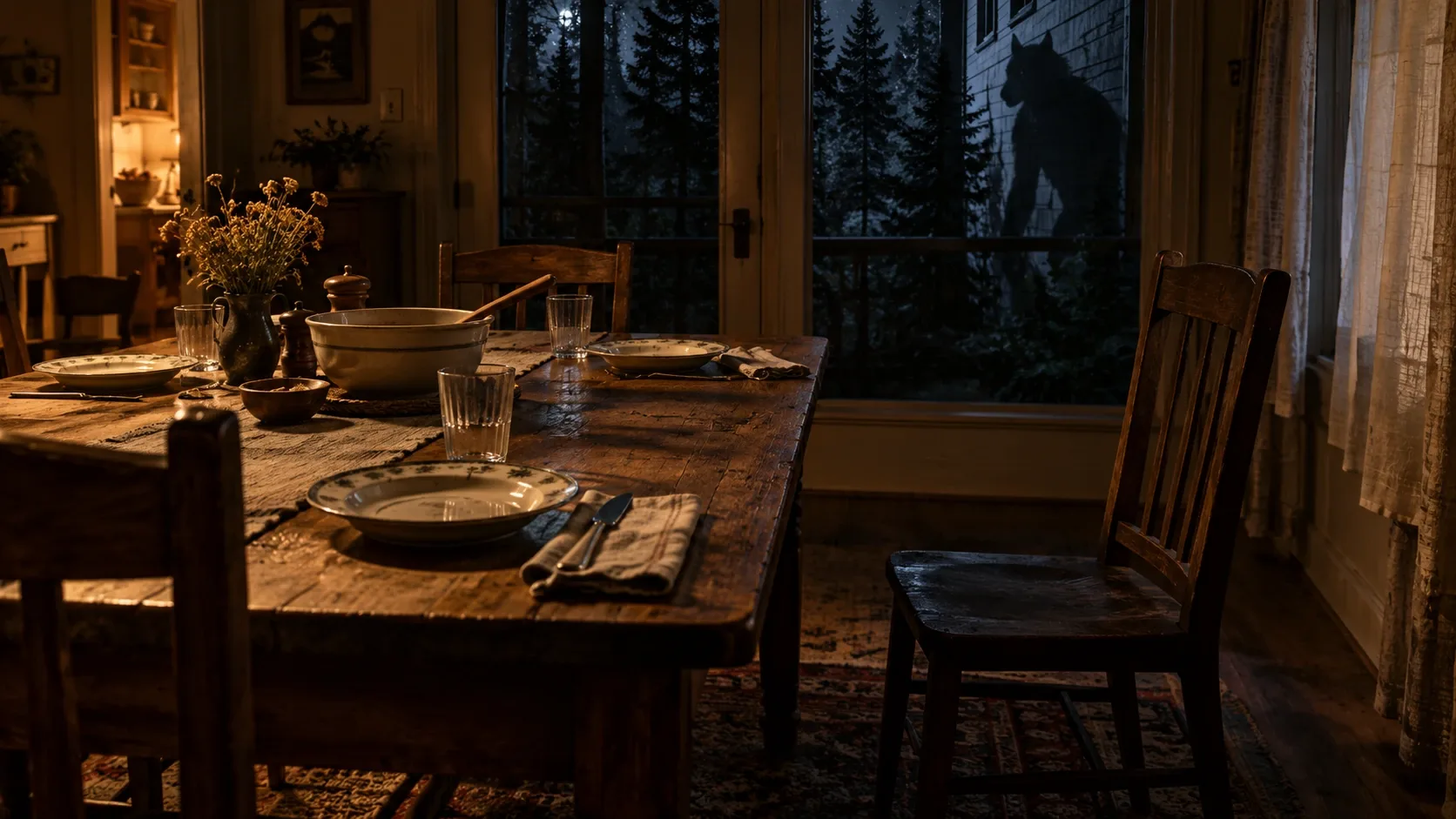
Original thematic illustration; not a film still, actor likeness or set recreation.