Standard cryptid news / feature Rural establishment ~6 km from Río Mayo, Chubut Province, Argentina (ranch / region)
Five Horses Dead Near Río Mayo — Soft Tissue Gone, Chupacabras Whispered, Lights Claimed
Near Río Mayo, Chubut, a rancher says five horses lost eyes, tongues and ears with little blood. ADNSUR: no proof links claimed sky lights. Necropsy missing.
Sign in to save stories to your shelf.
Update — September 16, 2026: Police have since offered a climate-and-scavenger explanation for the condition of the horses. Read our Río Mayo official-response update, which also distinguishes that explanation from a completed veterinary finding. The earlier report below records the initial claims; the reported lights remain unverified and unlinked.
Something walked the Patagonian night near Río Mayo — or something waited until the horses were already dead and then ate the soft parts. Or something stranger. Or nothing stranger at all.
On September 1, 2026, ADNSUR published a rural report that lights up every cryptid keyword in Spanish: five equines found dead on a campo about six kilometers from Río Mayo, Chubut, Argentina; soft tissue missing from eyes, tongues, ears, head, neck, and other sites; little or no spilled blood; a rancher who says he knows how a puma kills and this was not that. After the photographs traveled, stories of strange lights in the same corridor began to stack. ADNSUR's own copy draws the line: there is no proof linking the lights to the deaths.
Monstrum Athenaeum has not independently inspected the carcasses, run a necropsy, or verified a single sky light. We have verified that a named producer gave a detailed interview, that regional press framed the case with a chupacabras question mark, and that the missing scientific step — a proper post-mortem — is still the hole in the middle of the story.
Not proven chupacabra. Not proven UAP. Soft tissue and lights do not equal a new Patagonian species.
What Francisco Quilodrán says he found
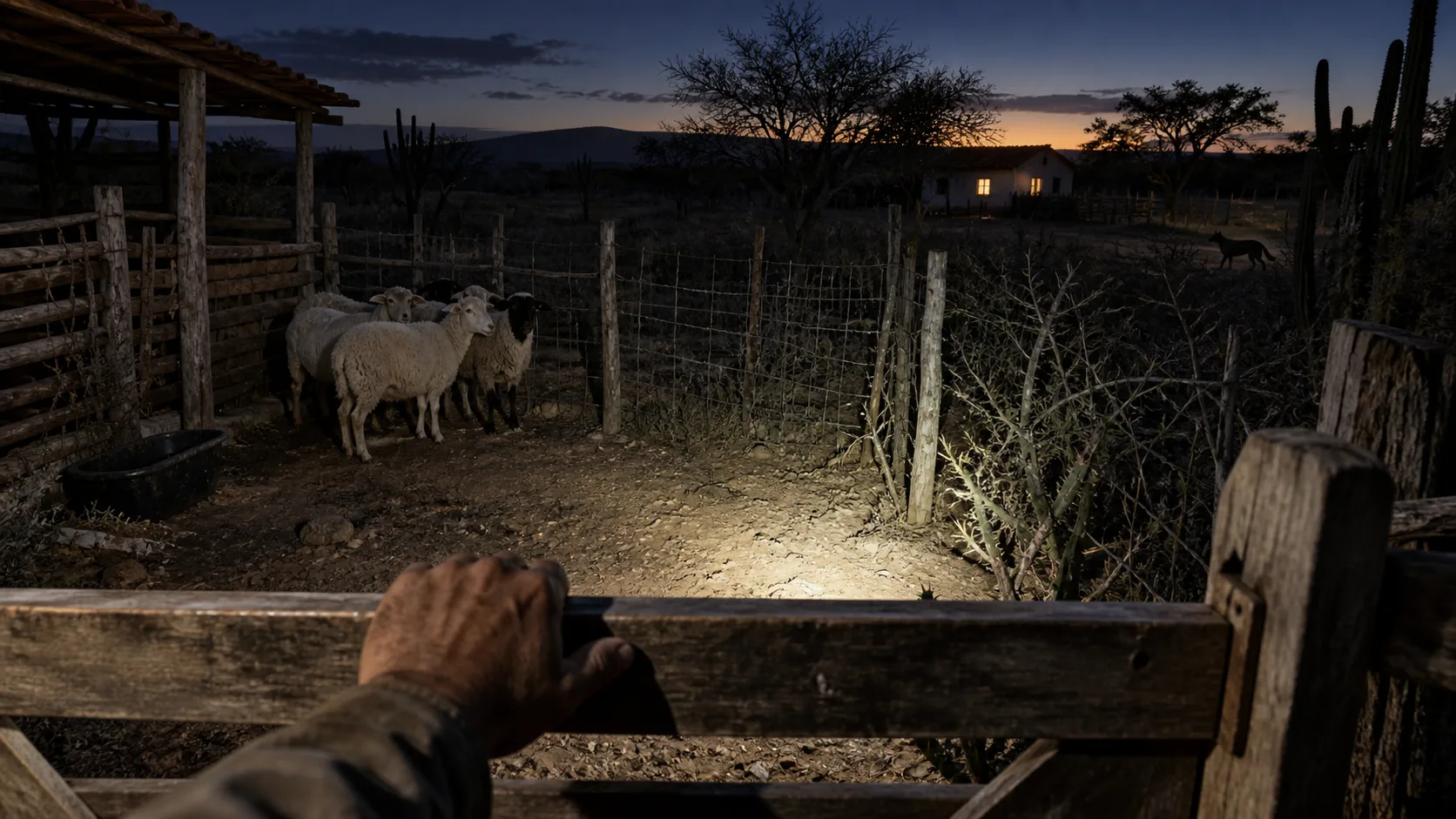
According to ADNSUR — drawing on reporting tied to the outlet RíoMayo1935 and an interview with journalist Raúl Oliva of Radio Nacional — rancher Francisco Quilodrán discovered five of his animals dead: three mares and two adult horses. The campo sits roughly six kilometers from Río Mayo, toward the junction with Ricardo Rojas and Alto Río Senguer.
The first body did not scream conspiracy; he thought one mare might have died of natural causes. Then he got closer. An eye was gone. Other carcasses followed with a similar pattern: in some cases eyes missing, in others tongue, ears, and soft tissue from the head, neck, and elsewhere. He told the press it was the first time in his life he had seen anything like it (Es la primera vez en mi vida que veo algo así).
He also described what was not there. No blood pooled the way he expected. No tracks. No predator choreography he associates with puma, fox, or the usual campo scavengers. Uno se crió en el campo y sabe cómo matan los bichos — you grow up on the land and you know how the animals kill, he told Oliva. That experiential claim is powerful for rural readers. It is still a claim, not a lab result.
One animal, ADNSUR notes, was found in standing water. Quilodrán said his dog drank from the same place without trouble and that other horses remained alive, so he did not hang the deaths on obvious contamination — he considered a poison-pond theory and tentatively set it aside. He photographed and filmed the scene and showed material to other rural workers and people with veterinary connections; as of the cited reporting, nobody handed him a concrete cause.
Soft tissue, little blood: scavenger, decomp, predator, or unknown
This is where hypersensational desks stamp CHUPACABRA in forty-point type. We keep the stamp in the drawer and walk the differential.
Scavenger / delayed discovery. Eyes, tongues, lips, ears, and perineal soft tissue are preferential targets for birds, foxes, dogs, and insects once an animal is down. A carcass found “bloodless” hours or days later can look surgically strange to a shocked owner even when the sequence was ordinary: death first, scavenging second.
Decomposition and drying. Soft tissue can slough, shrink, or be carried off while pooled blood soaks into arid soil, is lapped by scavengers, or never looked dramatic because the animal died without a dramatic external bleed. “No blood on the ground” is a classic mutilation motif worldwide — and also a classic observation when discovery is late and the ground is thirsty.
Predator that does not match the rancher's mental model. Puma kills in the region are real. Quilodrán says this did not look like the puma work he has seen. That mismatch matters as testimony. It does not erase every other carnivore, atypical feed, panicked pile-up, or disease process that can drop an animal before scavengers rearrange the face. “Not the puma I know” is not the same sentence as “unknown predator confirmed.”
Unknown / unresolved. Until someone with a scalpel and a notebook does a necropsy — time of death, hemorrhage versus post-mortem tissue loss, gastric contents, toxicology, predator DNA if present — the file stays open. ADNSUR itself flags veterinary evaluation, especially necropsies, as the path to a concrete cause, and the cited reporting does not describe that necropsy happening. Honest desk read: unknown pending forensics, with folklore already wearing the jersey.
Latin America's chupacabra brand — blood-poor livestock, soft parts missing, rural fear — travels because it is a media shape, not because every dry carcass in Chubut shares DNA with 1990s Puerto Rico panic. Naming the shape is journalism. Minting a specimen is not.
The lights: unverified, post-photo, and unlinked
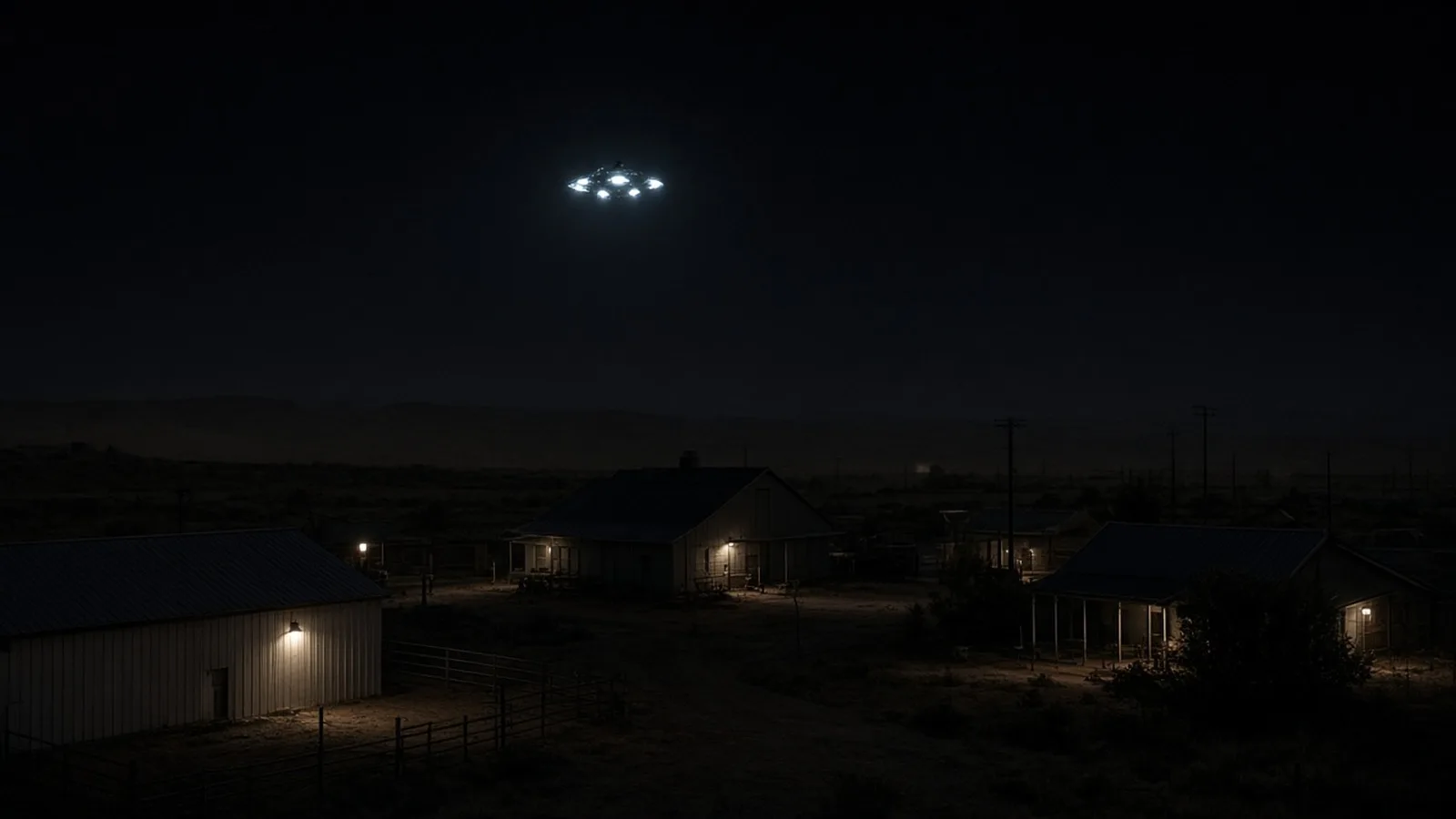
After the images spread, the story grew a sky. Quilodrán told ADNSUR that workers heading toward the Orizon mineral-water plant allegedly saw a light ten to fifteen days before the horse find, on a morning that was still just breaking — a luminous object described as plate-shaped, with something like a tail. Occupants of a traffic van reportedly stopped to record it; the light vanished when they got out. Other people later claimed night lights over rural sectors, and messages allegedly arrived from as far as Puerto Deseado. Quilodrán himself recalled seeing a large light with accompanying points the previous year and shrugging it off.
File all of that under unverified light claims. Some accounts are said to predate the find by days or weeks; others appear after photos circulated. Memory, suggestion, and corridor gossip are not GPS tracks. ADNSUR states plainly that no proof connects the mentioned lights to the five equine deaths. Lights are not causation. Lights are not a chupacabra. Lights are not UAP confirmation.
Geography without the trespass fantasy
The publishable pin is the town of Río Mayo, Río Senguer Department, southwest Chubut, Argentina (CPA U9030). The deaths are attributed to a private rural establishment about six kilometers out, along the corridor toward Ricardo Rojas and Alto Río Senguer; the ranch's exact coordinates stay unpublished. Do not invent an estancia street, gate code, or “hotspot” hike. Dead livestock on private land are a veterinary and owner problem, not a cryptid safari.
Where the story stands
In late August / early September 2026 coverage, Francisco Quilodrán reported five horses dead on a campo about six kilometers from Río Mayo, Chubut, with soft tissue missing from eyes, tongues, ears, and other sites, little blood, and no predator sign he recognized. Photos spread; light-in-the-sky claims followed, all of it unverified in the sense of independent confirmation and explicitly unlinked to the deaths by ADNSUR. No necropsy appears in the cited reporting. Not proven chupacabra. Not proven predator anomaly. Not proven UAP.
Salt the lights. Credit the rancher's shock. Demand the necropsy the story still owes the horses.
Sources
Entertainment / cryptid-news commentary only — not scientific confirmation of a chupacabra, unknown predator, or UAP event in Chubut. Soft-tissue livestock claims and sky-light anecdotes are attributed to third-party press and named interviewees; Monstrum Athenaeum has not performed field inspection or necropsy, and offers scavenger/decomposition/predator explanations only as general possibilities. ADNSUR reports no proof connecting claimed lights to the horse deaths; treat light reports as unverified and unlinked. If livestock are dying, contact local authorities and veterinary services; do not trespass on private campos. MonstrumAthenaeum.org is for mature audiences who can tell a panic from a species.