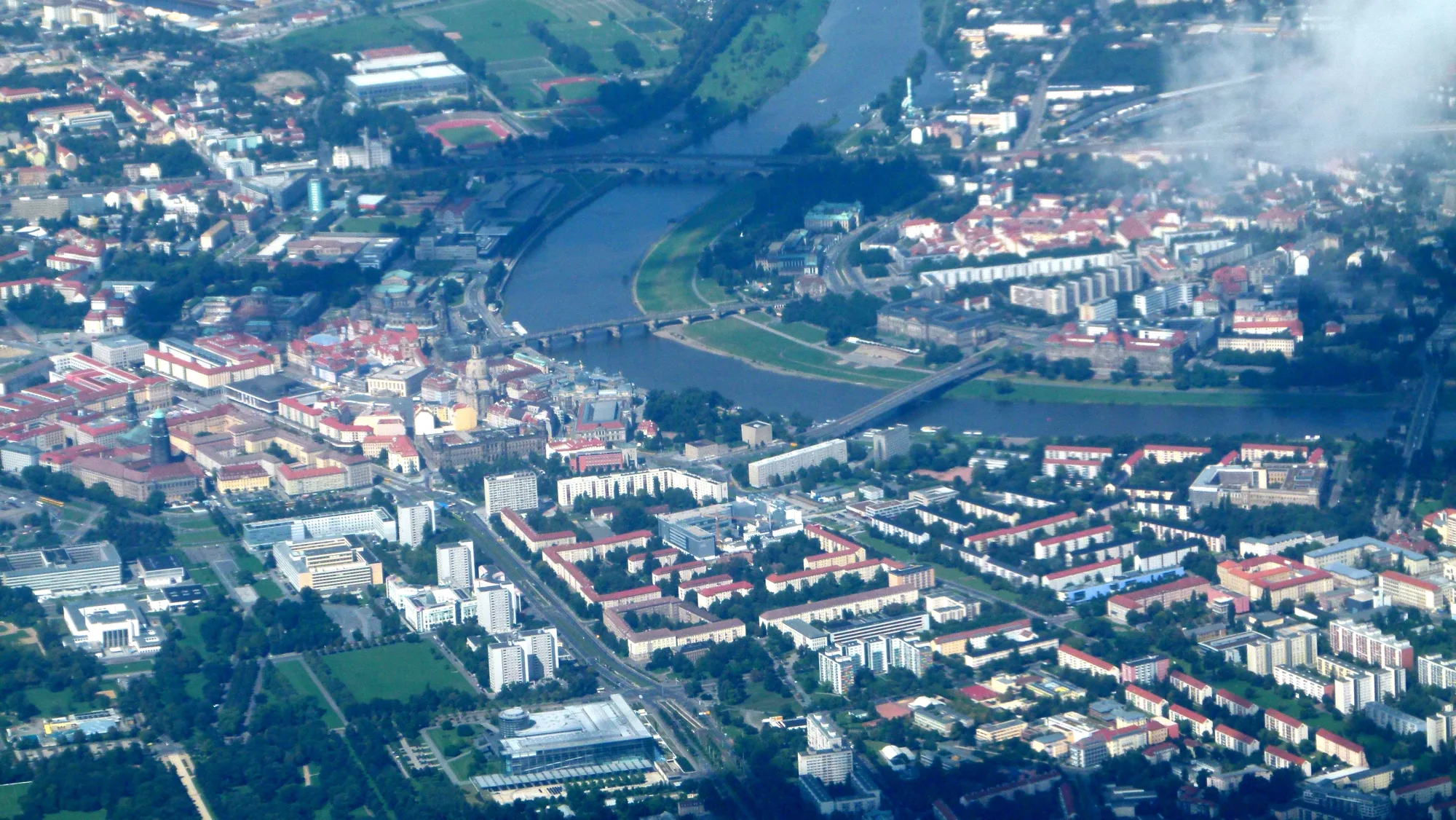
Cultural event Neumarkt, in front of the Frauenkirche, Dresden, Saxony, Germany
Dresden's Wolf-People: 66 Sculptures and a Political Argument
In March 2016, 66 wolf-headed metal figures stood a week before Dresden's Frauenkirche. DW reports the artist's message and the reactions he describes.
Sign in to save stories to your shelf.
For one week in March 2016, a pack of metal wolf-people stood on the square in front of Dresden's Frauenkirche. They were not folklore. They were an argument, cast in metal, about hate.
The installation
German broadcaster Deutsche Welle's March 15 report by Klaus Krämer counts 66 figures up to two meters tall and almost three and a half meters wide. On closer look, he writes, they are not typical wolves but "Wolfsmenschen," wolf-people: a human body with a wolf's head and tail, with deadly claws in place of hands and feet. Titles include "Blind Soldier," "Mitläufer" (follower), "Blinder Hasser" (blind hater) and "Anführer" (leader). Each was cast from about five hundredweight of metal and brought to the Neumarkt by five trucks.
The sculptor is Rainer Opolka. The project, "Die Wölfe sind zurück" ("The wolves are back"), is dedicated, he says, to victims of war, hate and violence. It was officially opened on Wednesday, March 16, 2016, for a week. The square is where the anti-Islam movement Pegida usually demonstrates, DW notes.
What the artist says it means
Opolka's own explanation, which DW quotes from the project's website, is that the pack stands symbolically for "haters, firebomb throwers, neo-Nazis, angry Pegida supporters and AfD members who want to shoot at refugees." He asks "What happens when man becomes man's wolf?" These characterizations are his; we report them only as his statement of purpose. The city administration supported the project: Dresden's second mayor, Annekatrin Klepsch, called it a "visible sign for solidarity, tolerance, respect and openness to the world."
The wolf-people were accompanied by information boards and by blank boards on which passers-by could write.
The week, according to him
In a March 23 interview, Opolka said about 500 people had gathered round the clock at the weekend, with more than a thousand at times, and that all 10,000 copies of a 40-page brochure were gone by Monday. He estimated roughly 1,500 messages on six boards, ranging from "listen" and "respect" to statements he called critical, such as "Anyone who believes in Islam is dangerous." He said he spoke with perhaps 100 Pegida supporters, some respectful of the craft and some shouting abuse, with a few calling it "degenerate art." He also said he received a threatening letter the day before. His stated message: "We must outlaw hate and violence, no matter from which side."
The pack was due to travel to Potsdam, where a new exhibition would open on April 14, and Opolka said he intended to visit every German state capital.
Why it belongs here
The werewolf idea is present in image, not in belief: bodies of people, heads of wolves, a long-running way to picture people who turn on each other. DW itself never uses the word "werewolf." The project belongs to the broad, old tradition in which a man-wolf stands for something about society, and it is useful on this desk as a 2016 example of that metaphor in the street.
Bottom line
Per Deutsche Welle, sculptor Rainer Opolka's 66 wolf-people stood on Dresden's Neumarkt from March 16 to 23, 2016, as a statement against hate and violence. Its political reading, including who the wolves represent, is the artist's own, as are the attendance and message figures; none was independently counted in the sources we read.
Attribution / source table
- Claim: 66 sculptures, dimensions, titles, metal weight, trucks, artist, project title, dates, Pegida location, Opolka's explanation, Klepsch quote, information boards, tour plans
Attribution: Klaus Krämer, Deutsche Welle, Mar 15, 2016
Link: DW - Claim: Attendance, brochures, messages, reactions, threatening letter, Potsdam Apr 14, state-capital tour
Attribution: Klaus Krämer interview with Rainer Opolka, DW, Mar 23, 2016
Link: DW interview
Legal / disclaimer footer
Entertainment and cryptid-news commentary only. Nothing here confirms a werewolf or any other creature. Claims belong to the sources named, and fiction is identified as fiction.
Dresden city-centre panorama (2011) — Brücke-Osteuropa, via Wikimedia Commons. CC0 1.0: https://creativecommons.org/publicdomain/zero/1.0/ . Contextual photograph, not the installation; converted to WebP without compositional editing.