Entertainment guide Multi-state U.S. (KY Louisville corridor / Pope Lick; MD Prince George's County folklore; TX Lake Worth / Greer Island; WI regional lore)

Goat Man Across America: Four States, One Nightmare Nickname (2026 Archive)

Archival 2026 feature on Goat Man lore in Kentucky, Maryland, Texas, and Wisconsin — Pope Lick, Lake Worth, axe tales. Claims vs legend; original 2015-12-16.

By Cryptid deskFirst published Updated 7 min read
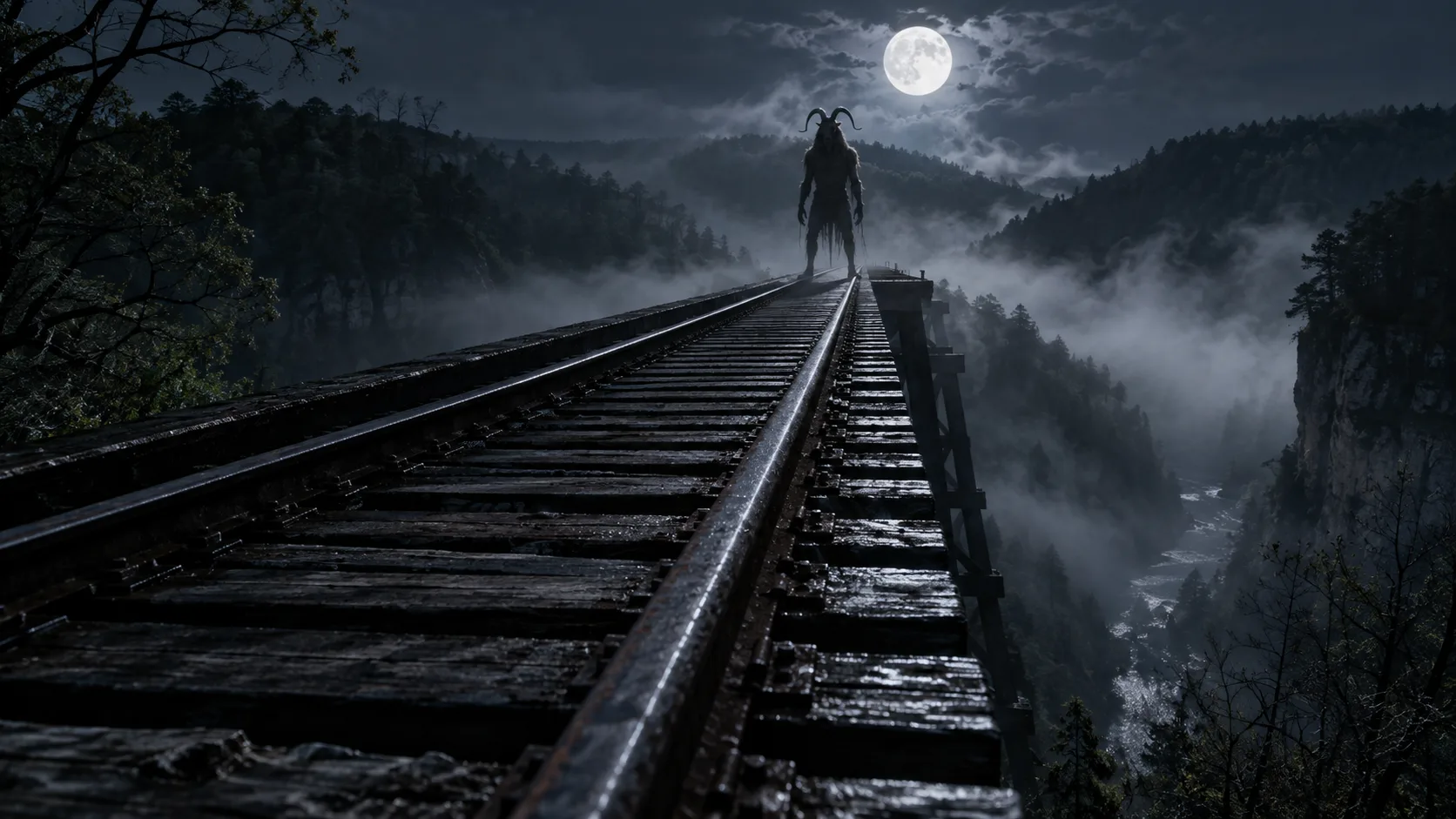
A moonlit railroad trestle over a Kentucky gorge (Pope Lick energy) at night, iron rails vanishing into fog, and at the far end a horned, cloven-hoofed half-goat half-man silhouette standing between the tracks, stringy hair catching moonlight.

Sign in to save stories to your shelf.

Half man. Half goat. Full nightmare branding.

On 16 December 2015, Monstrum Athenaeum published The Goat Man Expands Its Territory — a roundup arguing that horned humanoid legends in Kentucky, Maryland, Texas, and Wisconsin might be cousins under one ugly nickname. This 2026 piece is a brand-new archival feature. It does not pretend the 2015 article is “breaking news.” It keeps that original reporting date stamped on the glass and asks what the claims actually were.

Grain of salt the size of a railroad spike: legend density ≠ verified species.

What the 2015 desk claimed

The predecessor argued that “Goat Man” functions as a shared label for horned, bipedal, car-menacing figures reported in at least four states. Connection between them? Unclear then. Unclear now. What traveled was the nickname — and the habit of telling the same story with local paint.

Wisconsin: the long memory

Wisconsin lore, according to the 2015 framing, stretches deep — possibly centuries in oral culture, with modern tellings of a creature whose lower half is goat and upper half is something worse than human: fangs, horns, stringy red hair on the goat half. Attack narratives cling to the rare appearances. That is folklore cadence, not a wildlife survey. No museum specimen. Plenty of campfire currency.

Maryland: axe, hermit, or lab accident?

Prince George's County's Goatman is the mid-Atlantic headliner. Mid-20th-century tellings and later eyewitness folklore describe a figure that allegedly attacks cars with an axe. Origin stories fork hard: reclusive hermit versus experiment-gone-wrong (Beltsville-adjacent rumor factories love a USDA plot twist).

The 2015 piece floated a darker hook — unsolved forest murders in the 1980s and a “recent resurgence” that Marylanders should fear. Archival correction for 2026: that “recent” language was relative to December 2015. It is not a verified current crime wave, not a police BOLO for a goat hybrid, and not something this desk will refresh as live threat. Folklore archives and local media retrospectives (e.g., Boundary Stones-style history pieces) treat Goatman primarily as urban legend that escaped university folklore collections into regional pop culture.

Claims of murders “caused by” Goatman remain unproven attribution in entertainment coverage. Do not invent convictions. Do not invent closures.

Texas: Lake Worth, July 1969

Texas prefers Lake Worth Monster. The flashpoint date in popular retellings is 9 July 1969 near Greer Island, when local press and police chatter finally took a rash of sightings seriously after reports of an 18-inch gash on a car. Witnesses claimed a creature leapt onto a vehicle around midnight and grabbed toward passengers before the driver escaped.

Guns came out. Summer panic did what summer panics do. Later skepticism often files the episode under hoax, costume, or collective hype — while goatman branding stuck hard enough for decades of nostalgia tourism and anniversary listicles. The 2015 Athenaeum piece stressed the car-attack parallel with Maryland. Parallel storytelling is real. Species continuity is not established.

Kentucky: Pope Lick's cunning cousin

Kentucky's horned figure — often folded into Pope Lick Monster lore around the Louisville trestle corridor — shares the half-man/half-goat silhouette. The 2015 article claimed a nastier toolkit: car attacks plus alleged voice mimicry and even hypnosis-as-hunting-tech. That is high-drama folklore. It is also exactly the sort of claim that thrives because trestles are cinematic and dangerous for human reasons (trains, heights, trespass) long before any goat enters the chat.

Do not treat “hypnosis Goat Man” as field biology. Treat it as regional legend with a body count risk measured in human decision-making on railroad property.

Four states, one nickname — so what?

Put the map pins together and you get a pattern of American goatman folklore diffusion, not a confirmed migration corridor for a breeding population of axe-wielding ungulate-men. Folklorists study how motifs travel: horns, bipedal gait, roadside ambush, scientific-origin rumor, hermit-origin rumor. Cryptid fans study whether any sighting was “the real one.” This desk's 2026 job is to keep both lanes labeled.

What we will not do:

  • Assert a verified 2026 “resurgence.”
  • Publish how-to hunt instructions.
  • Invent membership numbers for hunting parties or conviction tallies for Goatman-attributed crimes.
  • Invite readers onto active trestles or private forest roads.

How a nickname becomes a species (on paper)

Crypto entertainment loves lumping. If Kentucky has a goat-headed trestle devil, Maryland has an axe hermit, Texas has a lake-shore leaper, and Wisconsin has a red-haired ambusher, the tidy headline writes itself: one cryptid, four zip codes. Folklorists reverse the arrow. Motifs travel through newspapers, campus legend collections, Halloween radio, and now listicles. A shared nickname can be evidence of culture moving, not hooves migrating.

That distinction matters for SEO honesty in 2026. Searchers typing “Goat Man sightings” often want a monster dossier. What the record actually supplies is a legend complex: overlapping descriptions, local origin myths, and occasional property damage stories that never quite graduate into verified zoology.

Car culture is the secret sauce

Notice the recurring stage: roads, cars, midnight. Maryland's axe, Texas's rooftop leap, Kentucky's roadside predation — these are twentieth-century American anxieties wearing goat horns. The automobile created mobile witnesses, dented evidence claims, and a reason for teenagers to park where folklore said they shouldn't. Summer 1969 at Lake Worth reads as much like a moral panic with a costume budget as it does a wildlife event. That does not “debunk” every witness emotion. It does explain why Goat Man lore explodes in the car age rather than the mule age.

What “expansion” meant in December 2015

The predecessor title — Expands Its Territory — implied a living range map updating in real time. Archival reading: it was a rhetorical map of motif distribution as understood on 16 December 2015. It was not GPS telemetry on a breeding population. Ten-plus years later, the honest refresh is comparative folklore with dates, not a migration alert for Prince George's County.

Tourism boards and haunted hayrides may still sell goatman nights. Fun. Ticketed fear is not a specimen jar.

Reader protocol (entertainment grade)

  1. Separate named historical flashpoints (Lake Worth, July 1969) from undated campfire upgrades.
  2. Treat axe-murder attributions as unproven folklore overlays unless a court record says otherwise — none is presented here as Goatman-caused.
  3. Stay off active rail trestles. Trains do not care about your content strategy.
  4. Cross-link Athenaeum goatman/Pope Lick features as legend reading, not field manuals.

The nickname is durable. The biology remains unpaid.

Grain-of-salt bottom line

The 2015-12-16 predecessor sold the thrill of a multi-state stalker species. The 2026 archive keeps the thrill of the stories and stamps every violent claim as reported legend / contested folklore. Wisconsin's red-haired goat legs, Maryland's axe, Texas's Lake Worth summer of '69, Kentucky's mimic-voiced trestle devil — they rhyme. Rhymes are not DNA.

If you came from search looking for “Goat Man sightings 2026,” you get history with dates, not a live BOLO. Salt heavily. Stay off the tracks.


Sources

  • Claim element: Historical predecessor (2015-12-16) — Attribution: Monstrum Athenaeum original — Link: The Goat Man Expands Its Territory
  • Claim element: Maryland Goatman as urban legend / folklore diffusion — Attribution: Wikipedia summary; WETA Boundary Stones feature — Link: Goatman (urban legend); Boundary Stones
  • Claim element: Lake Worth Monster 1969 Greer Island cluster — Attribution: Wikipedia / regional cryptid histories — Link: Lake Worth Monster
  • Claim element: Pope Lick / KY goatman trestle lore — Attribution: Athenaeum predecessor + regional legend corpus — Link: Predecessor URL above

About this article

Entertainment and folklore commentary only — not a crime bulletin, not a wildlife advisory, and not verification that any Goat Man, Pope Lick Monster, or Lake Worth Monster exists as a biological entity. Historical violence and unsolved cases referenced in older tellings involve real human tragedy; do not attribute murders to cryptids without court-grade evidence (none is asserted here). Railroad trestles and private property are dangerous and often illegal to access; this article is not an invitation to trespass. The 2015 URL is a historical predecessor; this 2026 text is new. MonstrumAthenaeum.org is for mature audiences who can tell a campfire from a case file.

Original publication credit

Original title: The Goat Man Expands Its Territory. The preserved copy has no named writer credit. Originally published December 16, 2015.


Continue reading.

Stay with the strange.

Explore the front page →