Historical report Gangkhar Puensum area, Bhutan–Tibet border region, Bhutan

Steve Berry’s Bhutan Yeti Tracks: Gangkhar Puensum Snow File (2026 Archive)

2026 archival feature on Steve Berry’s Oct 2014 Gangkhar Puensum track photos — single-file prints, Migoi lore, yak-herder ID claims. Tracks, not a body.

By Cryptid deskFirst published Updated 5 min read
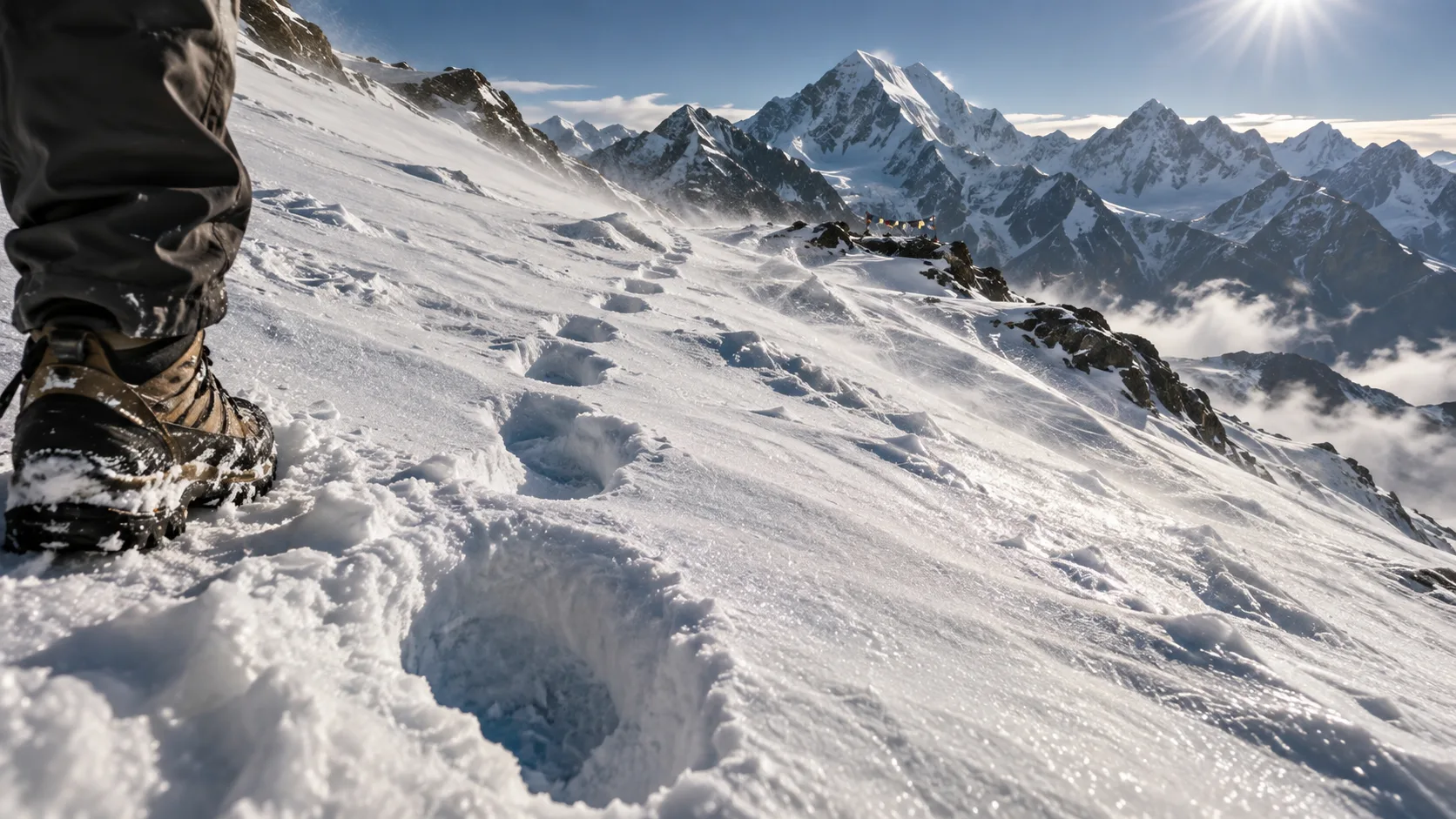
A high Bhutanese snow ledge near Gangkhar Puensum in October light, a single-file line of large deep footprints crossing a steep windswept slope, prayer-flag color a distant speck, jagged Himalayan peaks beyond, a lone trekker's boot at frame edge for scale.

Sign in to save stories to your shelf.

Track-find date in Berry’s account: October 2014, high on approaches toward Gangkhar Puensum — often billed as the world’s highest unclimbed peak — Bhutan.

Press / viral recirculation: early 2016 (Metro, Nation, UK local papers).

Original Athenaeum filing: 11 May 2016 — “Steve Berry Discovers Yeti Tracks In Remote Bhutan Mountain.”

This is a brand-new 2026 archival feature. The May 2016 URL is a historical predecessor. White primate romance sells. A photo of snow dents from 200 yards away is still a photo of snow dents.

Who Steve Berry is in this story

Steve Berry, managing director of UK trekking firm Mountain Kingdoms, is not a random tourist with a selfie stick. He had prior expedition history on Gangkhar Puensum (including a 1980s attempt narrative in company lore) and runs commercial Himalayan itineraries. That cuts both ways: experienced snow-reader… and someone with every incentive to keep the Migoi myth electric for trek marketing. Grain of salt includes the business card.

What he says he saw

According to Berry’s own Mountain Kingdoms write-ups and February 2016 UK press:

  • Bhutanese guide (named in coverage as Karma / Karma Tshering or Karma Tenzing depending on outlet) spotted a line of large prints on a steep snow ledge
  • Altitude cluster in reports: roughly 17,500–17,800 ft
  • Prints larger than a human boot trail, set one directly in front of the other — the bipedal sales pitch
  • Berry said the ledge was cut off by cliffs; locals told him the pass was essentially unvisited
  • He could not cross the chasm to cast or measure — naked-eye / telephoto territory
  • A yak herder later, shown photos, allegedly called them Migoi (Bhutanese Yeti) tracks and claimed a prior upright, dun-haired sighting years earlier

Berry’s comparative claims: not like snow leopard tracks he’d seen; too precise for a bear’s usual gait story; therefore ape-like. That is witness inference, not a peer-reviewed morphometric paper.

Mountain Kingdoms later noted Berry returned near the area in October 2015 and photographed another single-file trail with a sharp turn he found hard to square with four-legged animals. The Athenaeum’s May 2016 piece focused on the 2014 set that had just ridden the press wave.

Yeti / Migoi: consistency is a marketing line

The 2016 Athenaeum lede called the Yeti “possibly the most consistent” worldwide Bigfoot-type legend — large, pale, remote. Folklore is messier than that (brown Migoi descriptions appear in Berry’s own herder anecdote). Do not flatten sacred and regional traditions into one Abominable Snowman mascot without saying you did it for SEO.

Mundane competitors:

  • Bear / ungulate tracks distorted by melt and slope
  • Optical compression across a chasm
  • Wishful pattern-matching after “unclimbed mountain” romance
  • Hoax or embellishment — unproven, but always on the menu

Conspiracy-curious angle: remoteness is perfect cover for a residual ape. Skeptical angle: remoteness is perfect cover for unverifiable photos. Both sentences can live in the same paragraph.

What we do not claim in 2026

No specimen. No hair assay that closes the file. No Royal Bhutan confirmation of a living Migoi census. Berry’s belief is documented; a living cryptid is not. Subsequent Himalayan “Yeti” DNA flaps elsewhere (bear genetics headlines of the 2010s–2020s) cut against romance more often than they crown it — and we are not inventing a 2026 lab result for these prints.

Distance is the silent co-author

Berry’s most honest detail may be the one that undercuts certainty: the prints sat across a vertical drop and serious slope. He could see them. He could photograph them. He could not stand in them with a ruler. Telephoto snow features melt, slump, and double under sun. Single-file gait is a real talking point in Migoi lore — and also a pattern humans love to impose on ambiguous dents.

The yak herder’s ID is culturally meaningful and scientifically non-binding. Local knowledge deserves respect. It is still testimony, not a lab result.

Timeline hygiene

  • October 2014: primary track find near Gangkhar Puensum approaches (~17,500–17,800 ft cluster in reports)
  • October 2015: Berry’s reported return / second track set (company blog)
  • February 2016: UK and international press wave
  • 11 May 2016: Athenaeum historical predecessor
  • 2026: archival — no verified Migoi specimen claimed here

Commercial gravity (say it out loud)

Mountain Kingdoms sells Himalayan romance. Yeti ink sells trek dreams. That does not make Berry a liar. It does mean readers should weigh incentive the same way they’d weigh a casino press release about luck. Experienced mountaineer + tourism MD + sacred mountain + uncollected casts = a story that wants to be true. Wanting is not plaster.

Bottom line: In October 2014, Steve Berry photographed single-file high-altitude tracks near Gangkhar Puensum and argued Yeti/Migoi; early-2016 press and the Athenaeum’s 11 May 2016 digest amplified the claim. This 2026 archive keeps the altitude, the chasm, and the uncollected plaster cast.


Sources

  • Claim element: May 2016 house digest — Attribution: Monstrum Athenaeum historical predecessor, 2016-05-11 — Link: Yeti Tracks Pictured Bhutan
  • Claim element: Berry track narrative / photos / 2015 follow-up — Attribution: Mountain Kingdoms blog — Link: Mountain Kingdoms
  • Claim element: Local UK / wire press cluster (Feb 2016) — Attribution: Gazette Series; Metro; Nation — Link: Gazette Series

About this article

This article summarizes publicly available historical claims for news, commentary, criticism, and entertainment. Descriptions of alleged cryptid, paranormal, or anomalous activity are attributed to named third-party sources and have not been independently verified by Monstrum Athenaeum unless explicitly stated. This 2026 piece is a brand-new archival feature; linked earlier URLs are historical predecessors, not prior publications of this text. Links are for attribution and reader verification. We link out rather than republish original media files. Grain of salt always. MonstrumAthenaeum.org is intended for mature audiences and does not claim scientific confirmation of any cryptid’s existence. Not medical, legal, or safety advice.

Original publication credit

Original title: Steve Berry Discovers Yeti Tracks In Remote Bhutan Mountain. The preserved copy has no named writer credit. Originally published May 11, 2016.


Continue reading.

Stay with the strange.

Explore the front page →