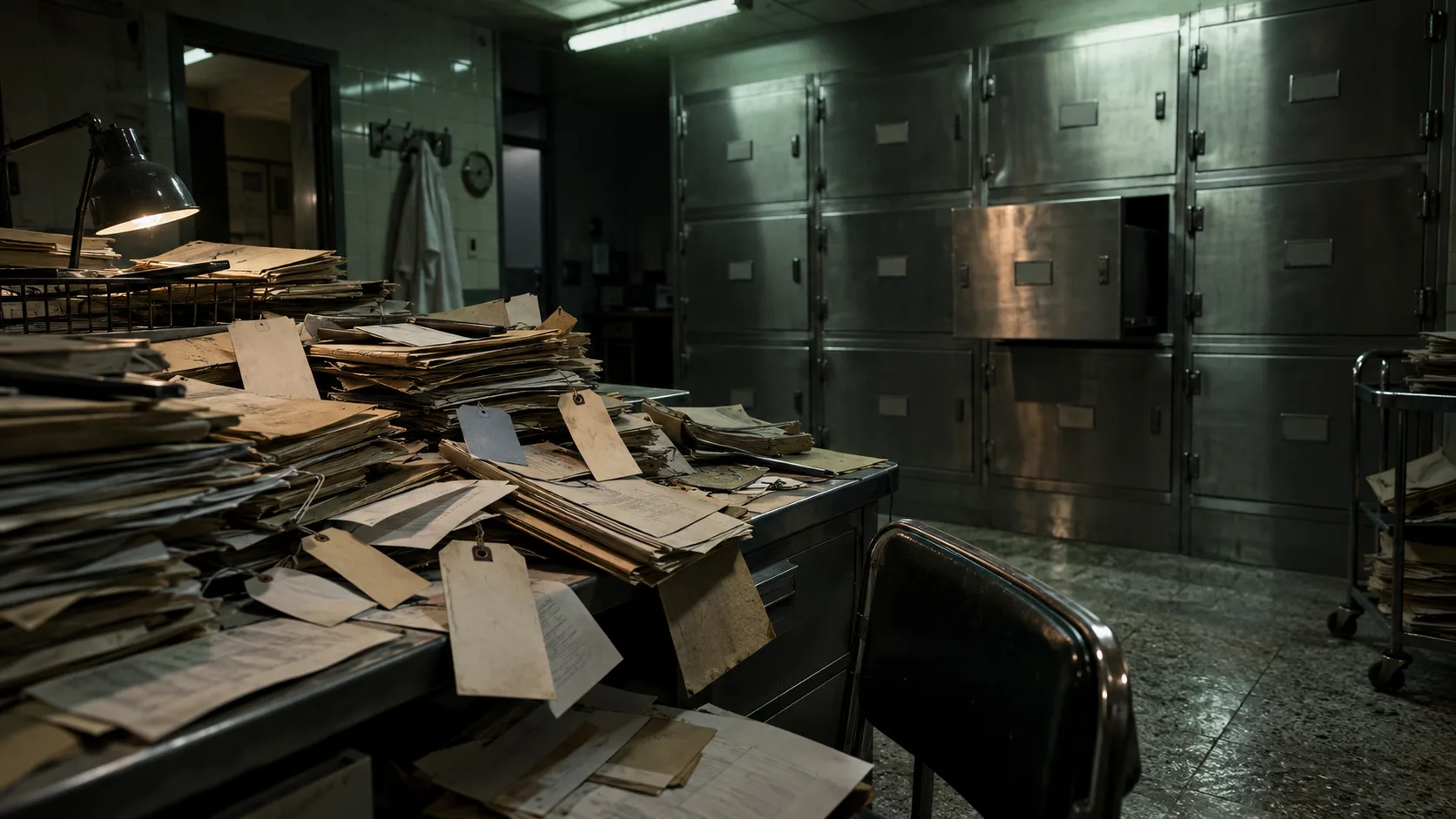
Historical report Buenos Aires City public-hospital morgue discourse region, Argentina
Buenos Aires Missing Bodies Archive: Morgues, Paperwork, and the 2014 “Ghoul” Peg
2026 archival feature on Athenaeum’s May 23, 2014 Buenos Aires morgue piece—216 unaccounted bodies, paperwork chaos, dated ghoul speculation, no occult claims.

Sign in to save stories to your shelf.
Original Athenaeum reporting date: May 23, 2014.
Death is paperwork until the paperwork fails. Then death becomes a horror movie — and every cryptid desk on Earth smells a ghoul.
On May 23, 2014, Monstrum Athenaeum published a short panic piece about more than 200 bodies “gone missing” from Buenos Aires hospital morgues, then asked the question the brand was built to ask: what if it wasn’t just clerks? What if something with an appetite was eating the ledger?
This 2026 article is a brand-new archival feature. It keeps the original date hard, salts the monster metaphor, and puts the scandal back where serious Argentine reporting already put it: morgue mismanagement, registry chaos, and a contentious judicial probe — not a supernatural body-snatcher franchise.
What public reporting actually described (2013–2014)
According to contemporary Argentine and regional coverage (Página/12, Caracol Radio summarizing local wires, later Infojus follow-ups), Contencioso Administrativo judge Andrés Gallardo opened a sweeping look at city-hospital mortuaries after burial-authorization paperwork looked wrong. Allans of multiple public-hospital morgues in August 2013 reportedly found:
- bodies in advanced decomposition under deplorable conditions;
- duplicate identities / mismatched names;
- remains registered as present that could not be located;
- unidentified fetuses and newborns in chaotic records;
- early tallies in the first six hospitals analyzed circling around 216 unaccounted bodies.
Workers’ representatives in period coverage often blamed chronic understaffing. City officials and the judge’s chambers fought procedurally — recusals, stalled boxes of documents, political heat. That is bureaucracy as gothic novel. It is still bureaucracy.
Athenaeum’s 2014 piece compressed that mess into “six of twenty-two hospitals,” “lists saying bodies were delivered yet they never were,” and a cover-up vibe. Fair as atmosphere. Weak as forensics for fangs.
What Athenaeum added (and why we cage it)
The original argued the sheer number “suggests something more systemic,” then reached for ghouls — folklore eaters of the dead — because Athenaeum’s beat is monsters first, municipal audits second.
Grain of salt: no court, wire, or hospital union in the serious record attributed the missing bodies to a cryptid. The ghoul line is dated entertainment speculation. In 2026 it stays labeled as such. We do not invent a conviction of a night-creature. We do not invent a clean “case closed: it was vampires” ending. We do not claim present-tense knowledge of every unresolved administrative file.
Why ghoul talk attaches to morgue scandals
Folklore loves a corpse that won’t stay accounted for. Ghouls, necrophages, body-snatcher legends — they are cultural software for grief that cannot find a funeral. When a city can’t tell families where a loved one’s remains went, the mind fills the blank with appetite. Conspiracy-curious readers want a cover-up with teeth. Skeptical readers want payroll and refrigeration logs. This desk’s job is to show both hungers without pretending they are the same meal.
Archive rules for 2026
- Keep May 23, 2014 as the Athenaeum peg date (the underlying Argentine scandal peaked in public view in 2013 raids; Athenaeum arrived late and weird).
- Attribute ~200 / 216 unaccounted-body figures to period journalism, not Athenaeum invention.
- Label ghoul talk as dated speculation.
- Do not invent later occult “solutions.”
- Do not turn hospital basements into tourism.
Bottom line
On May 23, 2014, Monstrum Athenaeum filed a Buenos Aires morgue scandal under a ghoul headline because missing dead make excellent monster bait. In 2026 we keep the bait as media folklore, date the original hard, and leave the serious story where it belongs: broken systems, contested courts, and families denied closure. Salt the ghoul. Respect the dead. Blame the ledger before you blame the legend.
Grain of salt: No Athenaeum confirmation of ghouls in porteño morgues. The 2014 URL is a historical predecessor; this text is new.
Sources
- Claim element: Historical predecessor (2014-05-23) — Attribution: Monstrum Athenaeum original — Link: Are Ghouls Behind Two Hundred Missing Bodies?
- Claim element: August 2013 hospital morgue allans; deplorable conditions; registry chaos — Attribution: Página/12 — Link: Cadáveres sin ningún control
- Claim element: ~216 missing across early six hospitals; Gallardo probe framing — Attribution: Caracol Radio (EFE/local summary) — Link: Investigan morgues en Argentina…
- Claim element: Later stalling / recusal context around the probe — Attribution: Infojus Noticias archive — Link: Un año sin avances…
About this article
Archival historical / folklore commentary only — not live court reporting, not an accusation of supernatural body theft, and not guidance on accessing hospital mortuaries. Figures for unaccounted remains come from period journalism and judicial coverage, which may differ by hospital subset and date. Treat victims and families with dignity. The 2014 URL is a historical predecessor, not a prior publication of this 2026 wording. Mature audiences; grain of salt required.
Original publication credit
Original title: Are Ghouls Behind Two Hundred Missing Bodies?. The preserved copy has no named writer credit. Originally published May 23, 2014.