Folklore and cultural history Ayrshire, Scotland; historical and literary context
How to Celebrate Halloween the Old Way
Host an atmospheric Halloween with Burns-inspired games, apples, ghost stories and clearly labelled modern recreations of old customs.
Sign in to save stories to your shelf.
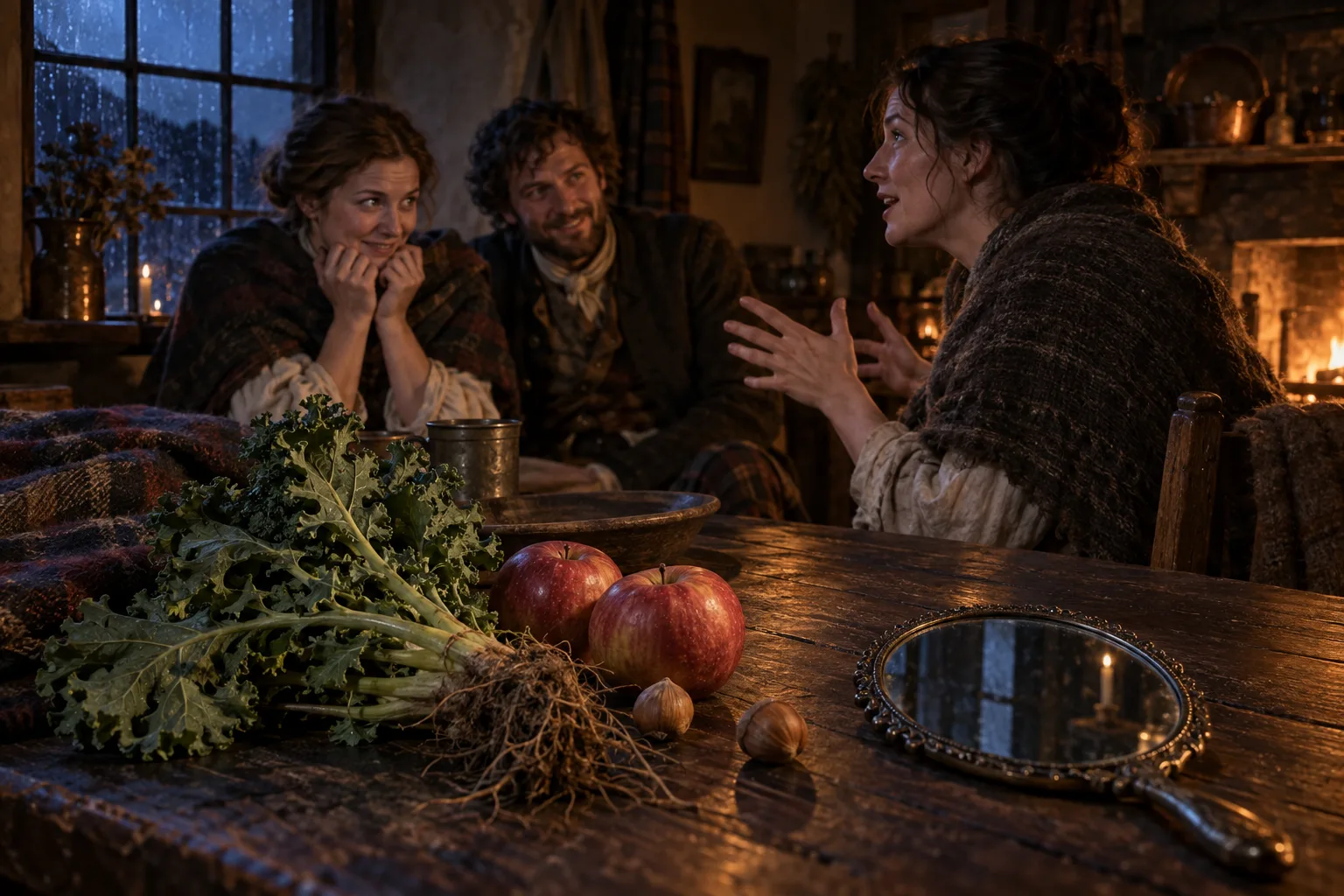
Forget the foam tombstones for a minute. For an older kind of Halloween evening, put apples on the table, bring out a looking-glass, and invite your guests to wonder who might be standing just beyond its reflection.
You do not need an invented grimoire. Robert Burns left a much better party prompt: a poem with footnotes explaining the courtship games of an Ayrshire Halloween. The attraction is wonderfully human. People wanted to know who would love them, whether that love would last, and whether the darkness might offer an answer.
Here is how to turn those records into an atmospheric evening of food, stories and harmless fortune-telling. The historical customs and our modern adaptations are labelled separately. Nobody has to believe the prediction to enjoy the delicious pause before it.
Start with Burns’s Halloween, not Burns Night
Burns wrote Halloween in 1785; it appeared in his 1786 Kilmarnock collection. This is different from the January Burns supper. As National Library of Scotland curator Robert Betteridge explains in his account of the poem, its subject is marriage divination rather than guising or lantern carving. Burns added notes to explain customs unfamiliar to some readers.
The poem offers an evening’s framework: anticipation, teasing, an ordinary object turned into an omen. Read a little aloud, then let your guests supply the laughter. The Robert Burns Birthplace Museum’s discussion reproduces several of the relevant notes.
The kail game: a future lover in a cabbage stalk
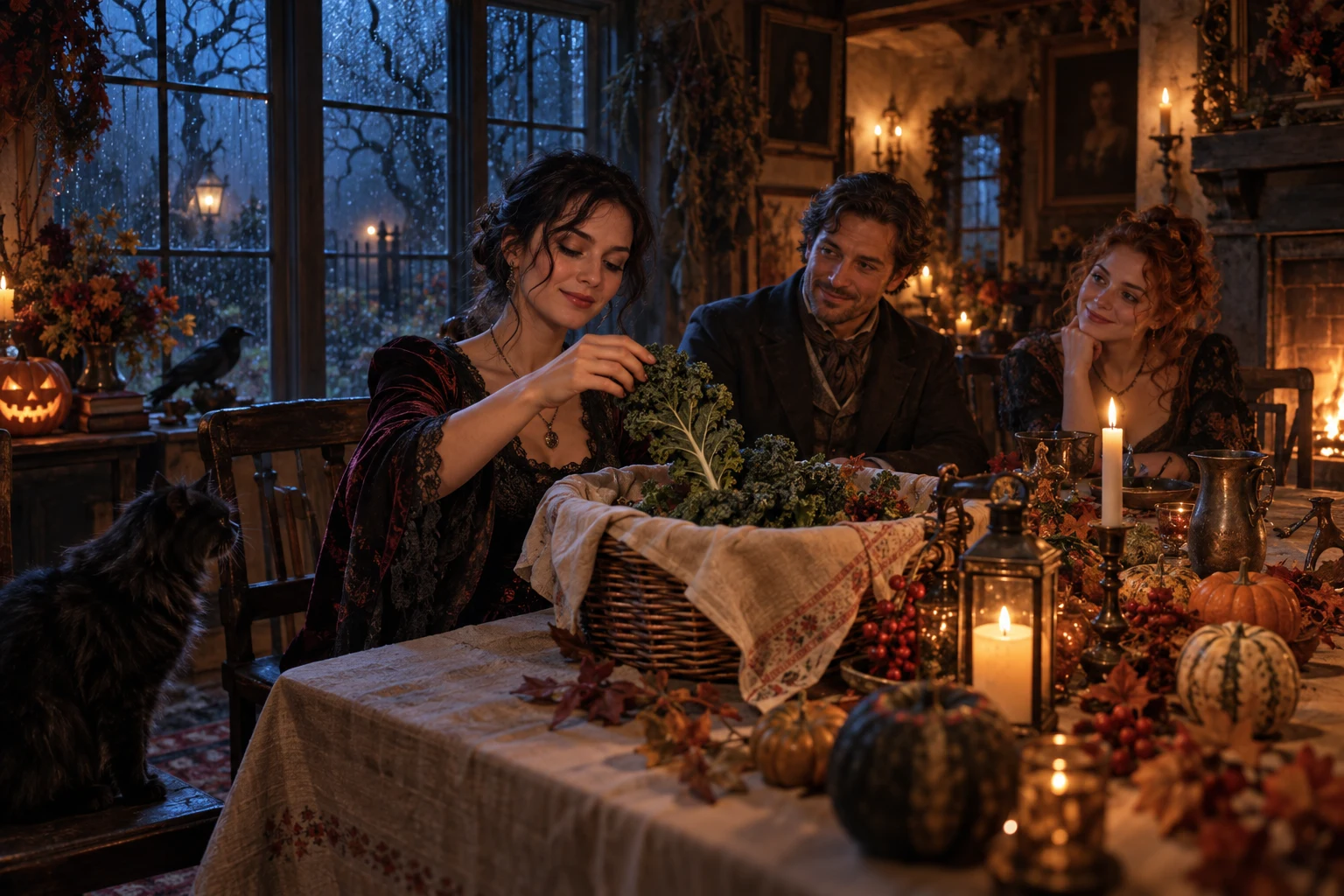
In the historical account: participants pulled kail with their eyes shut. A plant’s shape was interpreted as a future partner’s appearance; earth on the root suggested a dowry, and the stem’s taste supplied another omen. This was a courtship game with a vegetable doing an extraordinary amount of work.
For your table: put a few market-bought kale or cabbage stalks in a basket. Keep everybody seated with their eyes open; cover the basket with a cloth and let each willing player choose a stalk by touch. Nobody needs to walk blindfolded into a garden.
Make the predictions generous and absurd. The leafy one promises somebody who overpacks for weekends. The crooked one foretells an excellent dancer with terrible directions. A tiny stalk belongs to a future lover who insists they are only having one chip and eats half your dinner. These are our jokes, not Burns’s words.
Let guests choose a fictional sweetheart, an imaginary future self or no romantic interpretation at all. There is no need to turn somebody’s relationship, body or private life into the evening’s entertainment.
The nuts: will the pair stay together?
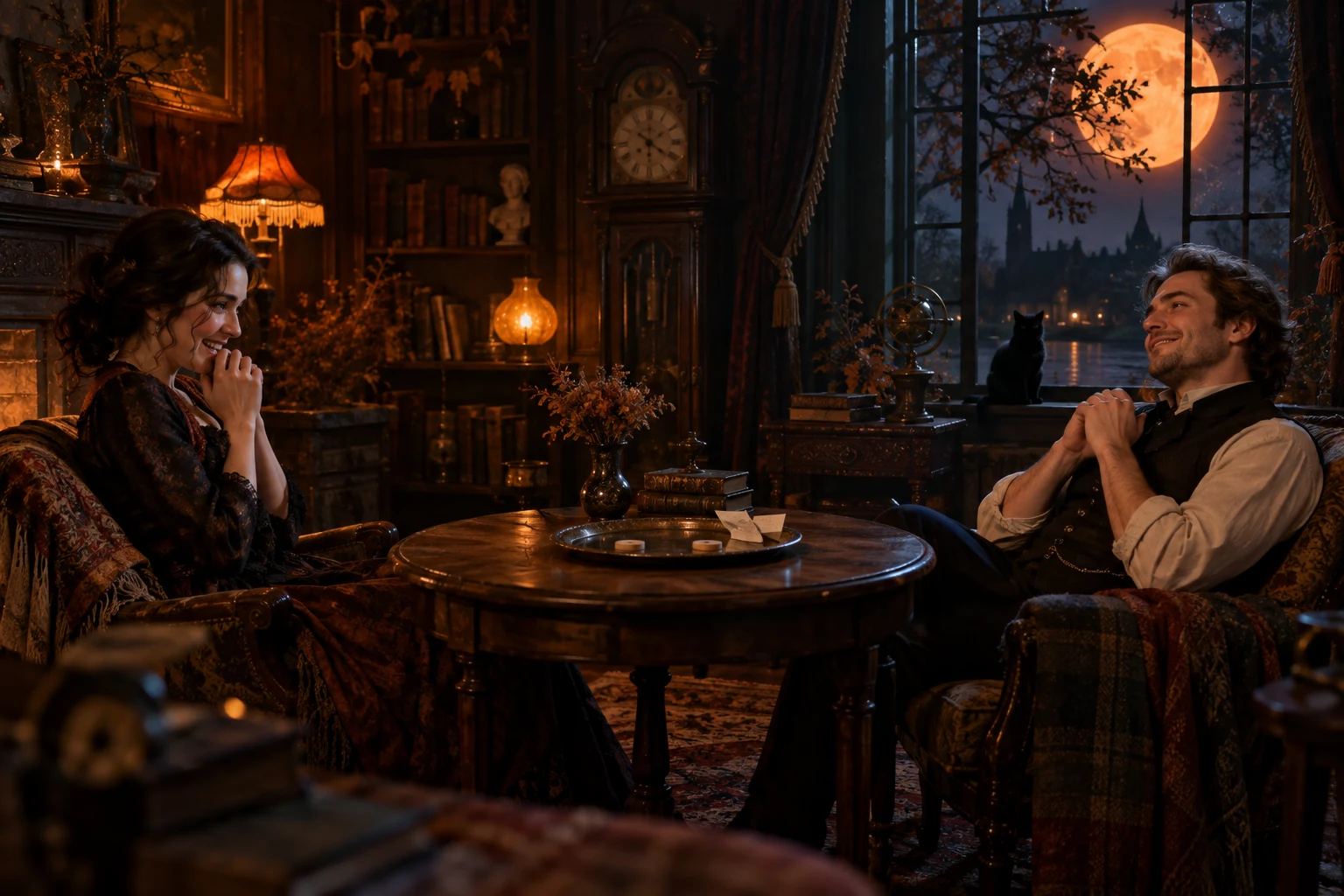
In Burns’s note: named nuts were placed in a fire, and their behaviour became a prediction about a couple’s future. A quiet pairing and a sudden separation made different stories.
Our flameless version: write two invented names on folded slips, pair them with wooden counters, and shake the counters gently onto a tray. Together means a shared adventure; apart means an unexpected detour. Take turns inventing what happens next. The game is a modern adaptation of the old question, not a reconstruction of the fire ritual.
You can serve nuts separately if they suit your guests, with allergens clearly identified. The game itself needs neither food nor flame. Let the suspense come from the storyteller.
The looking-glass: the best seat for a ghost story
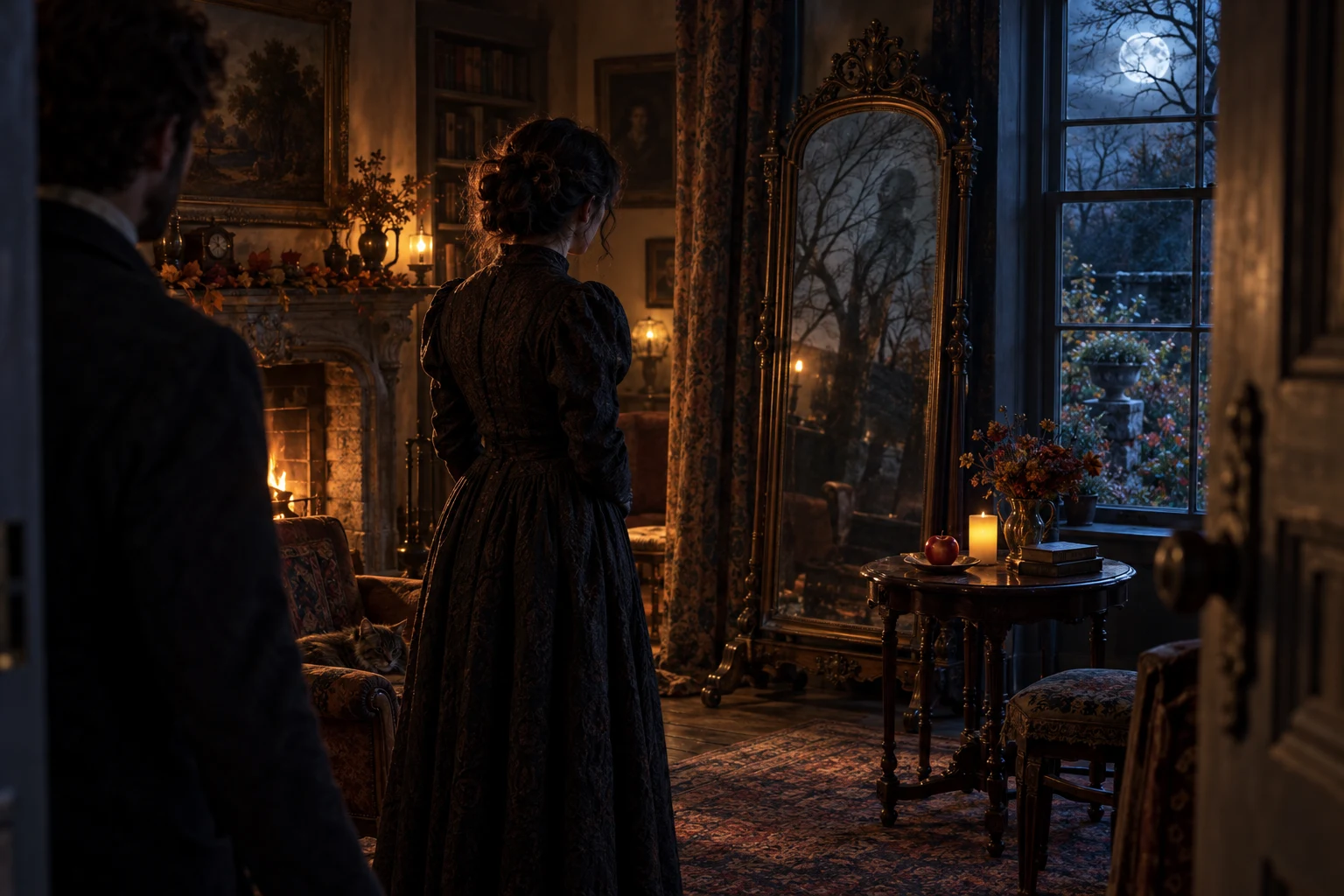
In the recorded custom: an apple, a candle and a mirror formed a charm for glimpsing a future companion. Burns describes the hoped-for face appearing over the participant’s shoulder.
At your gathering: use an LED light and a securely placed mirror. Give a willing guest a clean apple, or simply set one beside the glass. Then tell a short invented story about a reflection arriving a heartbeat late. Announce beforehand that any story or performance is make-believe; do not stage a frightening surprise for somebody who has not agreed to it.
Guests can stay in the room together. A mirror at dusk does enough atmospheric work without anybody being locked away, blindfolded or asked to hold a candle near their hair.
An apple-and-nut table, with room for the dead
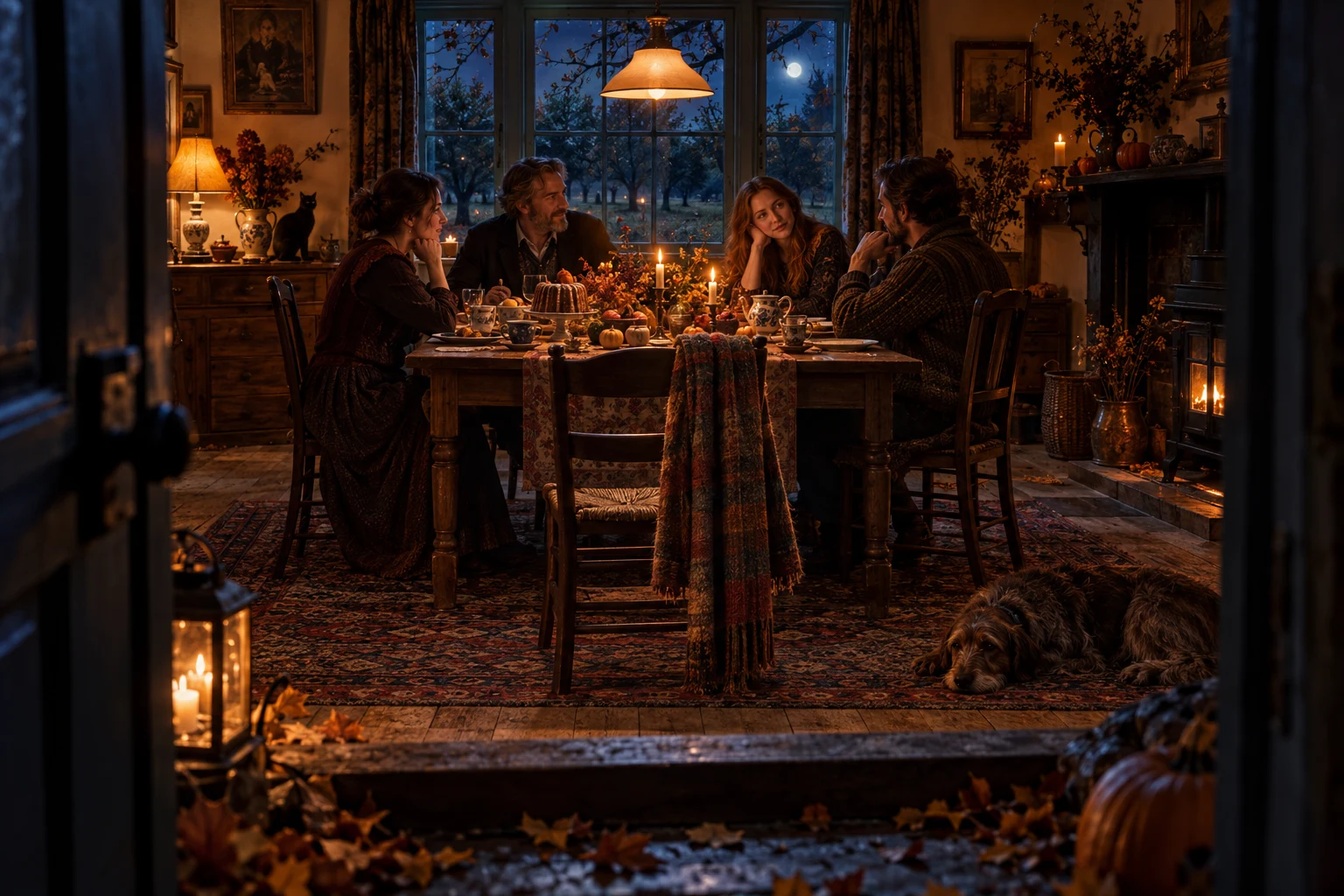
The food can be beautifully simple: apples, spiced biscuits, warm cider and a bowl of nuts where allergies allow. For a hands-on apple game, give each guest a spoon and a separate bowl and let them race to lift an apple. That is a modern party suggestion, not a claim about an eighteenth-century custom.
Want a quieter turn after the laughter? Invite each person to tell a story about somebody they miss. A remembered habit, a ridiculous expression or an inherited recipe will do. Participation should be optional. Remembrance need not become a performance.
This part of our suggested evening is a contemporary hosting choice. For the distinct Christian calendar of remembrance, read Allhallowtide explained. Historical customs have different settings; a good gathering can acknowledge those differences without becoming a lecture.
Borrow the mood of an old monster book
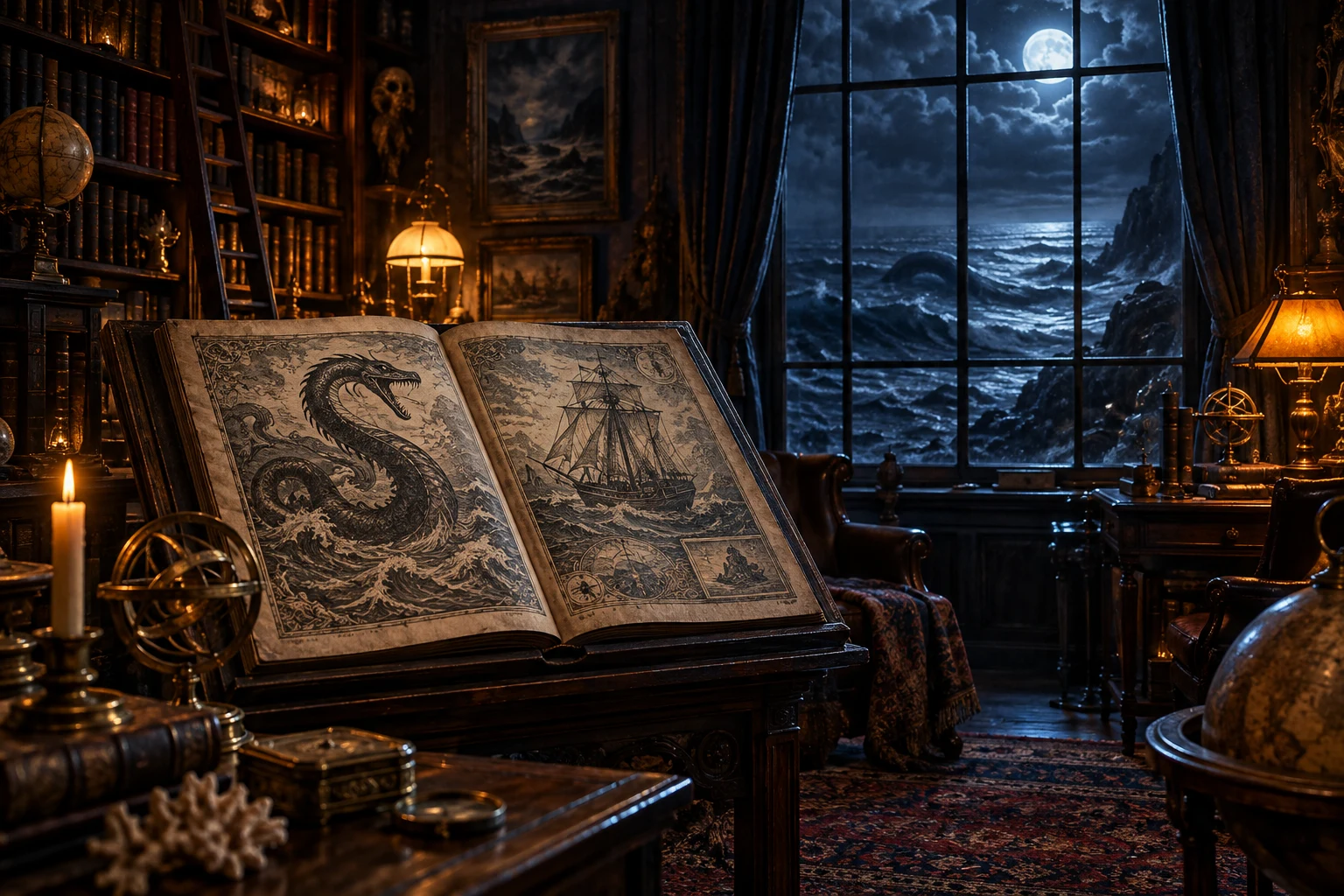
Long before Burns’s poem, Olaus Magnus filled the seas of his 1539 Carta Marina with extraordinary creatures. His 1555 History of the Northern Peoples gave such wonders further space. Joseph Nigg’s essay on Olaus’s sea serpent follows that creature through the printed record.
The map is not a source for Burns’s games, nor evidence that everyone in either century believed the same things. It is an excellent separate reading-room diversion: a reminder that the boundary between report, marvel and natural history has a history of its own.
Open the linked essay for your guests and ask which creature they would least like to meet on the voyage home. Call it a conversation with an old book, not an authentic Halloween ritual. No invented ancestry is needed to make a sea serpent unsettling.
Your old-ways Halloween evening, in six moves
- Set the room. Use warm lamps or LED candles, clear the walking routes, and put a mirror where it cannot fall.
- Lay out the food. Apples, bought or home-baked spiced cakes and warm drinks are enough. Check dietary needs and identify ingredients.
- Introduce the record. Explain that Burns wrote about Ayrshire courtship customs in 1785 and published the poem in 1786.
- Play one game. Choose the covered basket, the paired counters or the mirror story. Explain which details are modern adaptations.
- Change the temperature. After the laughter, offer a short ghost story or an optional memory of somebody absent.
- End with something ordinary. Tea, another cake, the lights turned up. Let the walk to the door provide the final shiver.
How old is “the old way”?
There was never one Halloween script shared by every household across centuries. A Scottish poem, a Christian remembrance custom and a Scandinavian monster map are different records. This evening brings them into conversation; it does not pretend they came from one ancient ceremony.
For the wider background, start with Samhain, folklore and the Otherworld and how Halloween became an American tradition. Keep the dates attached to the evidence, and leave space for the stories to be stories.
What Burns gives us is more intimate than a universal origin myth: people in a room, joking about desire, with the dark pressed close outside. Put a few friends around a table and that part is easy to understand.
Cover: a dramatic recreation of an imagined folklore evening, not a historical photograph or an exact reconstruction of Burns’s scene.