Historical report Maine, USA (statewide folklore; Durham / Shiloh Road corridor for 1973 cluster)
Maine Bigfoot Before Statehood: Kiwaka to Durham Gorilla (2026 Archive)
2026 archival feature on Maine hairy-biped lore — Penobscot Kiwaka, 1873 Camping Out, 1973 Durham Gorilla, Bill Brock’s mid-2010s claim. Grain of salt.

Sign in to save stories to your shelf.
Original reporting date: August 10, 2015.
Monstrum Athenaeum’s Maine Bigfoot roundup landed that day. The URL is a historical predecessor. This 2026 feature is brand-new archival entertainment — seclusion-country vibes, Indigenous giant lore, lumberjack panic, and one researcher’s mid-2010s “most convincing” claim — with the salt shaker welded open.
Why Maine’s map invites the story
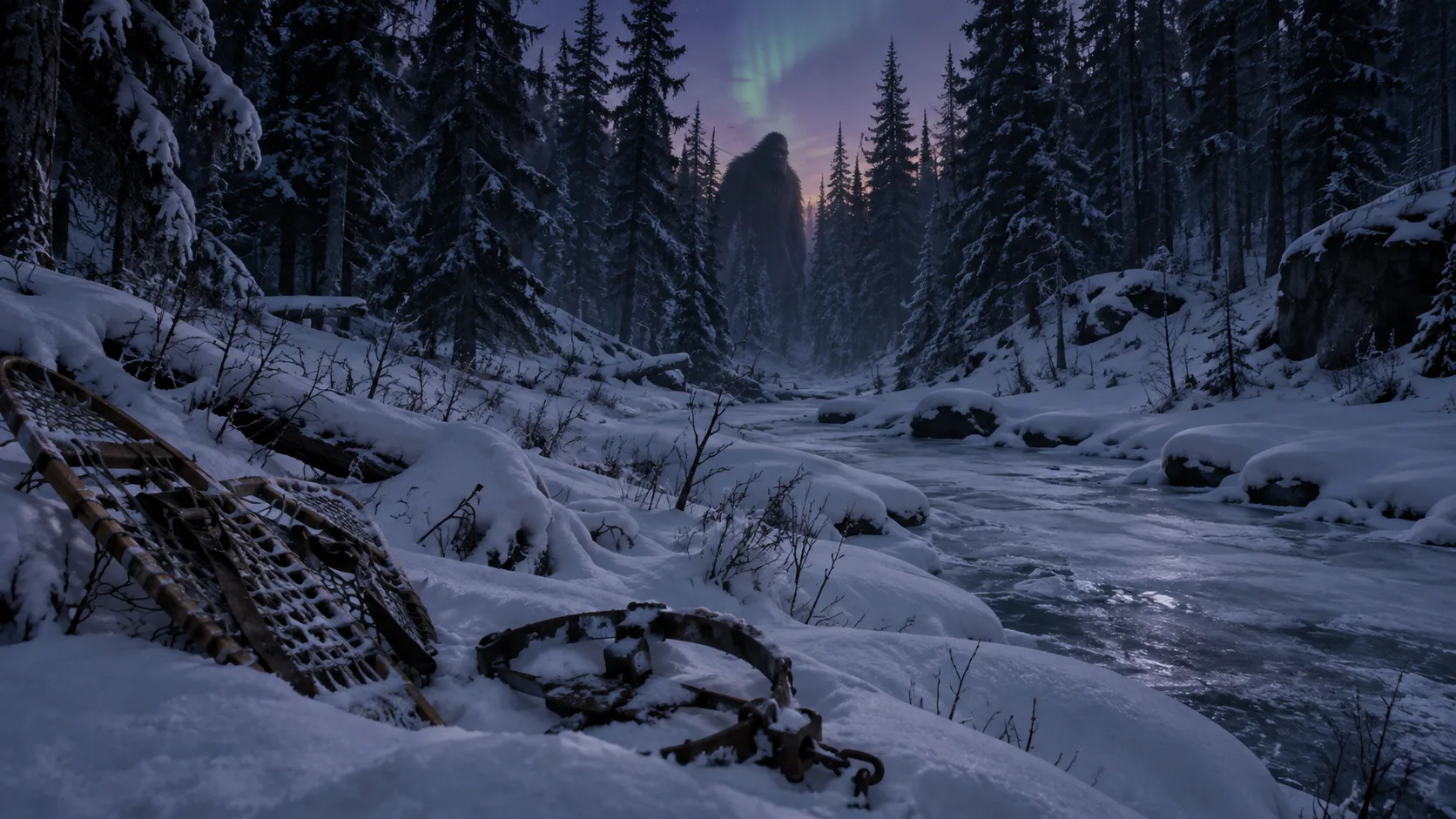
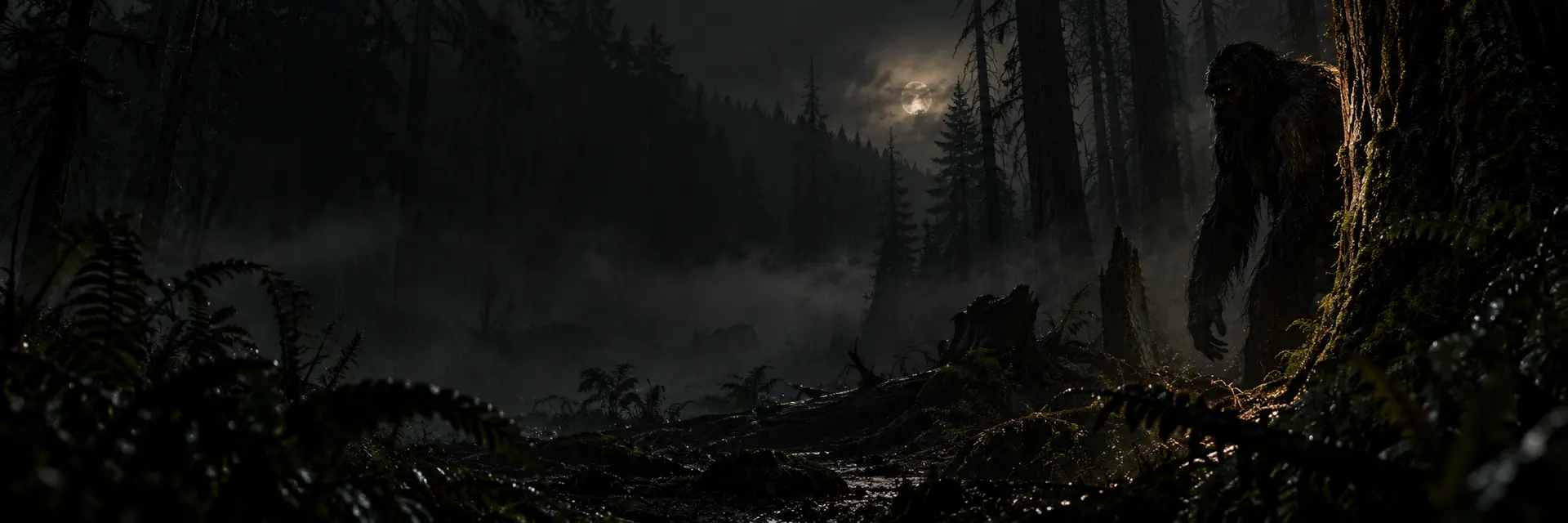
Maine joins the Union in 1820. Forests don’t care about constitutions. The 2015 desk argued undeveloped northeastern timber is perfect cover for anything that wants quiet — which is why records of hairy bipeds, says that piece, predate statehood in story form even if the word “Bigfoot” is a 1950s Pacific Northwest import. That is folklore chronology, not a museum accession number.
Indigenous and early settler name-stack (context)
According to the Athenaeum’s 2015 summary of regional tradition:
- Penobscot lore includes the Kiwaka, framed as a cannibalistic forest giant.
- Passamaquoddy tales mention monstrous Apotamkin figures.
- Mi’kmaq / Micmac traditions describe the Chenoo / Djenu — giants of cold country with a shriek said to be fatal, hearts “of ice,” rarely befriended.
- Abenaki Pomoola / settler “Injun Devil” stories appear in C.A. Stevens’ 1873 Camping Out, including a trapper allegedly torn apart and beaten against a trunk as territorial theater.
These are attributed cultural narratives filtered through a 2015 cryptid desk. They are not field-guide certifications, and they are not ours to flatten into a single “Maine Bigfoot species.” Treat them as story-world neighbors cited in the historical article, not as DNA kits or license to trespass on tribal or private land.
Twentieth-century pulses the 2015 piece stacked
- Early 1900s (via TM Gray’s New England Graveside Tales, 2010): a lumberjack’s father allegedly saw a hairy man bolt from woods across a road; search found nothing.
- 1973 Durham Gorilla Sightings: kids biking Shiloh Road toward Durham reported a chimpanzee-like stranger; flap ran July–August; cause still labeled mystery in the 2015 copy.
- 1984 trout-fishing pair: claimed a 7–8 ft, dark-brown-haired, 400–500 lb biped at ~50 feet.
Then the relative-time bomb: researcher Bill Brock, the desk said, had a “recent” sighting from “just last year” — i.e., roughly 2014 — rated among his most convincing: a 12-year-old watched something cross a rural track with whoops; snow tracks photographed at roughly twice a man’s foot. Convincing to Brock. That is investigator enthusiasm, not peer review. We do not upgrade it to “solved Maine sasquatch” in 2026, and we invent no later lab result.
Conspiracy-curious without the snowmobile posse
Believer read: continuous occupation narrative from ice-hearted giants to Durham flaps to kid-with-tracks era. Skeptical read: bear, moose-plus-panic, costume, folklore echo, or tracks in snow that any boot and drift can exaggerate. Conspiracy-curious entertainment lane: if something large and shy used Maine’s emptiest townships, “pre-1820 stories + 1973 flap + 2014 tracks” is the exact montage channels love — continuity without a body.
Archival ethics
Do not flatten living Indigenous traditions into a cryptozoology brand without care. Do not publish private rural-property pins from Brock’s case. Do not send readers onto unmarked tracks at night with plaster kits and a death wish. Soft evidence stays soft.
What this 2026 archive refuses to do
- Will not claim scientific confirmation of Maine Bigfoot.
- Will not invent club memberships, park closures, or Brock’s current rating of the case.
- Will not send readers onto unmarked rural tracks after dark.
- Will not declare any named being in Indigenous lore “the same animal” as Pacific Northwest Sasquatch as established fact.
How the 2015 desk framed “before statehood”
The headline move was chronological shock: stories that feel like Bigfoot before Maine was a state. Useful framing for SEO and folklore tourism. Dangerous framing if readers hear “documented zoology since before 1820.” The Athenaeum’s own 2015 body mixed Indigenous names, a nineteenth-century camping book, twentieth-century flaps, and one mid-2010s researcher rating. That is a timeline collage, not a continuous specimen chain. In 2026 we keep the collage visible as collage — dates on every layer, doubt on every joint.
Stevens’ 1873 trapper horror, Gray’s early-1900s road crossing, Durham’s 1973 bike-route flap, the 1984 fishing pair, and Brock’s ~2014 boy-and-tracks package each arrive with different evidence standards. Whoops in snow photograph differently than a cannibal giant in oral tradition. Mixing them sells a continuous Maine monster. Separating them is what an archive owes readers.
Grain of salt the size of a lobster buoy: Maine has the trees, the cold, and the stories. Stories are not specimens. The August 10, 2015 filing is the dated predecessor. This page is the 2026 reissue label.
Bottom line: The 2015 Athenaeum Maine package braided pre-statehood giant lore, 1873 trapper horror, early-1900s road crossings, the 1973 Durham Gorilla flap, a 1984 fishing encounter, and Bill Brock’s ~2014 boy-and-tracks claim. A decade later: keep the dates, keep the attribution, keep the doubt.
Sources
- Claim element: Historical predecessor roundup — Attribution: Monstrum Athenaeum, first published 2015-08-10 — Link: Maine Bigfoot Sightings Predate Founding of State
- Claim element: 1873 Camping Out / Pomoola cluster — Attribution: C.A. Stevens (as cited in 2015 MA piece) — Link: Historical text — verify editions independently
- Claim element: Durham Gorilla 1973 flap (press/folklore) — Attribution: Public Maine weird-news / local memory summaries — Link: Search “Durham Gorilla” 1973 Maine
- Claim element: Geography proxy — Attribution: Durham, ME regional centroid — Link: Exact rural track unpublished
About this article
Entertainment / historical cryptid and folklore commentary only — not scientific confirmation that a sasquatch occupies Maine, not ethnographic authority over Indigenous traditions, and not authentication of any track photo or witness claim. Descriptions are attributed to the 2015 Athenaeum record and named third-party sources therein. Do not trespass on private timberland. This 2026 article is a brand-new legacy refresh; the 2015 URL is a historical predecessor, not a prior publication of this text. MonstrumAthenaeum.org is for mature audiences who can tell a legend from a lab result.
Original publication credit
Original title: Maine Bigfoot Sightings Predate Founding of State. The preserved copy has no named writer credit. Originally published August 10, 2015.