Entertainment guide Island of Borneo; Gunung Palung National Park, West Kalimantan, Indonesia (2015 camera-trap work)
Borneo’s “Vampire Squirrel”: 2015 Camera Trap Hype vs. What Researchers Later Found (2026)
Rheithrosciurus macrotis went viral as a deer-slashing “vampire squirrel.” Dated 2015 video news + 2020 research: specialized seed-eater, legend still spicy.

Sign in to save stories to your shelf.
Deer-disemboweling squirrel. Tufted ears. Tail like a feather duster possessed by a demon.
Of course we published.
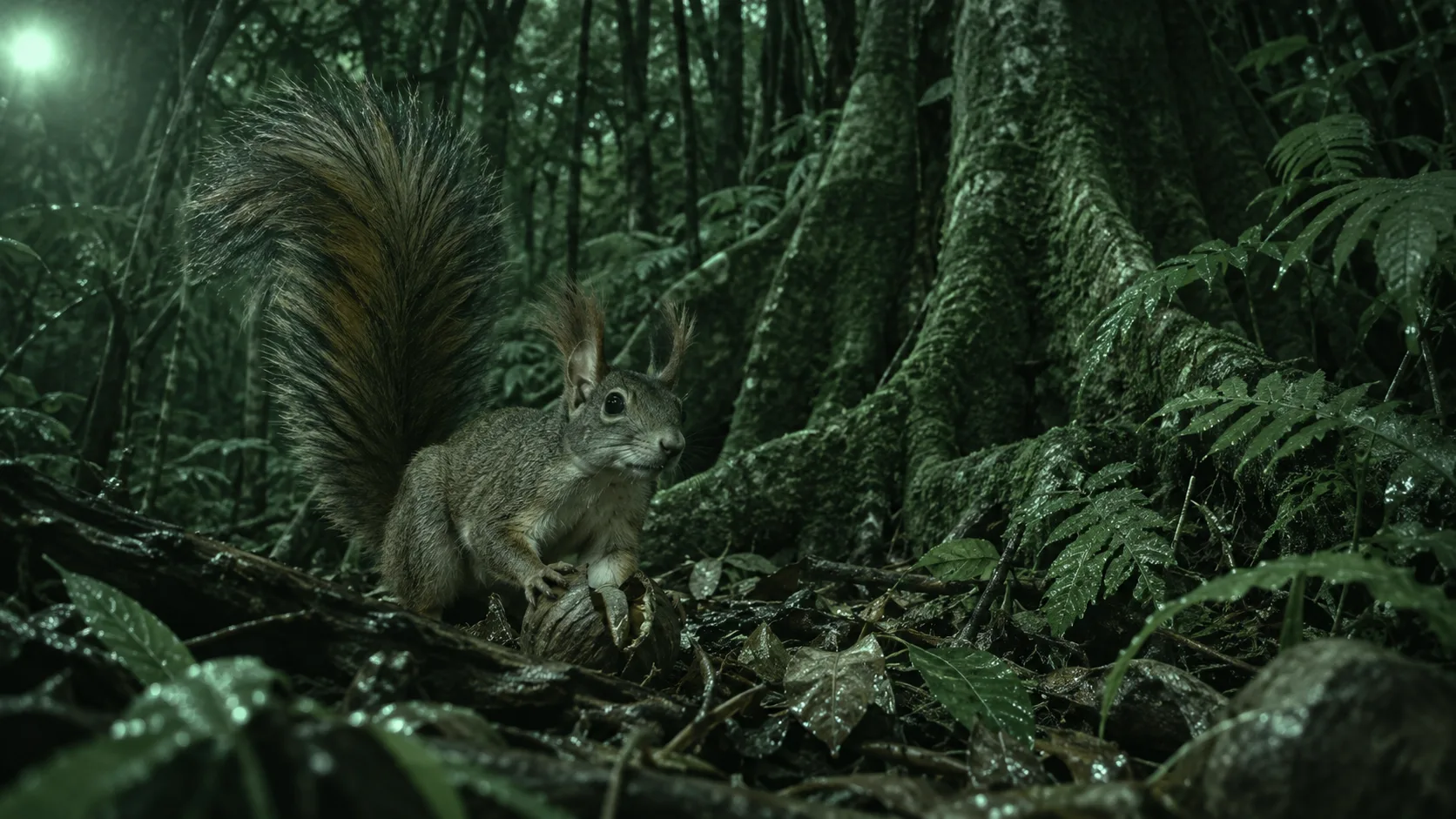
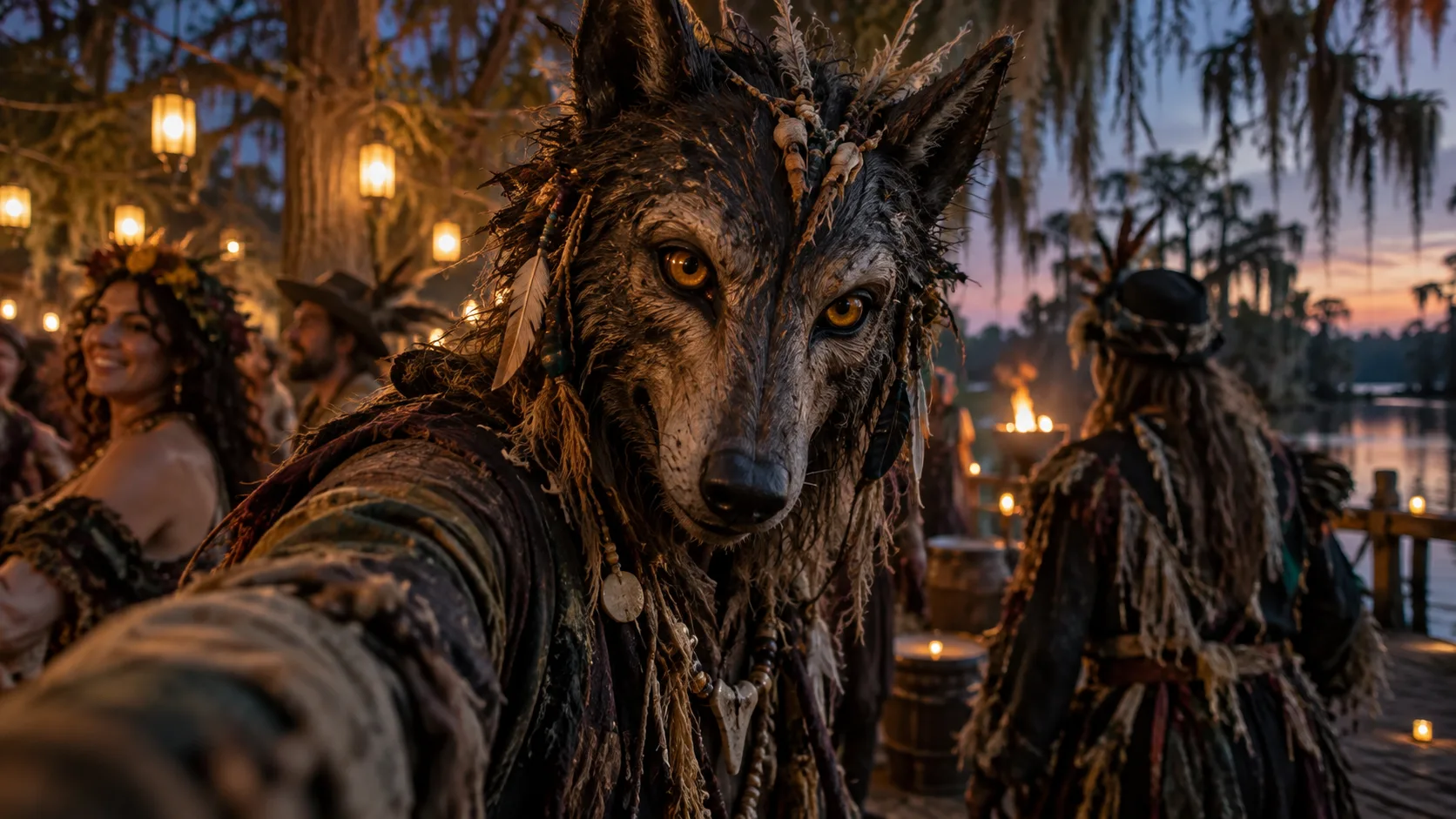
On September 30, 2015, this desk ran a hypersensational riff on Borneo’s tufted ground squirrel (Rheithrosciurus macrotis) — the so-called vampire squirrel — after researchers publicized rare camera-trap video. Our older piece flirted with werewolf-hybrid metaphors and declared legend upgraded to “cryptid fact.”
That page is a historical predecessor. This 2026 rewrite keeps the monstrum grin and installs the science seatbelt: what was claimed in folklore, what 2015 fieldwork showed, and what a 2020 feeding study says you should not still scream as current carnivore gospel.
The folklore (older than your feed)
Dayak hunter lore, discussed in natural-history notes such as the 2014 Taprobanica “Tall Tales of a Tropical Squirrel” piece and amplified by a 2014 Science news nickname, claims the squirrel can drop onto deer, slash jugulars, and feast on heart, liver, and stomach contents — sometimes chickens too, in village-edge stories.
That is folklore attribution, not a filmed kill reel. Even sympathetic writers kept an open mind because Borneo keeps proving hunter stories weirdly right sometimes (mouse deer underwater hiding being the classic “told you so”).
Open mind ≠ settled zoology.
What changed in 2015 (dated)
In 2015, work associated with researchers including Heiko Wittmer and Andrew Marshall in Gunung Palung National Park produced what outlets called the first clear video of the species via motion-triggered cameras. Phys.org and others ran the astonished-scientist package: bushiest-tail mammal lore, infrared night foraging vibes, reminder of how little rainforest species are documented.
Wittmer was quoted casting doubt on true carnivory — no known squirrel lifestyle quite like the legend. The video showed a real rodent doing real rodent things under a tree. It validated the animal’s existence on camera; it did not validate deer assassination.
Our 2015 predecessor oversold the jump from “on camera” to “cryptid fact / supernatural hybrid.” Fun voice. Soft epistemology. Fixed now.
Later status: 2020 diet reality check
Fast-forward. In August 2020, New Scientist and related coverage of Marshall’s team’s long-term observations reported the squirrel as a highly specialized seed predator, especially hard Canarium seeds — teeth like botanical safecrackers, not jugular specialists. Dozens of feeding observations clustered on a narrow set of ultra-hard seeds; the deer-slasher lifestyle remained unseen by the field team.
Marshall reportedly still would not swear the legend never happens — field humility is healthy — but the evidence in hand points to seed specialist, not werewolf-adjacent apex rodent.
Live Science explainers into the 2020s keep the nickname for clicks while leading with the diet correction. Correct instinct.
So was our “werewolf hybrid” bit… science?
No. It was entertainment riffing: shapeshifter metaphors, low-light predator aesthetics, “what if squirrels aren’t vegan.” Cute in a cryptid zine. Misleading if ripped into a textbook.
Squirrels can occasionally eat flesh in odd cases elsewhere; that trivia still does not crown R. macrotis as Borneo’s crypto-saber-toothed tree rat.
How to love a legend without lying
- Date the viral moments: 2014 nickname, 2015 video, 2020 diet paper wave.
- Separate animal confirmed from behavior confirmed.
- Credit Indigenous folklore as cultural knowledge with its own status — not automatically false, not automatically zoology.
- Keep hybrid/werewolf talk in the fiction lane.
Conspiracy-curious angle, salted: maybe the kills happen off-camera. Maybe carcasses blamed on squirrels have other authors. Extraordinary predation claims want extraordinary clips — preferably not infrared Rorschach.
What we refused to do
We will not present 2015 hype as 2026 biological consensus. We will not invent a documented deer kill by this squirrel. We will not offer hunting, trapping, or “prove the legend” harassment tips. We will not sell supernatural hybrid as taxonomy.
Salt freely. The tufted ground squirrel is strange enough as a real seed specialist with a ridiculous tail. It does not need a Hollywood transfusion.
Why the hybrid riff was unfair to a cool rodent
Calling a documented squirrel a “vampire-werewolf hybrid” in 2015 made for sticky social copy and a sloppy ontology. Hybrids, in biology, mean specific reproductive stories. Werewolves are folklore. Vampires are folklore. Rheithrosciurus macrotis is a monotypic genus with an odd evolutionary biogeography (deep split hypotheses debated in the literature) and a tail that breaks mammal proportion charts. That is already elite weird.
Infrared foraging clips feel predatory because night + glowing eyes + human storytelling = monster. The same clip, after 2020 diet work, reads as a specialist commuting to a seed resource. Both readings can be emotionally true; only one is currently evidenced as routine ecology.
Conservation aside (still not a cryptid trophy)
Rare, hard-to-see, range-restricted mammals get hammered when virality inspires harassment. If this piece does anything useful beyond SEO, let it be: watch the park videos, support habitat protection, leave the animal alone. Legend tourism that ends with spotlighting and trapping helps no one — least of all the squirrel.
Claims vs facts table
- Element: Animal exists — Claimed / hyped: Yes — Better-supported read (dated): Confirmed species; 2015 camera-trap video publicized
- Element: Deer jugular predator — Claimed / hyped: Dayak folklore + viral nickname (2014) — Better-supported read (dated): Unverified as documented behavior; researchers doubtful
- Element: Diet — Claimed / hyped: Implied carnivory in clickbait — Better-supported read (dated): 2020 observational synthesis: specialized hard-seed feeder
- Element: Werewolf/vampire hybrid — Claimed / hyped: 2015 entertainment riff — Better-supported read (dated): Fiction — not taxonomy
- Element: “Terrorizes Borneo” — Claimed / hyped: Headline energy — Better-supported read (dated): Overstatement; localized folklore + media surge
What “until recently only eyewitnesses” actually meant
Our predecessor’s source cue — descriptions limited to eyewitnesses until “recently” — referred to the mid-2010s documentation wave, not a supernatural reveal. Camera traps reduced the “is it even real?” fog. They did not adjudicate the deer legend. That distinction is the whole ballgame for cryptid-adjacent wildlife stories in 2026.
Sources
- Claim element: Historical predecessor (Sept 30, 2015) — Attribution: Monstrum Athenaeum original — Link: Vampire-Werewolf Squirrel Hybrid…
- Claim element: First video coverage (2015) — Attribution: Phys.org / Victoria University of Wellington release — Link: World’s first video footage…
- Claim element: Diet study popular summary (2020) — Attribution: New Scientist — Link: Borneo’s ‘carnivorous’ squirrel…
- Claim element: Folklore documentation (2014) — Attribution: Meijaard et al., Taprobanica — Link: Tall Tales of a Tropical Squirrel
- Claim element: General explainer (2020s) — Attribution: Live Science — Link: Tufted ground squirrel…
About this article
Entertainment and natural-history commentary only — not a field guide for capturing or harming wildlife, not permission to enter protected areas outside posted rules, and not a taxonomic claim that the tufted ground squirrel is a supernatural hybrid. Folklore is labeled as folklore; research findings are dated. This 2026 article is a brand-new legacy refresh; the 2015 URL is a historical predecessor, not a prior publication of this text. MonstrumAthenaeum.org is for mature audiences who can tell a camera-trap clip from a bestiary.
Original publication credit
Original title: Vampire-Werewolf Squirrel Hybrid Terrorizes Borneo. The preserved copy has no named writer credit. Originally published September 30, 2015.